Asia
Tibet
"I ran out of air before I ran out of reasons to stay."
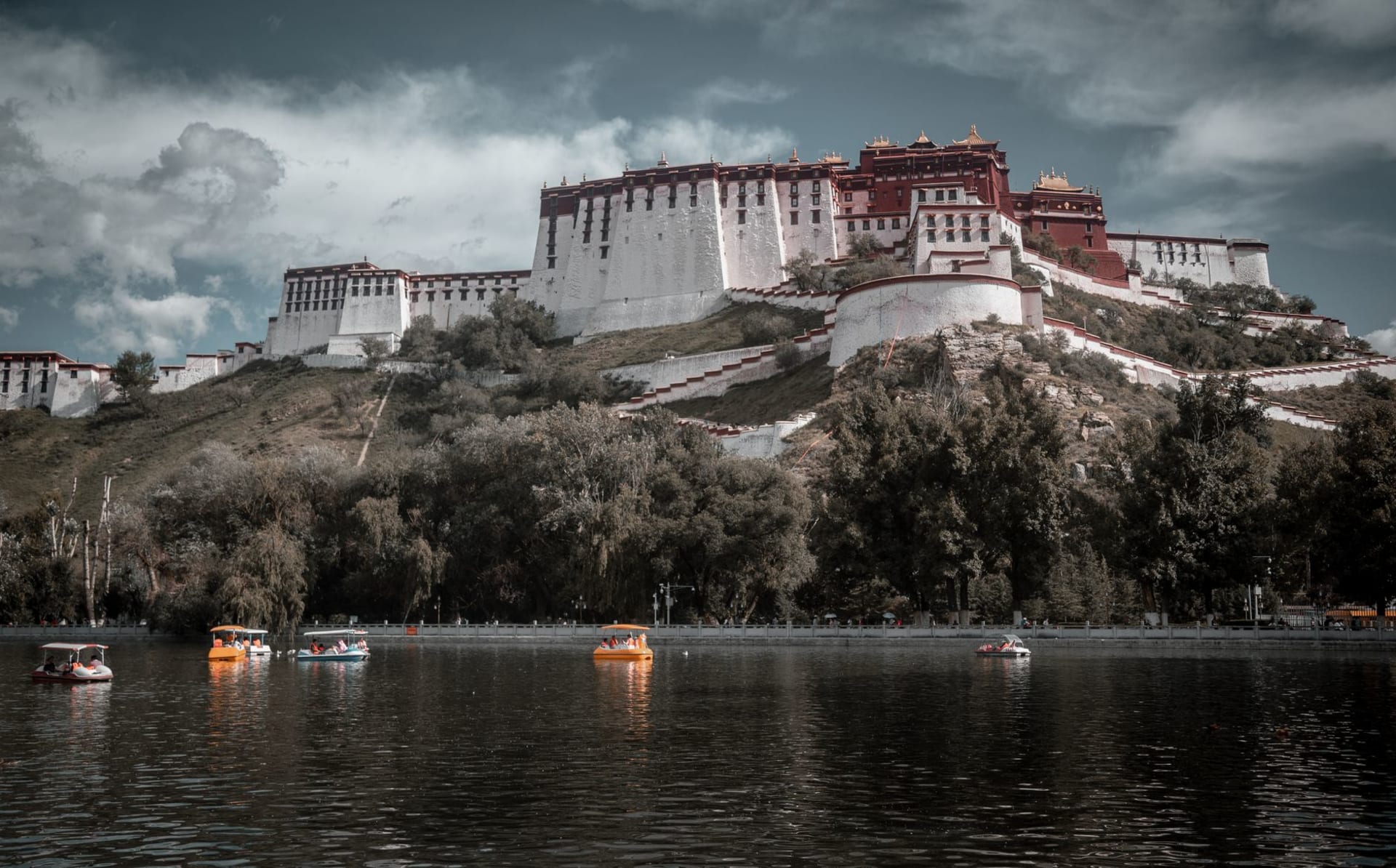
The moment that defined Tibet for me came two hours after landing in Lhasa. I was walking slowly — very slowly, because the altitude at 3,650 meters makes haste a fantasy — toward the Barkhor, the circular pilgrimage route around the Jokhang Temple. Elderly Tibetans in heavy robes were doing full prostrations on the stone, rising, stepping forward, dropping again, their hands padded with wooden blocks. They had been doing this for hours. Some had been doing it for days. I stood there in the thin air with my heart working twice as hard as usual, and I thought: whatever this place is, it is operating on a different set of premises than anywhere I have been before.
The altitude disciplines you from the moment you arrive. You cannot rush. You cannot drink alcohol the first few days. You sleep more than you want to. This enforced slowness turns out to be Tibet’s greatest gift. Without it, you might walk past the Jokhang’s butter lamp rooms too fast, miss the conversation with a monk who has opinions about Indian cinema, overlook the market stalls selling yak butter in wooden cylinders that look unchanged from the ninth century. Lhasa rewards the visitor who cannot move quickly, which is to say all of us.
Outside the capital, the scale becomes almost impossible to communicate. The drive toward Everest Base Camp on the Tibetan side passes through high-altitude grasslands where yak graze on seemingly nothing, past turquoise lakes that have no business being that color, under skies with a quality of light I have seen nowhere else — something about the elevation and the angle makes everything sharper, more present. Shigatse’s Tashilhunpo Monastery is vast and largely empty of tourists; you can walk through its gilded assembly halls while monks debate in the courtyard in a call-and-response rhythm that sounds like music.
When to go: May through October is the window, with May–June and September–October being the sweet spots — temperatures are bearable, the passes are clear, and the summer crowds of July–August have either not yet arrived or have gone home. Avoid December to March: the cold is serious and many roads at high elevation close entirely.
What most guides get wrong: They emphasize the political restrictions — the permit system, the regulated tours, the limitations on independent travel — as though Tibet is primarily a bureaucratic problem to be solved. It is not. The restrictions are real and must be navigated, but once you are there, what you encounter is not a diminished experience. The monasteries are functioning. The pilgrims are walking. The landscape is overwhelming. Tibet is not a place that has been neutralized by access controls; it is a place where the access controls happen to frame something genuinely ancient and alive. Plan carefully, accept the constraints, and then let the place be what it is.