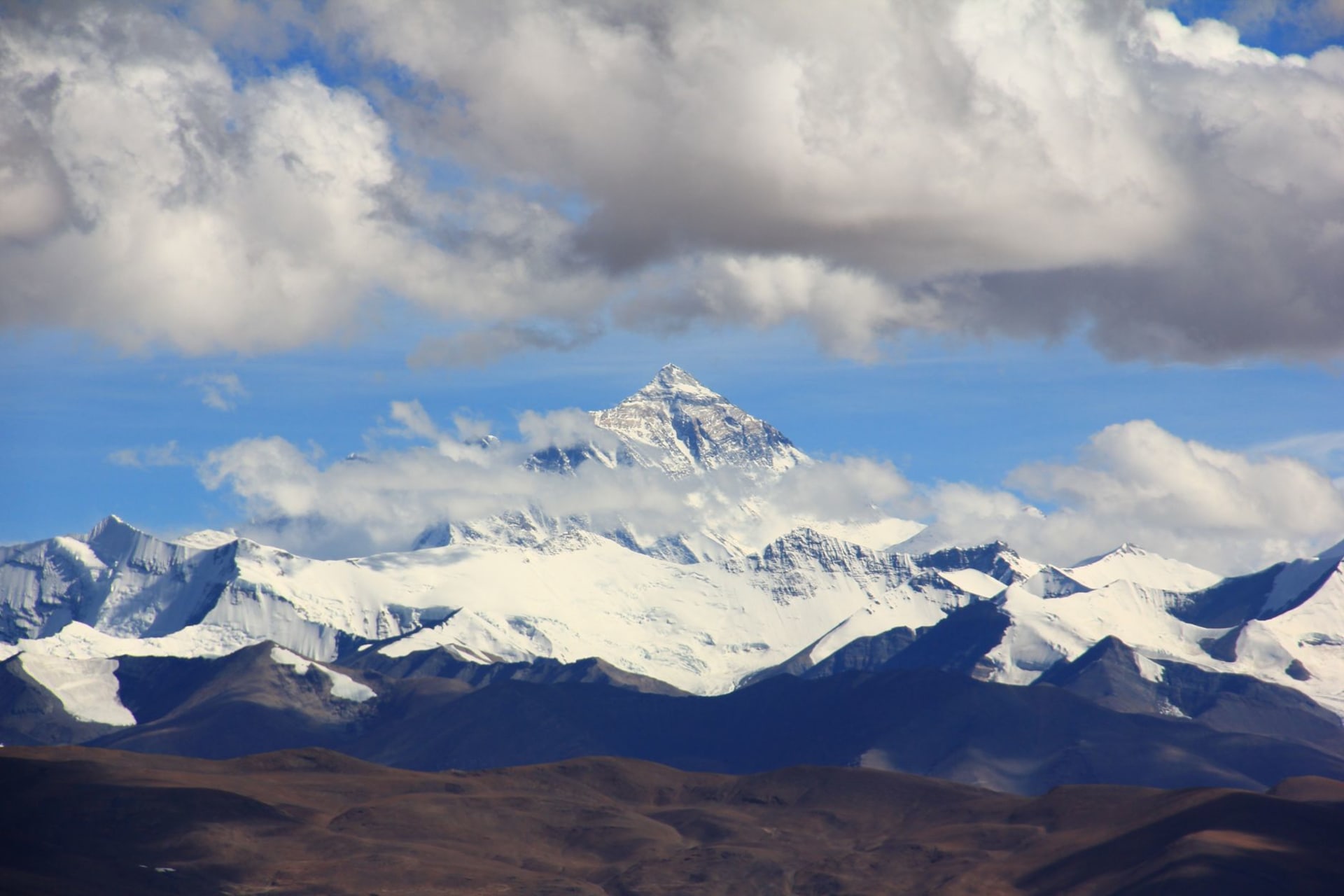
Mount Kailash
"Nobody climbs Kailash. You walk around it for three days and it looks at you the whole time."
Mount Kailash has never been summited. This is not for lack of technical ability — the 6,638-metre peak is, by Himalayan standards, technically climbable. It remains unclimbed because the mountain is considered too sacred to set foot on by Hindus, Buddhists, Jains, and Bönpo alike. The mountain is circumambulated instead. The kora — the three-day, 52-kilometre circuit around the base — is one of the most important pilgrimages in Asia, undertaken by thousands of devotees annually and by a smaller but growing number of secular travellers who are drawn to the idea of walking around something rather than over it.
I came for the landscape and left with something harder to categorize.
The Approach
Western Tibet is far from everything. The journey from Lhasa takes two to three days by Land Cruiser, crossing passes above 5,000 metres and descending into the valley of the Brahmaputra, then climbing again across an increasingly arid plateau until the landscape feels genuinely lunar. The Barkha plain, where you first see Kailash, is flat and vast and brown, and the mountain rises from it with impossible symmetry — four nearly identical faces, a cap of snow, a presence that the word “impressive” does nothing to address. There is something about its proportions that refuses to resolve into the merely geological.
Day One: Darchen to Dirapuk
The kora begins in the pilgrim town of Darchen at 4,575 metres and immediately climbs. The trail follows the Lha Chu river valley north, past mani walls of carved stone and wind-whipped prayer flags, into a landscape that grows progressively more severe and more beautiful as altitude increases. Pilgrims pass at all paces — elderly Tibetans using walking sticks, young monks moving fast, the occasional Hindu pilgrim from India who has organized permits across two countries for this moment. Some Tibetan Buddhists complete the circuit by full prostration, lying flat on the ground, standing, walking to the mark made by their outstretched hands, lying flat again. The circuit takes them weeks.
Dirapuk Guesthouse sits at 4,900 metres with a direct line-of-sight view of Kailash’s north face. The north face is the most dramatic — a sheer wall of dark rock streaked with ice — and it catches the last light of the evening and holds it longer than seems fair.
Day Two: The Dolma La
The second day crosses the Dolma La pass at 5,630 metres, the physical and spiritual high point of the kora. The ascent is steep and the altitude is punishing. I moved slowly, stopping every hundred steps or so, my breath forming visible clouds in the cold air. Other pilgrims passed me or I passed them depending on the moment. The pass itself is marked by a massive cairn of prayer flags and offering scarves — colours faded by sun and wind into a kind of unified pale — and the view from the top stretches across mountains in every direction.
The descent drops steeply to the Lham Chu valley and the sacred lake of Gauri Kund, partially frozen when I visited, its surface a milky jade green.
Day Three: Back to Darchen
The final day is long and gradual, following the Zhong Chu valley south. My legs felt the previous two days. The mountain was behind me now, but the landscape in front remained extraordinary — wide sky, brown stone, the occasional nomad tent. I reached Darchen in early afternoon and sat down heavily on a wall and ate a chocolate bar I’d been rationing since Lhasa.
When to go: May through September. The most auspicious year for the kora — the Year of the Horse, which occurs every 12 years — draws vastly larger crowds. Western Tibet requires additional permits beyond the standard Tibet Travel Permit; your agency handles this but factor in extra lead time. Avoid October through April when high passes can be snowbound and guesthouses along the kora close.