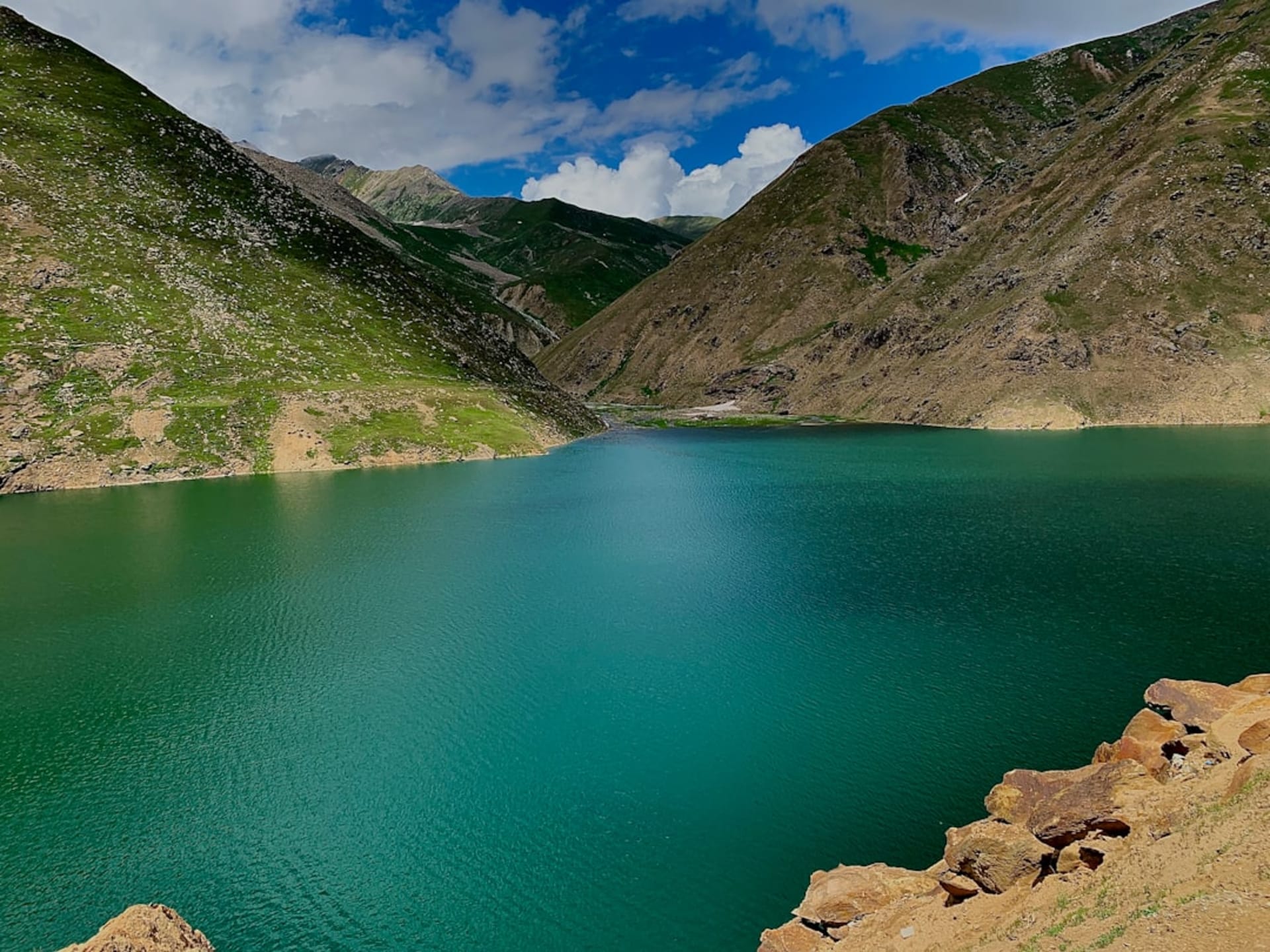
Basum Lake (Draksum-tso)
"Some lakes you look at. Basum Lake, I felt in my chest before I even found the words for it."
A turquoise glacial lake cradled by pine forests, with a 17th-century monastery floating at its heart on Tashi Island.
We left Bahe Town in the early morning, the road narrowing as it climbed alongside the upper Ba River, and I remember Lia pressing her forehead against the window glass, tracking the color of the water as it shifted from milky gray to something closer to jade. By the time we’d covered the roughly 36 kilometers to the lake, neither of us was talking much. There’s a kind of quiet that altitude and anticipation impose on you together, and at 3,700 meters, Basum Lake — Draksum-tso, “Three Rocky Mountains Lake” in Tibetan — asks for both.
Nothing prepared me for the scale of it once we were actually standing at the shore. Eighteen kilometers long, nearly 28 square kilometers of water sitting in a bowl of pine-covered mountains, and a depth that plunges to 120 meters in places — you don’t so much see the lake as get slowly surrounded by it as you walk the shoreline path. I kept stopping to take photos I knew wouldn’t do it justice, that particular turquoise that seems to come from somewhere below the surface rather than just reflecting the sky.
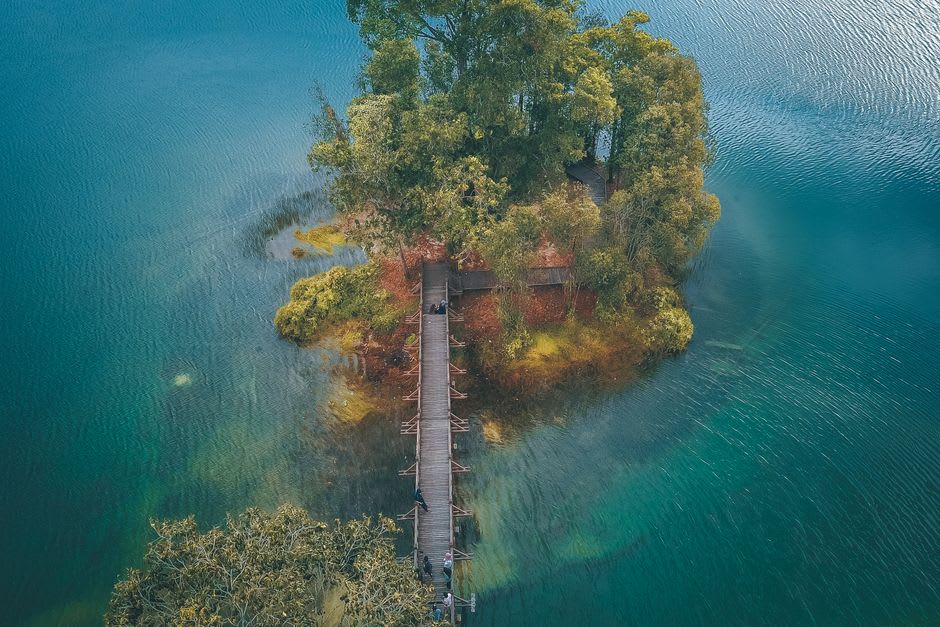
We crossed to Tashi Island by the wooden causeway, and that’s where the trip earned its keep for me. Tsodzong, the two-story monastery founded in the 17th century, sits right at the island’s center, its wood dark and worn smooth by centuries of hands. It’s a sacred site for the Nyingma school of Tibetan Buddhism, and even as a visitor with no religious claim on the place, I felt the need to lower my voice walking through it. An old monk was turning a prayer wheel near the entrance when we arrived, and he nodded at us without breaking rhythm — Lia lit a butter lamp inside, and I just stood in the doorway for a while, listening to water lap against the pilings below.
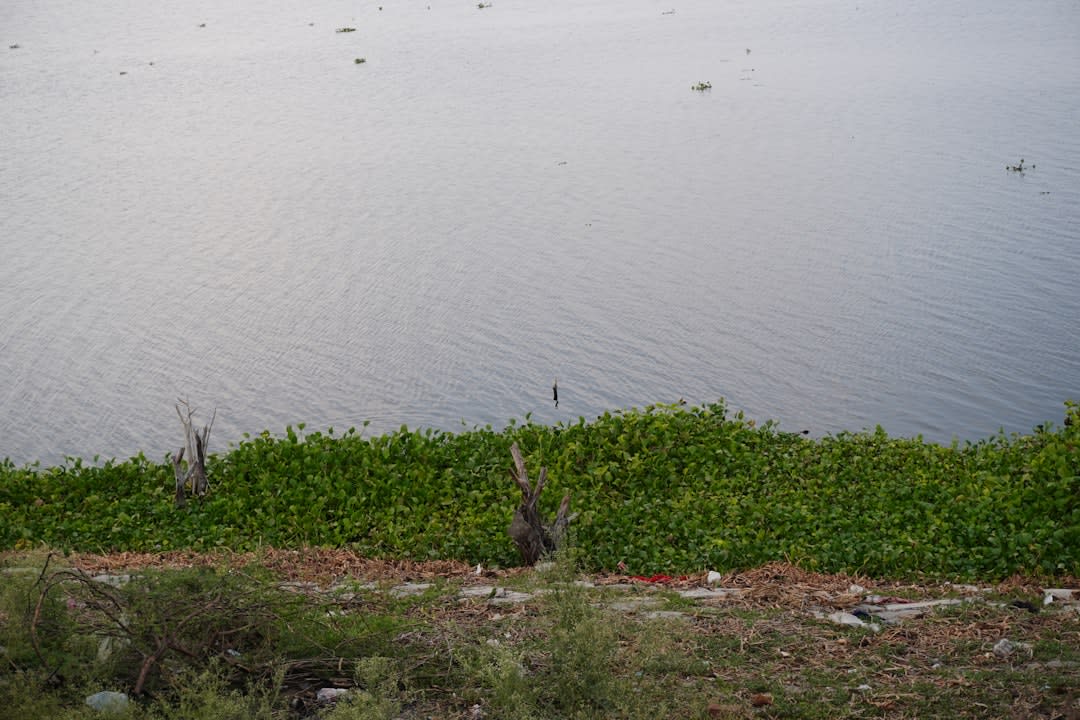
We ate lunch on a rock near the shore — yak butter tea from a thermos one of the boatmen sold us, and some flatbread Lia had stashed from breakfast — and just watched the light change on the water for probably an hour longer than we needed to. Basum Lake carries China’s top 5A scenic rating, and it shows in how well the paths and the crossing are maintained, but standing there with almost no one else in sight, it never once felt like a tourist stop. It felt like something we’d stumbled into that happened to also be famous. From Lhasa it’s a four-to-five-hour drive, which is a long way to go for one lake — until you’re actually there, and then it isn’t nearly long enough a day to leave.
When to go: Aim for May through October, once the mountain passes have shed their snow — that’s also when the lake holds its deepest, most vivid turquoise.