Khao Sok National Park
"I woke up floating on a green lake under cliffs that have been standing here since before there were forests anywhere else."
Most people go to southern Thailand for the beaches. We went inland instead, on a hunch and a slightly desperate need to be somewhere without a beach bar, and ended up in one of the oldest rainforests on the planet. Khao Sok is the kind of place that resets your sense of scale. The trees are enormous, the cliffs are enormouser, and you are a small damp creature moving through it all hoping the leeches haven’t noticed you yet. They had noticed me. We’ll get to that.
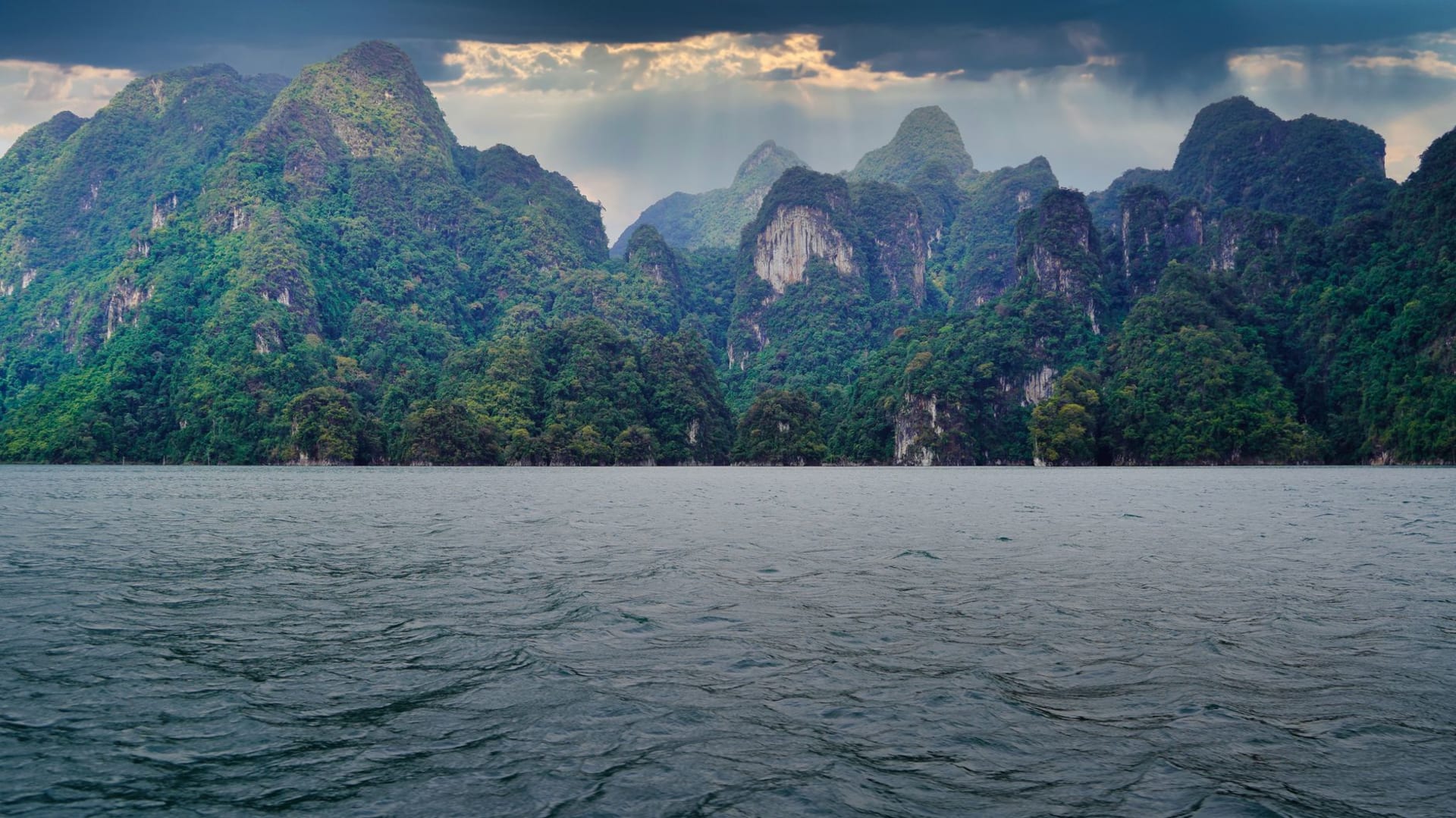
The park sprawls across the interior of the Surat Thani province, a tangle of evergreen jungle, limestone towers and rivers, and at its heart sits Cheow Lan Lake — which is not a natural lake at all but a reservoir created in the 1980s by a dam. I usually flinch at man-made lakes. This one I forgive completely. When they flooded the valley, the water rose around the bases of the karst peaks and left their upper halves standing, so the whole lake is studded with these vertical green islands rising sheer from impossibly still emerald water. It looks engineered by someone with very good taste and no budget constraints.
Sleeping on the water
We stayed two nights in a floating raft house — a row of simple bamboo bungalows tethered to the shore, each one a step from the water. There is no Wi-Fi, no road, no engine noise after the longtail boats cut out for the night. Just the lake lapping at the floor under your bed and, at some indecent hour before dawn, the whooping call of gibbons rolling across the water from the forested slopes.
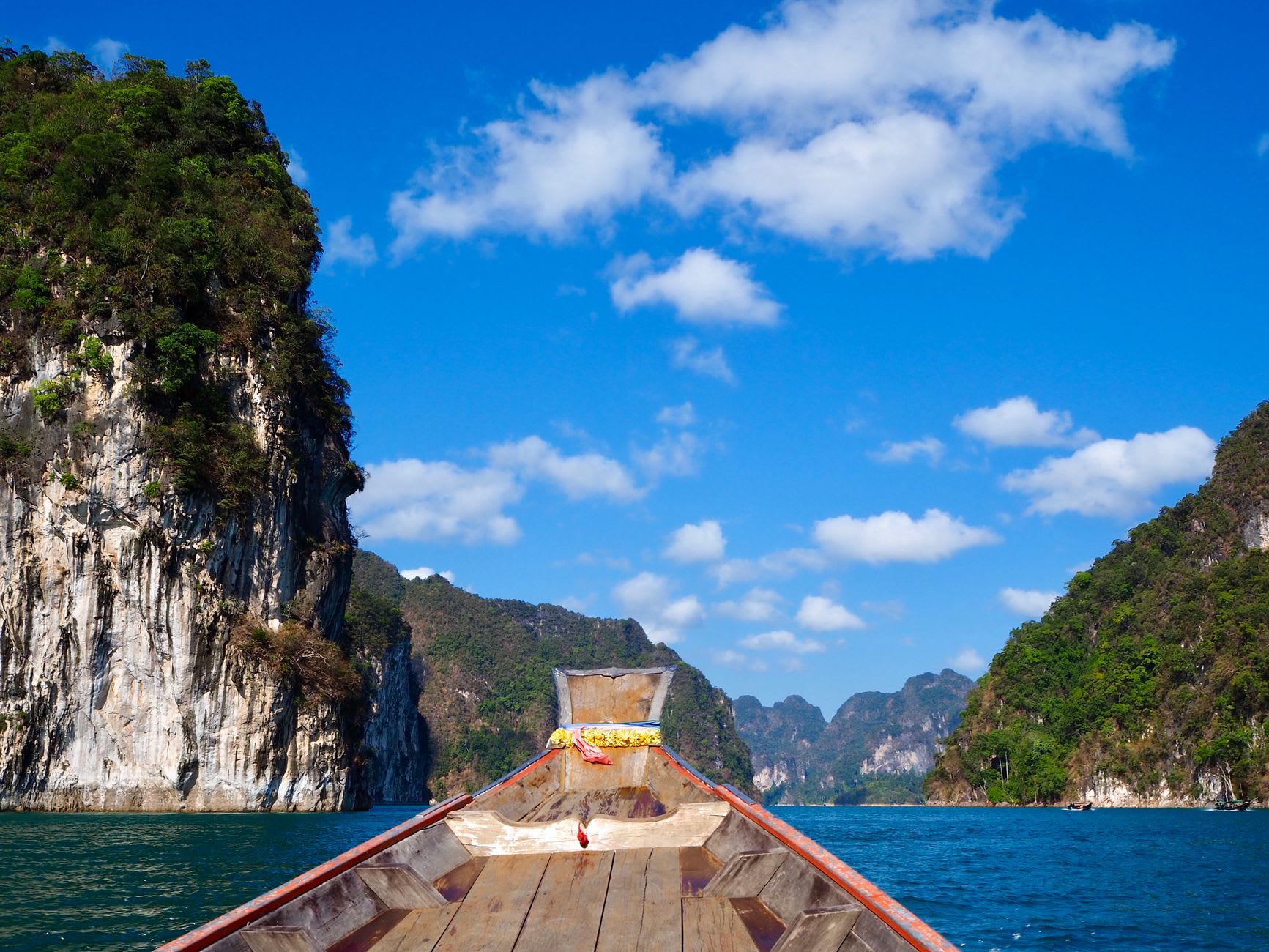
Lia, who claims not to be a morning person, was the one who shook me awake at 5:30 to get into the longtail for the dawn paddle. She was right and I told her so, which I don’t always do. The mist sat on the water in long horizontal bands, the karsts emerged from it one by one like a slow developing photograph, and a hornbill flew across the bow with that absurd heavy wingbeat that sounds like a small helicopter. We didn’t talk much. There wasn’t a sensible thing to say.
Into the jungle, and the leeches
The trekking is the other half of Khao Sok. We did a guided walk to a cave system — wading through a river inside the limestone, headlamps catching the eyes of fishing spiders, the guide pointing out a colony of bats overhead with the casual pride of a man showing you his garden. The forest itself is genuinely primeval. Our guide stopped to show us the Rafflesia, the giant parasitic flower that blooms here — a metre-wide red bloom that smells, accurately, of rotting meat, and which I was thrilled to see and relieved not to stand near for long.

The leeches are real and they are committed. I pulled three off my ankles over the course of the walk, each removal accompanied by an undignified noise. The guide found this very funny. So, eventually, did I. They don’t hurt and they carry nothing — they just want a quiet meal and leave a small, theatrical amount of blood. Wear the proper socks they sell at the entrance and you’ll mostly be fine. Mostly.
Why it lands
What I keep returning to about Khao Sok is the age of the place. This forest has been here, more or less continuously, for something like 160 million years — it survived the ice ages that flattened most of the world’s jungles. You feel that. There’s a density and a patience to it that beach Thailand doesn’t have. We came for two nights and left wishing we’d booked four, which is the truest endorsement I know how to give.
When to go: December to April, the dry season, when trails are passable and the lake is at its most mirror-still. The wet months bring leaping waterfalls but also serious mud and leech enthusiasm.