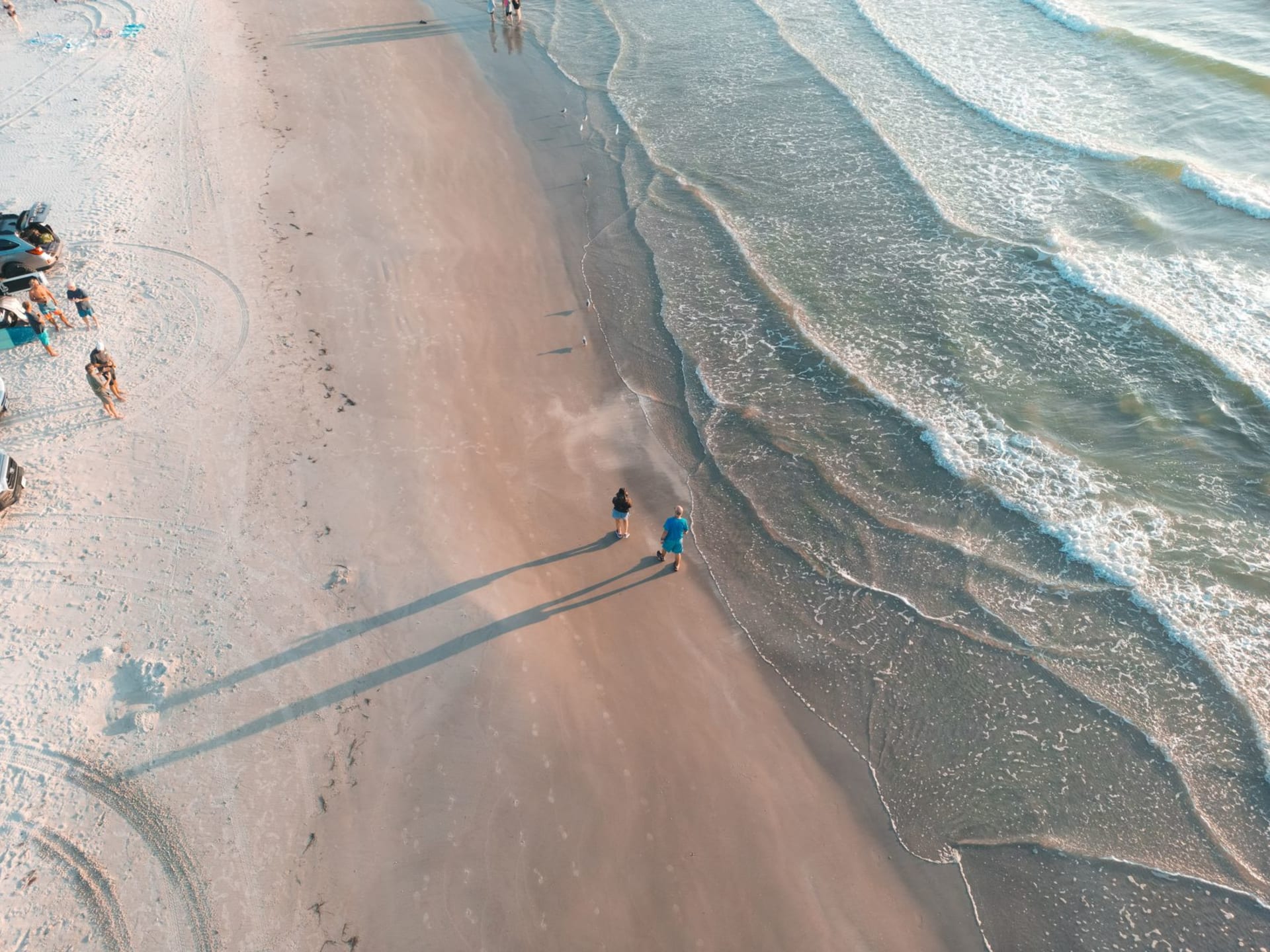
South Padre Island
"The water really is that color. I checked the photos twice because I assumed the phone had filtered it."
South Padre Island exists in a strange dual state: during March it becomes one of the more notorious spring break destinations in North America, and during every other month it’s a quiet barrier island with excellent birding, warm Gulf water that’s genuinely teal in good light, and a density of wildlife that rivals the Florida Keys. I came in mid-November, which is to say I came at the right time, and spent four days alternating between the beach and the wetlands on the bay side and barely saw another non-local the entire visit.
The island is narrow — rarely more than half a mile wide — and long, with the developed southern end giving way to undeveloped national seashore to the north. The Laguna Madre on the bay side is one of the hypersaline lagoons in the world and one of the best winter birding habitats in North America. The Gulf side is beach, consistent and unpretentious.
The Gulf Water and Why It’s Different Here
The transparency of the water at South Padre surprised me. The northern Gulf coast — Houston, Galveston, Corpus Christi — runs murky with river sediment from the Mississippi system. But South Padre sits south of where that influence fades, closer to the Mexican coast of Tamaulipas, and the water runs clear and warm. In November it was 78 degrees and the visibility was ten feet. I swam out past the first sandbar and looked down at the bottom with my mask and saw sand dollars moving slowly along the floor.
The waves are gentle most of the year — the island sits inside the arc of the Gulf, protected from the largest Atlantic swells — which makes the beach accessible in ways that Atlantic coast beaches aren’t always.
Birding the Laguna Madre
South Padre sits on the Central Flyway, one of the four major North American bird migration corridors, which means that in spring and fall the island functions as a landfall for birds crossing the Gulf of Mexico. They arrive exhausted and drop into the first available vegetation — sometimes in such concentration that the trees seem to move.
The World Birding Center at the south end of the island operates a series of elevated boardwalks over the bay wetlands. I walked them at dawn on consecutive mornings and counted species without trying very hard: roseate spoonbills in the shallows doing their sweeping bill-motion, a flock of avocets working the mudflat in tight formation, a tri-colored heron standing absolutely still in grass so close I could have touched it without moving far.
A peregrine falcon sat on a piling for twenty minutes watching the shorebirds below it. The shorebirds paid attention but didn’t scatter. Everyone seemed to understand the terms of the arrangement.
Sea Turtle Inc.
A small rescue and rehabilitation center at the south end of the island works with Kemp’s Ridley sea turtles, the most critically endangered sea turtle species in the world, whose primary nesting ground is the coast of Tamaulipas just across the Mexican border. The center operates with the energy of an institution that knows it is doing genuinely necessary work.
Volunteer releases happen on the beach when rehabilitation is complete. I watched three turtles go into the Gulf on a late afternoon, each one hesitating at the waterline for a moment before the first wave took them, and then moving with a speed and purpose that made clear how inadequate land had been for them all along.
The Night Fishing Pier
The pier at the southern tip of the island extends several hundred feet into the Gulf and operates around the clock. Night fishing from the pier involves folding chairs, coolers, conversations that drift lazily between English and Spanish, and the occasional spectacular catch landed with the minimum of ceremony. I bought a cup of coffee from the pier bait shop at 10 PM and watched for an hour.
When to go: Late September through November and April through early June. March is spring break: avoid unless you are the target demographic. December through February is mild and quiet with excellent birding. Summer is hot, humid, and actively busy on weekends.