Americas
Texas
"I crossed into Texas expecting a cliché and found a landscape that humbled me."
The first thing you understand about Texas is that it is not one place. I came in from Monterrey on the Eagle Pass crossing, the Rio Grande barely a trickle in the August heat, and drove west through the Chihuahuan Desert toward Alpine. Four hours in, I had seen no city, no billboard, no chain restaurant — just creosote flats and distant volcanic mountains and sky so wide it felt architectural. By the time I reached Marfa, the light was going gold and I pulled over on the roadside and sat on the hood of the car and thought: I had no idea Texas looked like this.
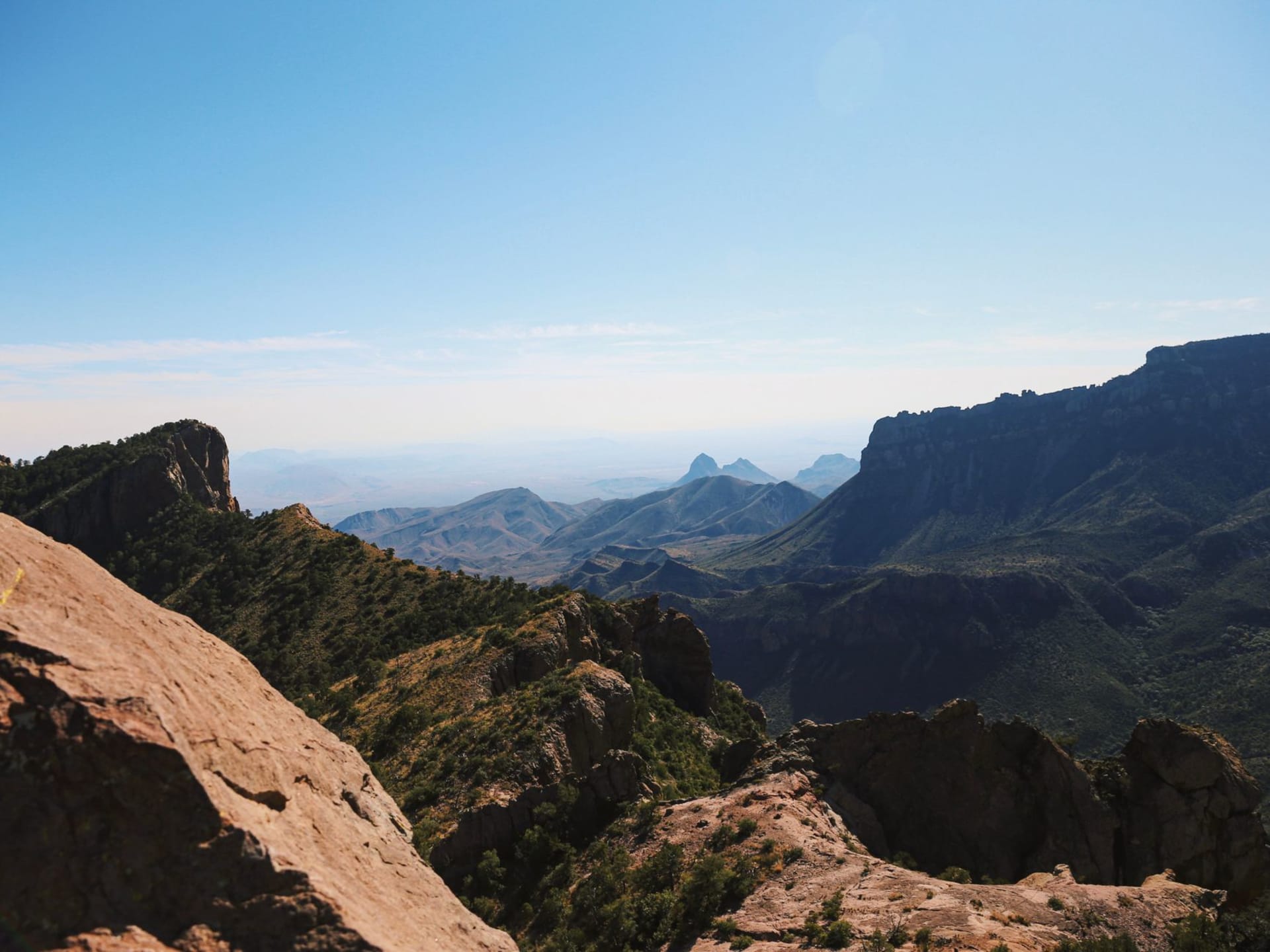
That stretch — Marfa, Alpine, the Davis Mountains, and then the plunge into Big Bend — is one of the great American road trips that nobody outside the country seems to know about. Big Bend National Park sits on a bend of the Rio Grande where the Chisos Mountains rise abruptly from the desert floor, creating a pocket of pine forest inside an otherwise arid landscape. I hiked the South Rim trail in the pre-dawn dark with a headlamp, arrived at the edge just as the sun cracked the horizon, and looked out over two hundred miles of Mexico. A golden eagle rode the thermals below me. I have stood on a lot of viewpoints. That one was different.
Texas also does food better than most of the country is willing to admit. Central Texas barbecue — brisket smoked low and slow over post oak for fourteen hours, served on butcher paper with pickles and white bread and nothing else — is its own cuisine. At Snow’s BBQ in Lexington, which opens only on Saturday mornings, I was in line at six-thirty for a meal that justified an entire detour. San Antonio’s Southtown neighborhood runs from breakfast tacos at Rosario’s to mezcal cocktails at midnight in a converted warehouse. And Austin, for all its tech-inflected self-mythology, still has the TexMex counters and honky-tonk bars and live music porches that made it worth visiting before the magazine profiles arrived.
When to go: March and April for wildflower season in the Hill Country — bluebonnets turn the highways violet in a way that should be corny but is genuinely moving. October through November is the best time for Big Bend, when the desert heat breaks and the light turns extraordinary. July and August in the interior are brutal and should be avoided unless you have a very strong reason.
What most guides get wrong: They collapse Texas into Austin, which is roughly like collapsing France into Paris. The state’s most compelling geography is in the far west — the Trans-Pecos region that most people from outside never reach. If you have a week, spend less time on Sixth Street and more time driving toward the Chisos Basin with a tent and a cooler. Texas as a concept is exhausting. Texas as landscape is one of the most surprising things I have encountered in North America.