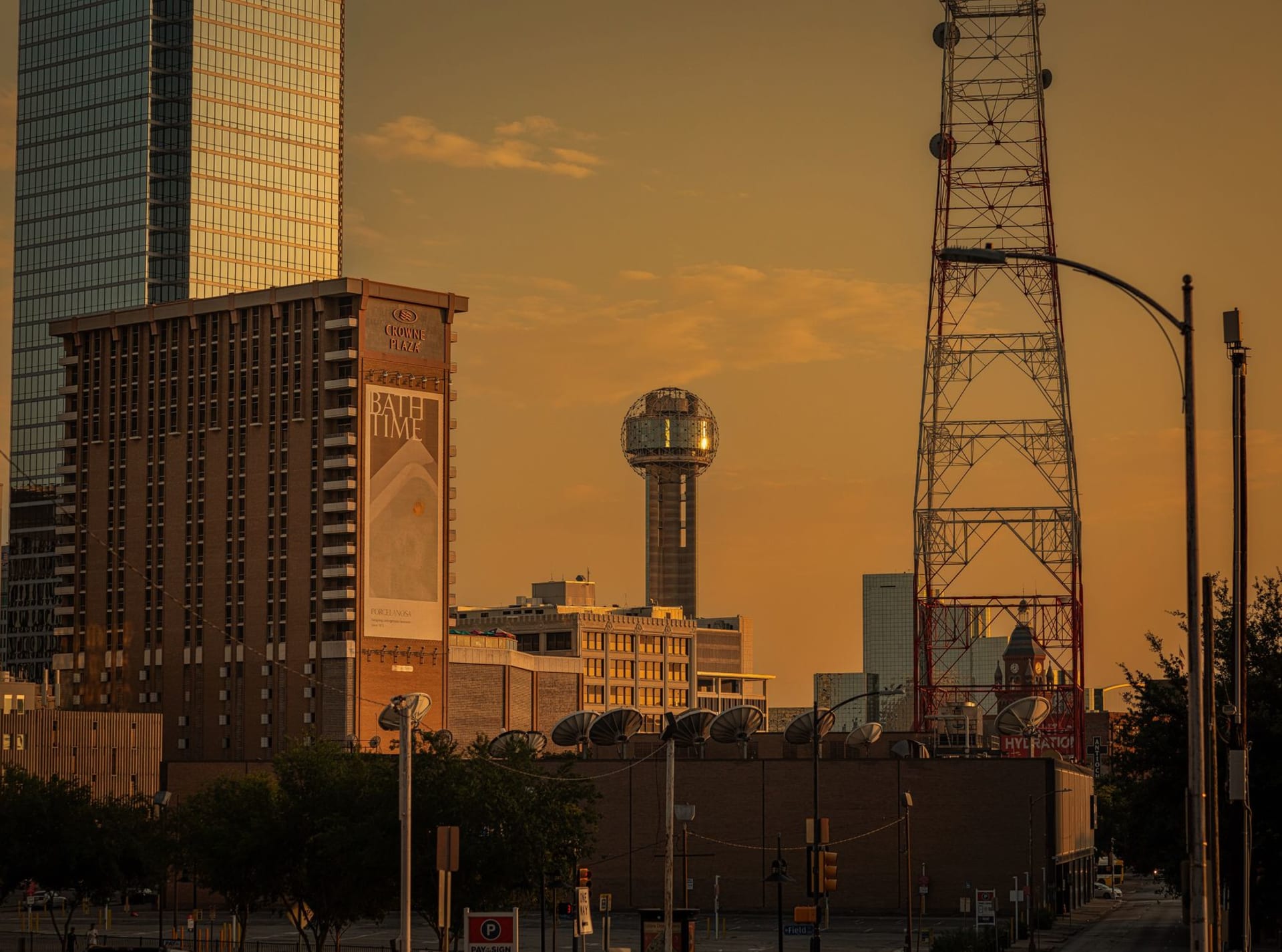
Dallas
"Dallas has been trying to convince people it's a real city for decades. Somewhere in the last ten years, it stopped trying and became one."
Dallas occupies an interesting position in the hierarchy of American cities — substantial, architecturally ambitious, financially powerful, and long dismissed by coastal culture as a place that only happens between flights. The dismissal has always contained some truth and missed the larger point, which is that Dallas has been quietly building one of the better arts ecosystems in the American interior while the rest of the country wasn’t paying attention.
I came with low expectations, which is the correct approach to any city whose reputation precedes it in the wrong direction. I left with a list of reasons to return.
The Arts District and Its Ambitions
The Dallas Arts District is the largest contiguous urban arts district in the United States — seventeen city blocks encompassing multiple performance venues and museums that were built or renovated between 1984 and 2009 with a level of architectural ambition that still surprises. Renzo Piano’s Nasher Sculpture Center sits behind a grid of steel louvers that filter the Texas sun onto garden paths where Rodin and Serra and Bourgeois occupy the same limestone-paved outdoor space. The building itself earns its reputation.
The Dallas Museum of Art, free to enter, has one of the stronger pre-Columbian collections in the country alongside an Impressionist wing and an Asian art section that rewards unhurried time. I spent three hours and made a list of galleries to return to.
The Winspear Opera House — the most architecturally dramatic of the district’s buildings, a red disc of carbon fiber and glass shading an outdoor plaza — is worth looking at even if nothing is scheduled. Foster + Partners designed it to provide shade for a theater in a city that needs shade for a theater, which is an obvious problem solved with unusual elegance.
Dealey Plaza and the Weight of November
Dealey Plaza is a small triangular park at the western edge of downtown where President Kennedy was assassinated in November 1963. The space is smaller than memory and photograph suggest. The Texas School Book Depository building — now the Sixth Floor Museum — looks directly down onto Elm Street’s curve with an immediacy that makes the historical record physically legible.
The museum inside handles the assassination and its aftermath with serious archival care: the Zapruder film in multiple formats, contemporaneous photographs, the investigation documents. I spent two hours and emerged into the Dallas afternoon with a specific kind of exhaustion that serious history produces.
Deep Ellum After Dark
Deep Ellum is the live music and bar district east of downtown — the place where Dallas blues and jazz developed in the 1920s and where the nightlife scene has concentrated through several cycles of decline and revival. The current iteration is denser and more curated than previous ones, with breweries and cocktail bars mixed among the live music venues.
On a Tuesday night, Lia and I found a place where a four-piece was playing Texas blues to an audience of about forty people, all of them leaning into it. The bass player was working with her eyes closed. The drummer barely moved, which is the thing that’s hardest to learn.
The Bishop Arts District
Southwest of downtown, the Bishop Arts neighborhood operates on a scale opposite to the Arts District’s ambitions — small independent restaurants and shops in converted bungalows and storefronts, walkable in a way that most of Dallas is not, with the kind of programming that indicates a neighborhood still figuring itself out rather than one that has arrived. The Ethiopian restaurant we found on a side street served injera and four different stews in portions sized for people with real appetites.
When to go: March through May and October through November. Dallas summers are genuinely severe — above 100 degrees for weeks at a stretch, with a heat index that makes outdoor exploration theoretical. Winter is mild by any northern standard: rarely below freezing, frequently sunny, occasionally confused by a brief ice storm that closes the city for two days with the solemn drama of a natural disaster.