Big Bend
"Three hours to the nearest hospital. Four hours to the nearest decent grocery store. This is the point."
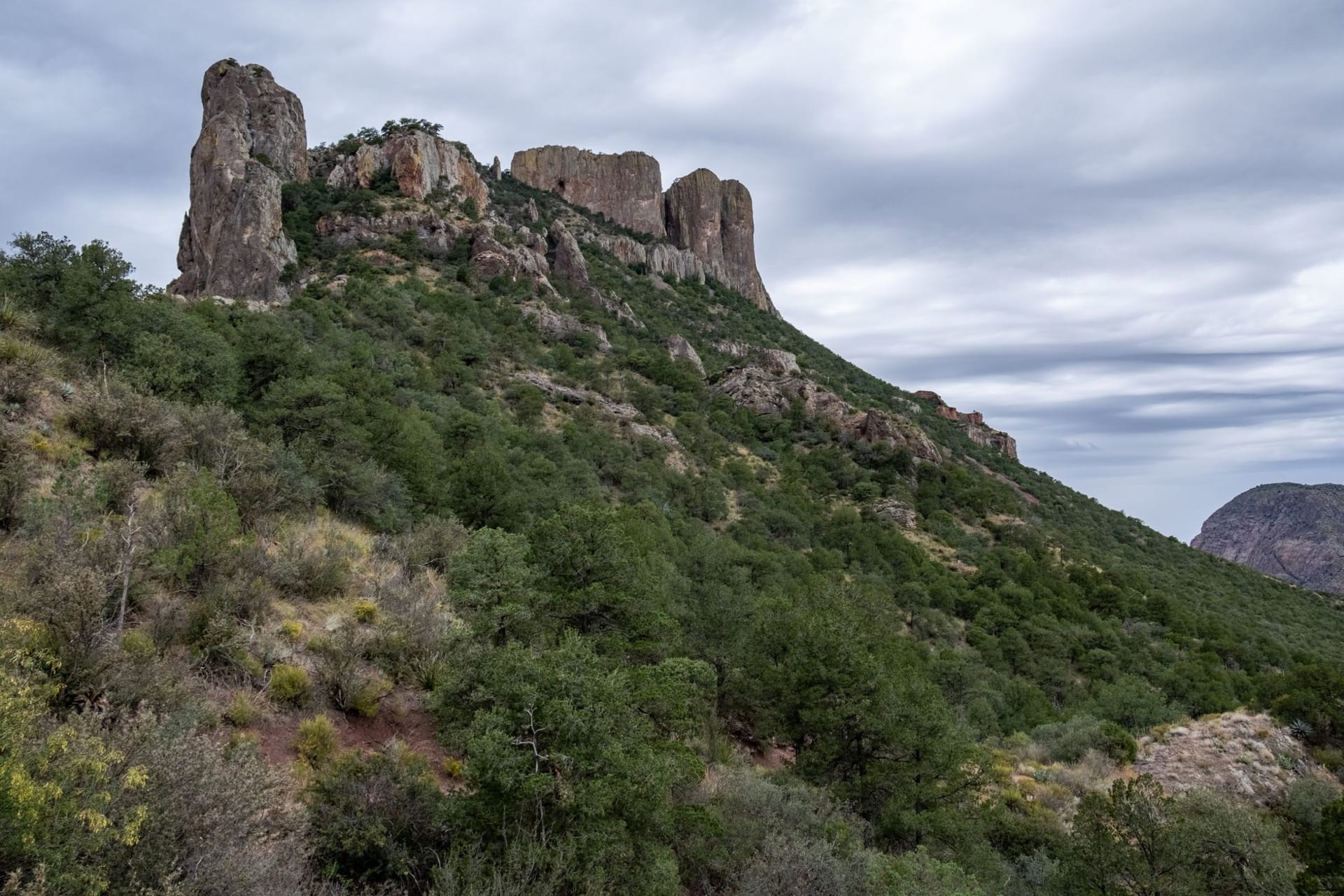
Big Bend sits in the elbow of the Rio Grande where Texas bends south and then back north into the Chihuahuan Desert. It is far from everything in a way that takes an hour or two of driving to fully register — the towns thin out, the radio stations drop off one by one, and eventually even the sense that civilization is nearby fades into the same beige distance that recedes in every direction. This is not a failure of infrastructure. It is the destination.
I drove in from the east, from Marathon, on a morning when the Chisos Mountains appeared in the windshield as a blue-grey mass that looked painted rather than real. The distance does strange things to scale out here. Everything looks closer and smaller than it is.
The Desert That Changes Hourly
Chihuahuan Desert light is one of those things that photographers have spent decades chasing and still can’t fully capture. In the early morning, it’s cool blue over ochre rock. By midday it’s white and flat and you retreat to whatever shade you can find. At 4 PM everything goes golden and long-shadowed in a way that makes even a gravel parking lot look like a Ansel Adams print. At night, if you walk away from the visitor center, the darkness is absolute and the sky resolves into density — not just the bright stars but the dim ones behind them, the clouds of them, the actual arm of the galaxy visible as a brushstroke of light.
I sat on a rock outside my tent at midnight with no light source and watched a meteor cross from one end of the sky to the other, slowly enough to follow with my eyes the whole way.
The Santa Elena Canyon
You hike in from a trailhead at the end of Ross Maxwell Scenic Drive, crossing a creek that may or may not have water depending on recent rains. The canyon opens around a bend with the Rio Grande moving dark and green at the bottom and the walls rising sheer and impossible on both sides — 1,500 feet of Cretaceous limestone that spent 135 million years being laid down as seafloor before the river cut through it. Mexico is the left wall. The United States is the right wall. The river doesn’t know or care.
I sat at the canyon mouth for a long time doing very little. Swallows darted in and out of holes in the cliff face. A canyon wren called somewhere above, its descending trill bouncing off stone.
Hot Springs and River Logic
The historic hot springs at the park’s eastern edge involve a short hike to a small concrete tub built in the 1920s where thermal water seeps out at 105 degrees directly into the Rio Grande. You soak in the hot water and watch the colder river slide past a few feet away. The arrangement is pleasantly absurd. On a cool morning in November, with steam rising off the pool and a great blue heron standing on the Mexican bank, it feels like the exact right place to be.
The Terlingua Ghost Town
Just outside the park’s western entrance, Terlingua is a former mercury mining settlement that died in the 1940s and has been slowly repopulated by people who wanted to live somewhere extremely remote. The Starlight Theatre serves cold beer and surprisingly good green chile stew in a room with string lights and a porch where everyone ends up by 9 PM. There is nowhere else to be, which concentrates the conversation.
When to go: October through April. Summer means 110-degree days with no shade and genuine danger for hikers. Thanksgiving week is popular but the park is large enough to absorb it. Christmas and New Year’s are quietly beautiful and less crowded than you’d expect.