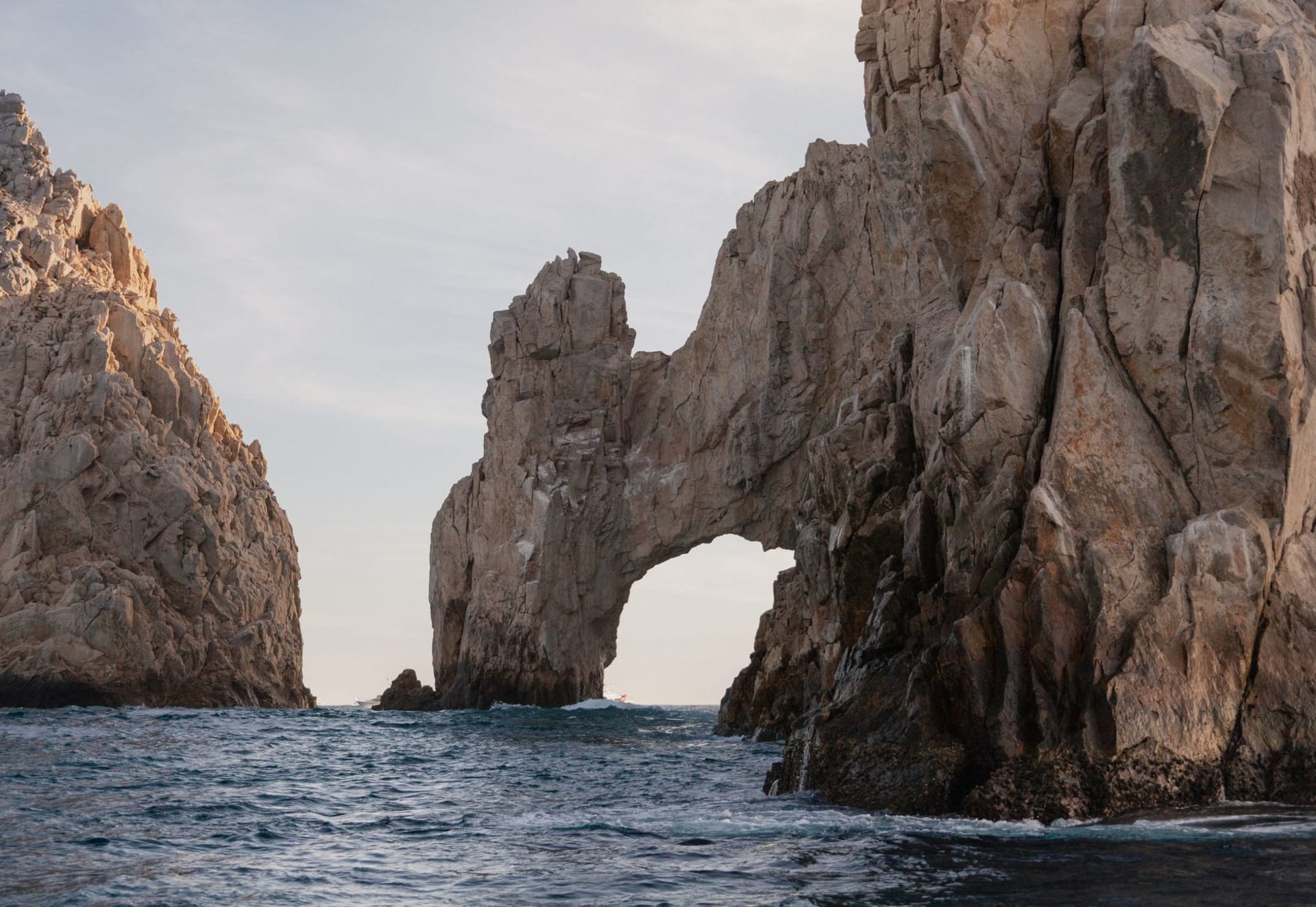
Cabo San Juan del Guía
"Two beaches, one hammock, and the specific sound of waves hitting both sides of a headland at once."
Nobody tells you how much you’ll sweat before you arrive. The trail from El Zaino takes two hours through jungle so thick and humid that your shirt is soaked through before you’ve cleared the first ridge. You follow a red-dirt path past ceiba trees, past howler monkeys crashing through the canopy above, past a stream crossing where I stood for longer than necessary just to feel the cold water against my ankles. Then the trees thin and you step out onto a headland and the Caribbean opens in both directions, and suddenly the sweat doesn’t matter at all.
The Two-Beach Geometry
What makes Cabo San Juan feel earned rather than just beautiful is its geometry. To the right, Playa Brava faces open ocean — waves slam the rocks in white explosions and swimming is prohibited for good reason. The water has a dark-blue weight to it. To the left, Playa del Cabo curves inward like a cupped palm, the water lighter and calmer, greenish over the sand. You can stand on the rocky promontory between them and watch both seas simultaneously, which sounds like a small thing until you’re actually doing it.
The thatched restaurant on the point serves fried fish, cold Águila beer, and a fish soup that I ate twice in two days because nothing else made sense. The price is what you’d expect for a place with no road access — not ruinous, but clearly accounting for the mule that carried the supplies in.
Hammock Living
Accommodation at Cabo San Juan runs from camping under palms to the famous hammocks — fabric slings strung beneath a large palapa right on the headland. I spent one night in a hammock, which is to say I spent about three hours awake watching phosphorescence in the water below and then approximately four hours in a kind of half-sleep where the sound of waves entered my dreams without disrupting them. Whether that counts as rest is a philosophical question. It counted as something.
The Morning Before the Day-Trippers Arrive
The park limits daily visitors and closes periodically for environmental recovery, but even within those limits there’s a window of quiet between 5:30 and 8:00 a.m. when the overnight crowd has the place almost entirely to themselves. Lia and I walked both beaches in that light — that low-angle Caribbean light that turns everything gold and slightly unreal. By nine the first day-hikers were arriving, and by ten the palapa was full. But we’d already had the version of the place I’d imagined.
The hike back felt easier than the hike in, which doesn’t make physical sense. I think it’s a morale effect.
When to go: December through March is the dry season and the clearest water. Avoid Semana Santa and Colombian public holidays when the park can hit capacity and reservations (now mandatory) sell out weeks ahead. The park closes periodically — check Parques Nacionales Naturales de Colombia’s website before planning, because they’re not joking about the closure dates.