Americas
Tayrona Coast
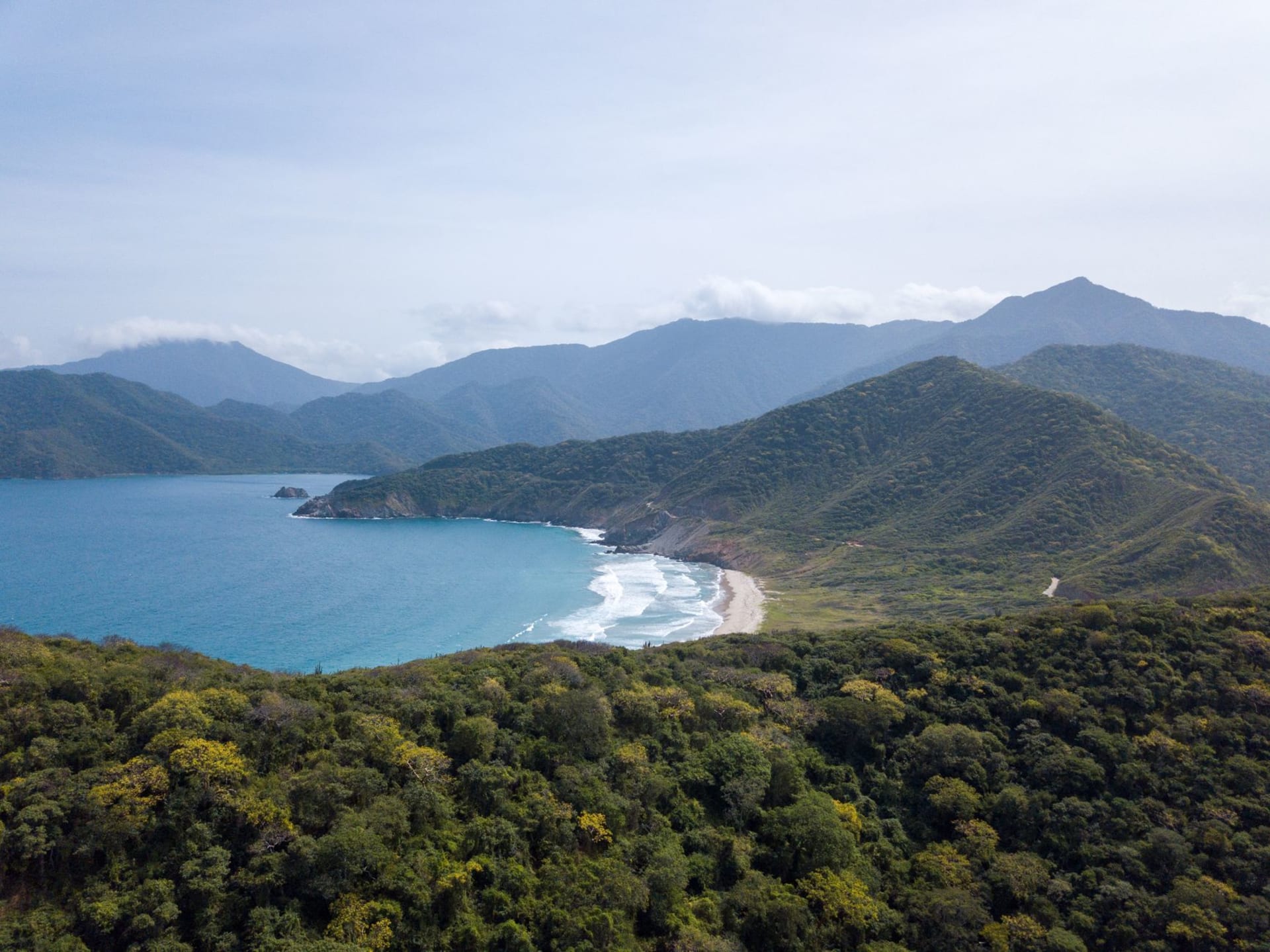
"The jungle here doesn't stop at the treeline — it walks straight into the sea."
The first thing that hits you is the silence underneath the noise. The howler monkeys at dawn, the waves folding over smooth granite boulders, the wet heat pressing in from the canopy above — and then, threading through all of it, the absolute absence of road traffic. You reach most of Tayrona on foot, and that walk through the park — an hour or two of red dirt trail winding past cashew trees, past iguanas that don’t bother moving, past glimpses of the sea between the palms — functions as a kind of decompression chamber. By the time you reach Cabo San Juan, you’ve already let go of something.
Tayrona National Natural Park stretches along the Caribbean coast of northern Colombia, tucked between Santa Marta and the base of the Sierra Nevada — the highest coastal mountain range on earth. That geography creates something unusual: beaches that feel genuinely remote, backed not by flat scrubland but by ridges of cloud forest rising sharply to over five thousand metres. The boulders are the thing you don’t expect. Enormous granite outcroppings, smooth and rust-coloured, divide the coves and give Tayrona its particular visual grammar. You swim between them at Arrecifes — carefully, the current is unforgiving — and dry off on them at La Piscina, where the water is calm enough to float without thinking. The food at the park camps is simple: fried fish, patacones, coconut rice. You eat it at plastic tables under thatched roofs and feel extremely correct about your life choices.
Outside the park, Palomino is where the coast starts to breathe differently. Backpackers, Colombian families, a handful of surfers, everybody sharing the same long grey-sand beach while the Sierra Nevada watches from behind the treeline. Tubing down the Palomino River into the sea is the kind of activity that sounds like a tourist gimmick until you’re actually doing it, river-cold water giving way to ocean warmth, the mountains above you the whole time.
When to go: December through March is the dry season on the Caribbean coast — the clearest skies, the calmest seas, the least mud on the trails. July and August offer a short secondary dry window. Avoid October and November if you want the trails walkable; the park sometimes closes sections entirely after heavy rains.
What most guides get wrong: They treat Tayrona as a day trip from Santa Marta or a single-night camping stop. The park only makes sense when you slow down inside it. Two nights minimum at Cabo San Juan — one to recover from the walk in, one to actually be there. The Kogi and Wiwa Indigenous communities have lived in and around the Sierra Nevada for millennia; the park exists in negotiation with them, not despite them. That context matters, and most guides skip it entirely.