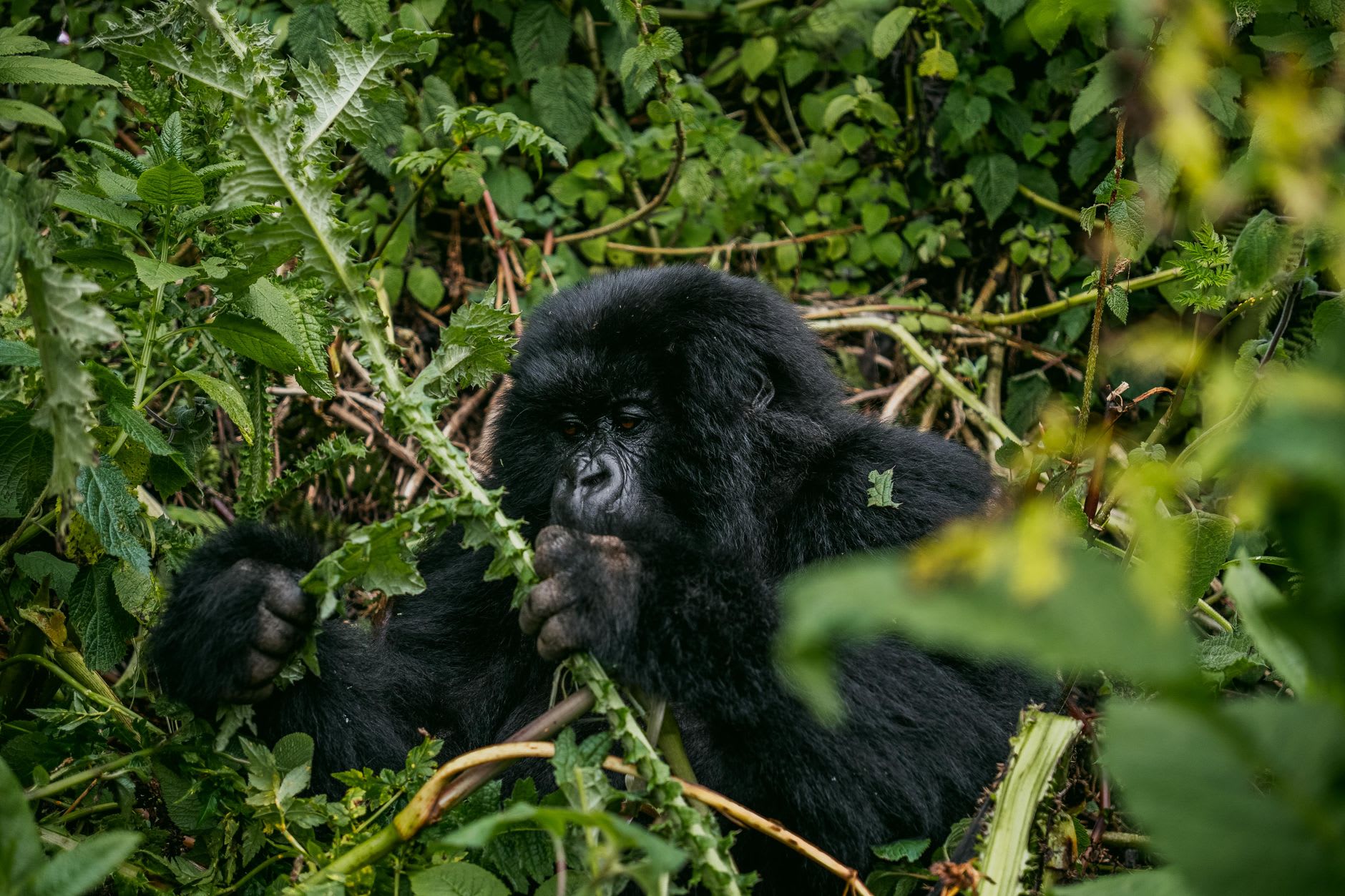
Mahale Mountains National Park
"I have never worked so hard to reach anywhere, and never regretted it less."
Mahale is the hardest place I have ever traveled to, and I would do the whole journey again tomorrow. There are no roads in. You fly in a small plane to a dirt strip, then transfer to a boat and chug for an hour or more along the shore of Lake Tanganyika, the second-deepest and second-oldest lake on earth, until a wall of forested mountains rises straight out of the water in front of you. There is no town, no road, no phone signal — just the lake, the peaks, and somewhere up in that dense green, the chimpanzees you came halfway across a continent to find. Lia called it the edge of the map, and for once the cliché was simply accurate.
The Chimps of Mahale
The chimpanzees are the reason Mahale exists as a park. A community here has been studied by Japanese primatologists since the 1960s, which means these particular apes are habituated to human presence without being fed or tamed — they simply tolerate us, on their terms, in their forest. Tracking them is genuine work. You set off after breakfast with a guide who reads broken branches and fresh dung and distant pant-hoots the way I read a menu, and you climb. The forest is steep, humid, and tangled, and there were stretches where I was hauling myself up by roots and quietly questioning every life decision that had led me here.
And then, suddenly, there they are. We crouched on a slope while a whole family went about its afternoon a few meters away — a huge male reclining like a bored emperor, mothers grooming, juveniles crashing through the canopy and dropping to wrestle in the leaf litter. One young chimp stopped, looked directly at me for a long moment, and then lost interest with an almost human shrug. I have been close to a lot of wild animals. Nothing prepared me for the unsettling intelligence in that gaze, the sense of looking at someone rather than something. We get one hour with them by strict rule, and the hour evaporated.
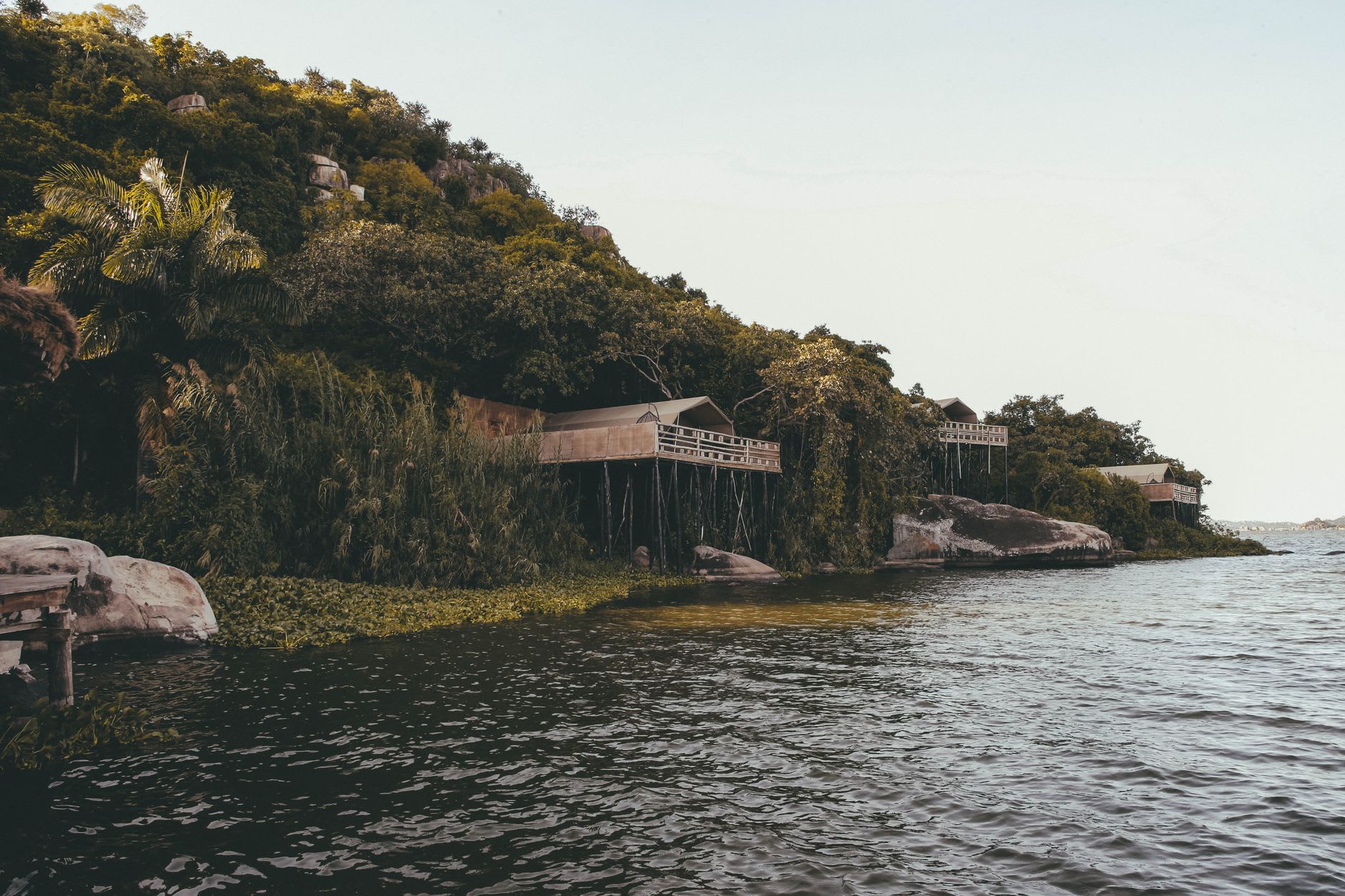
The Lake and the Forest
What nobody quite tells you is that Mahale would be worth the trip even without the chimps. Lake Tanganyika here is astonishing — water so clear you can see the cichlid fish darting over the rocks, a beach of pale sand where the forest meets the shore, and sunsets that turn the whole lake molten while the Congo coast smudges the far horizon. After the brutal climb of the morning, floating in that warm, clear water felt like a reward issued by the universe specifically to me.
In the evenings the camp runs on solar power and hushed voices. We ate by lamplight, listened to the forest tick and rustle behind us, and watched the lights of distant fishing boats string out across the black water. There is no nightlife, no spa, no distraction. There is the lake, the forest, the stars, and the knowledge that the chimps are out there somewhere in the dark, doing whatever chimps do at night. I slept the deep, complete sleep of someone who has earned their exhaustion honestly.
Practical Notes
Mahale is for the dry season, roughly May to October, when the chimps tend to come lower down the mountain and tracking is more reliable. Getting here means a chartered flight and a boat transfer, so it is neither cheap nor quick — this is a place you commit to. Bring proper footwear and a real level of fitness; the tracking is strenuous and the heat is serious. Respect the rules to the letter, especially the mask and distance requirements, because these animals share enough of our biology to catch our diseases. Go while it is still this wild.