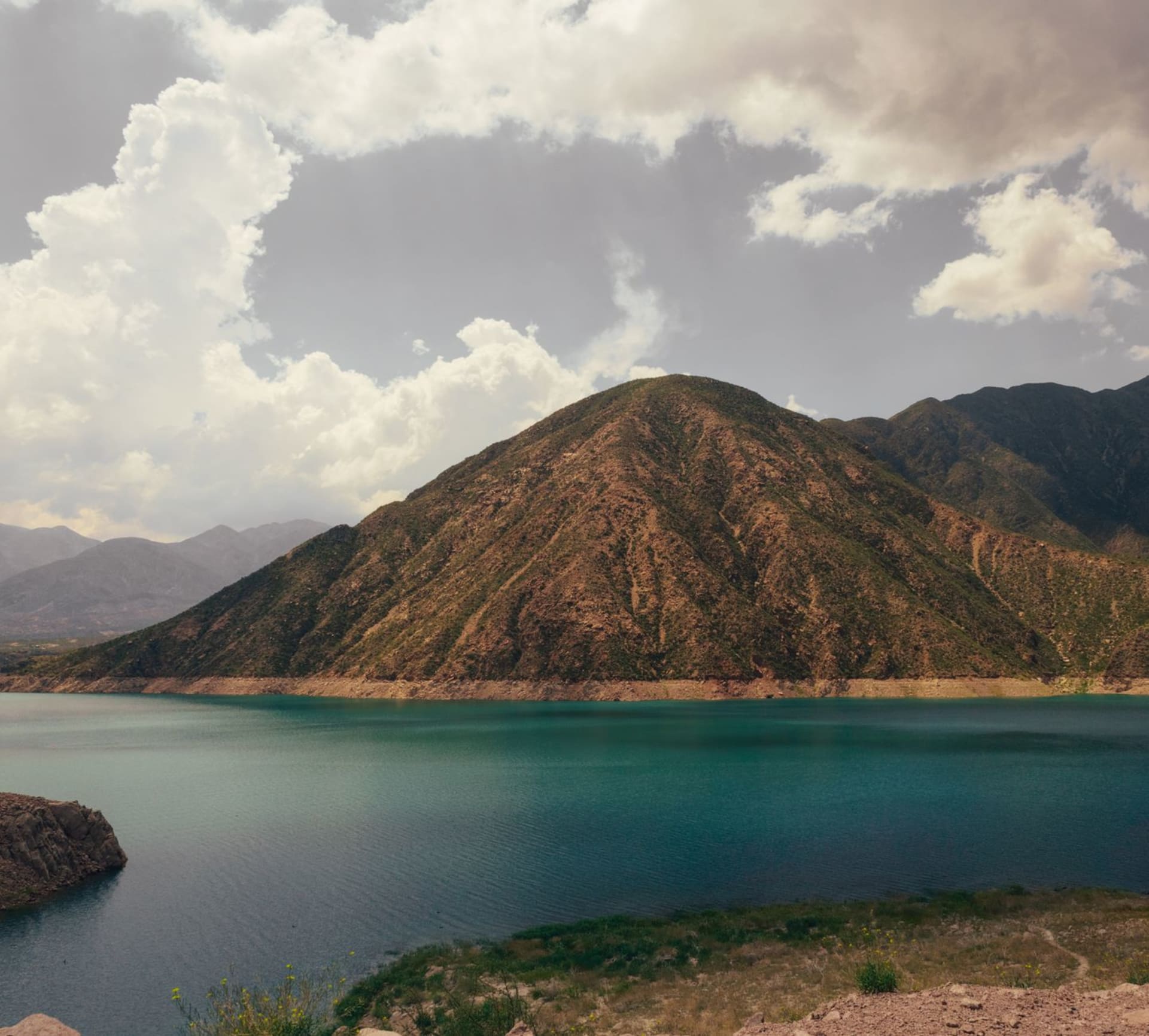
Wakhan Valley
"The Afghan villages were so close I could see smoke rising from their chimneys."
I turned south off the Pamir Highway at Ishkashim and everything immediately changed register. The Wakhan is not on the way to anything else — it terminates in a high glaciated corridor with no onward crossing — which means the people who come here chose it specifically. The road follows the Panj River and across that brown, fast-moving water is Afghanistan, perpetually close, never reachable. That proximity sets the emotional tone for the whole valley.
Yamchun and the Khanaqah
The fortress at Yamchun is one of those ruins that resists easy chronology. Built somewhere between the 3rd and 8th centuries, depending on which account you trust, it sits on a ridge above the valley with the Hindu Kush filling the southern horizon. I climbed to it in the mid-morning when the light was still flat enough to read the stone clearly, and from the top I could see the geometry of the whole valley — the river splitting the two countries, the apricot orchards below, the brown-green terraces where people were irrigating by hand from channels that have been in use for longer than most nations.
Below the fortress, Bibi Fatima hot springs pipe sulphurous water into a small stone bath cut into a hillside. The water was blood-temperature and smelled sulfurous and I stayed in it much too long staring at the mountains.
The Wakhi People
The Wakhan is home to the Wakhi — a people whose territory was divided by colonial border-drawing between Tajikistan, Afghanistan, Pakistan, and China, and who seem largely indifferent to this administrative fact. Culturally they are distinct from Tajiks and Pamiri Ismailis both, though the faiths and languages blend at the edges. The villages here are small enough that there’s no anonymity: you’re noticed, evaluated, and then welcomed with a directness that urban travel rarely produces.
A family in Langar invited us in for tea that turned into dinner. The grandmother spoke no Tajik, only Wakhi, and communicated everything she needed to through the insistent placement of food in front of us. Chapati, yak butter, a bowl of dried mulberries. The room was dark and smoky and smelled of animals and fuel and something herby I couldn’t identify.
Langar and the Petroglyphs
At the valley’s more accessible end, near Langar, a hillside holds thousands of petroglyphs: ibex, hunters, snow leopards, geometric patterns whose meaning has been argued about and not resolved. They date from the Bronze Age through the early Islamic period, which means some are 4,000 years old and others might be 1,000 — and without specialist training you’d have difficulty telling them apart. I found this oddly comforting. Not everything needs to be labeled.
Getting Here
From Ishkashim, shared jeeps run up the Wakhan periodically. The road is unpaved and rough past Yamchun. Homestays are your only accommodation option in the upper valley, which is not a hardship. You need a GBAO permit. Some sections near the border require an additional military permit — confirm current requirements in Khorog before you go.
When to go: July through early September. The upper Wakhan is snow-locked much of the year, and spring roads are unreliable. Late August offers the highest probability of clear mountain views and passable tracks to the more remote villages.