Asia
Tajikistan
"The altitude alone rewired how I thought about distance."
I crossed into Tajikistan from Kyrgyzstan on a shared taxi that smelled of diesel and dried apricots. The border formalities were perfunctory — a bored official, a stamp, and then suddenly the Pamirs opened in front of us like something out of a geography textbook that forgot to scale things correctly. The peaks here don’t feel like mountains. They feel like the ground simply decided to keep going up. By the time we reached Murghab, the highest town on the route, I was breathing with a slight deliberateness, rationing each inhale without quite realizing it.
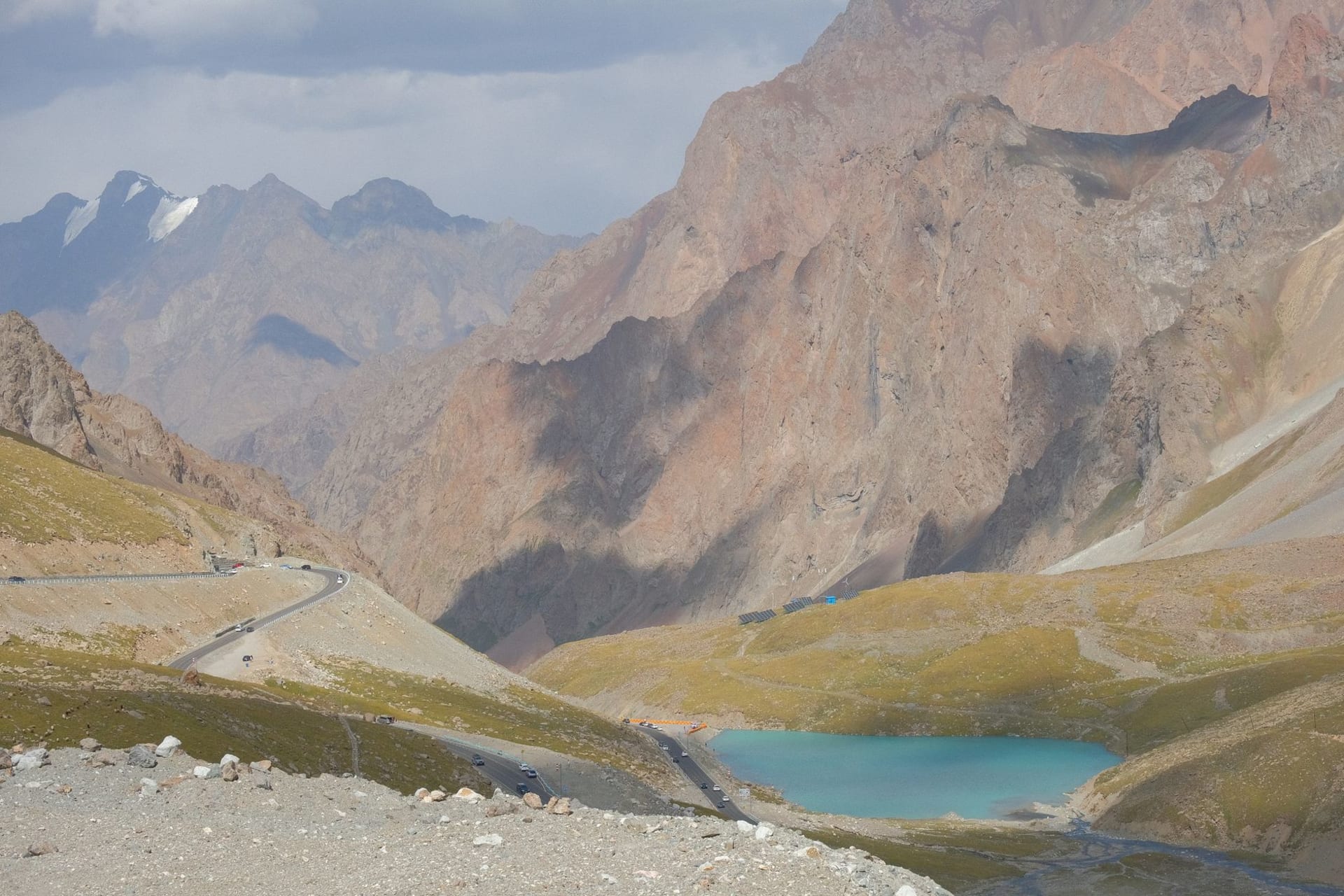
The M41 — the Pamir Highway — is one of the great overland routes on earth, and unlike most things that carry that reputation, it actually delivers. The road isn’t always good. There are sections where “road” is an optimistic term for a compressed dirt track at the edge of a thousand-meter drop. But the landscape on either side makes you forget to be afraid: lakes so turquoise they look artificially coloured, plateaus that stretch so flat you can watch a truck approach for thirty minutes before it reaches you, valleys where the only moving things are yaks and the occasional eagle. Dushanbe, the capital, is underrated as a starting point — it has a genuinely pleasant tree-lined centre, a strong bazaar, and samsa that I still think about.
The food across Tajikistan is Central Asian in character — plov, mantu, shorpo — but the lamb here has a particular quality that comes from high altitude grazing, and the flatbread emerging from a tandoor in a roadside teahouse at 3,500 metres might be the most honest thing I have eaten in years. People on the Pamir Highway are remarkably hospitable in a way that doesn’t involve transaction. A family in Wakhan Valley invited us in for tea that became dinner that became a night on felt mats under a wall of Soviet-era photos. Nobody asked for anything.
When to go: June through September is the only viable window for the Pamir Highway — passes are snowbound from October to late May. July and August are peak, with the best road conditions but more overlanders on the route. June and September offer thinner crowds and the same landscapes, though evenings at altitude turn cold fast.
What most guides get wrong: They frame Tajikistan entirely around the Pamir Highway as a transit route — something to tick off between Kyrgyzstan and Afghanistan. But the country repays slowing down. Ishkashim on market day, when Afghan traders cross the river into Tajikistan, is extraordinary. The Fann Mountains near Penjakent offer trekking that rivals anything in Nepal with a fraction of the infrastructure and none of the queues. Tajikistan is not a backdrop. It’s the point.