Dushanbe
"The city felt like a film set for a country still deciding what it wants to be."
I arrived in Dushanbe on a Tuesday afternoon when the heat was pressing down on Rudaki Avenue like a physical thing — dense, specific, smelling of diesel and the faintly sweet dust that comes off the plane trees lining every boulevard. Most people fly through on their way to the Pamirs. I kept telling myself I’d leave in two days. I stayed five.
The Avenue and Its Ghosts
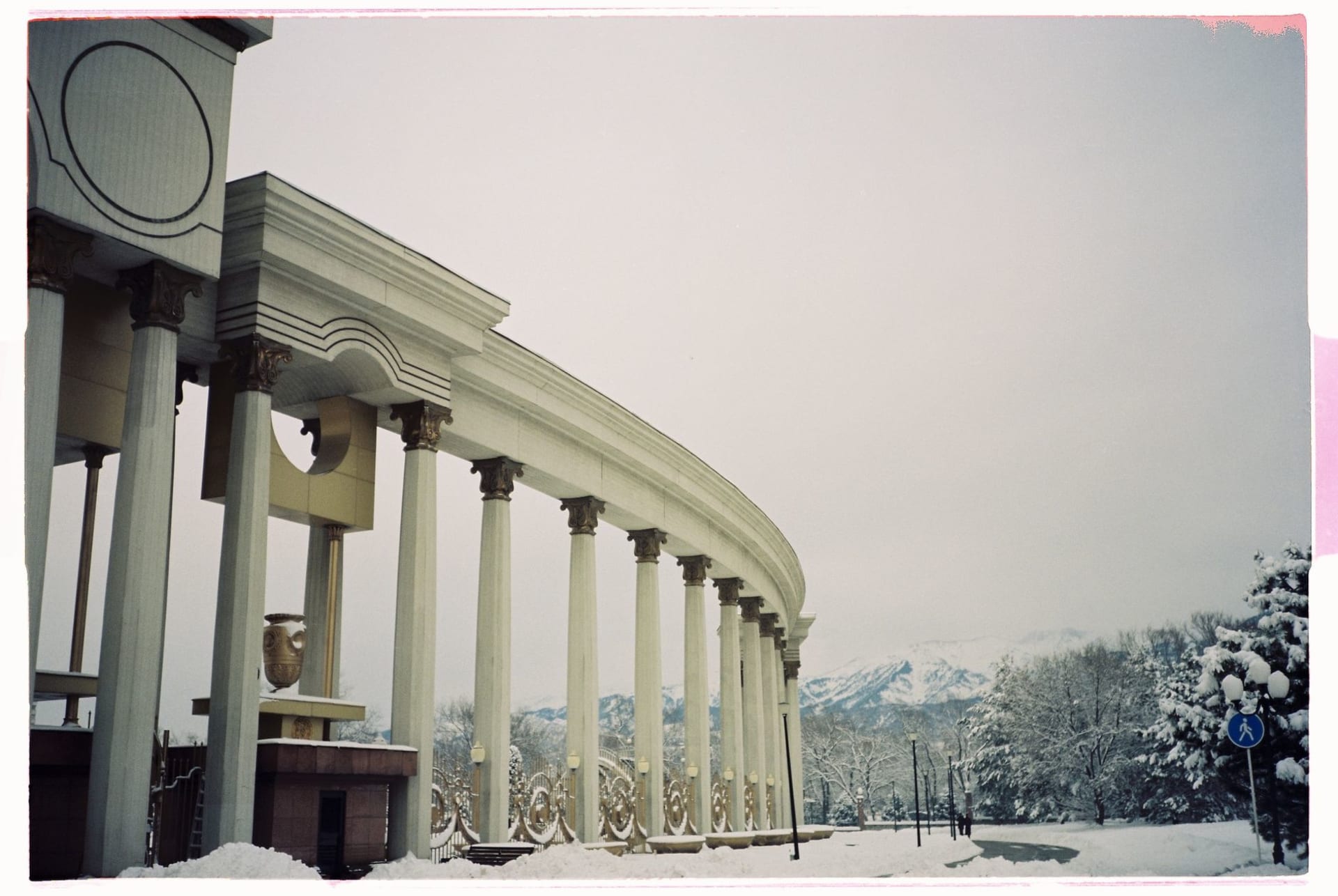
Rudaki Avenue is almost absurdly wide, as if designed for the kind of military parades that no longer happen here. The Soviet blueprint is obvious — grand symmetry, fountains that actually run — but the details have been re-embroidered. Statues of Ismoil Somoni, the founding hero of Tajik statehood, appear at intervals. Carved verses by the 10th-century poet Rudaki turn up on government buildings alongside mosaics of mountain landscapes that look slightly too bright, like postcards of themselves.
What I liked was the gap between the architecture and the life happening in front of it. Old men played chess on folding tables under the trees. Women in floral dresses and white headscarves sold dried apricots from plastic bags. The city operates on a human scale that its avenues suggest it shouldn’t.
Chorsu Bazaar and the Weight of Apricots
The central market is where Dushanbe stops performing and gets honest. I spent an entire morning there with no objective other than to eat slowly. A stall at the far end sold about twelve varieties of dried fruit from the Zeravshan valley — yellow sultanas with a sour back note, apricots the color of amber that tasted like something had been concentrating sweetness in them for months. The woman running it watched me try everything without comment, then charged me almost nothing.
The bread stalls are worth your attention too: round non loaves pulled from clay tandoors, crusted just enough that you can hear the snap when you break them. I ate two with a bowl of shorbo soup from a tea house on the far side of the market and felt entirely set.
The National Museum
The collection is uneven — some rooms feel under-lit and provisional, like the curation hasn’t quite finished making decisions. But the Sogdian artifacts stop you cold. Murals recovered from Penjikent dating to the 7th century show hunting scenes, feasts, mythological figures in vivid ochres and reds. The painters were responding to something specific in their world, and standing close to the glass you can feel the gap between them and us narrowing in an uncomfortable, interesting way.
Navruz and the Right Season
Dushanbe becomes a different city in March during Navruz, the Persian new year. The parks fill, sumalak porridge simmers in massive communal pots, and the restrained formality of the boulevards temporarily dissolves. Outside of that, spring and early autumn are the most workable temperatures — summers bite hard, winters are grey and cold.
When to go: Late March for Navruz celebrations, or May–June and September–October for comfortable temperatures and clear skies. Avoid July–August heat in the city; if you’re using Dushanbe as a Pamir base, time your arrival around your onward travel.