Zermatt
"The mountain doesn't need the village. The village very much needs the mountain."
The Peak That Shouldn’t Exist
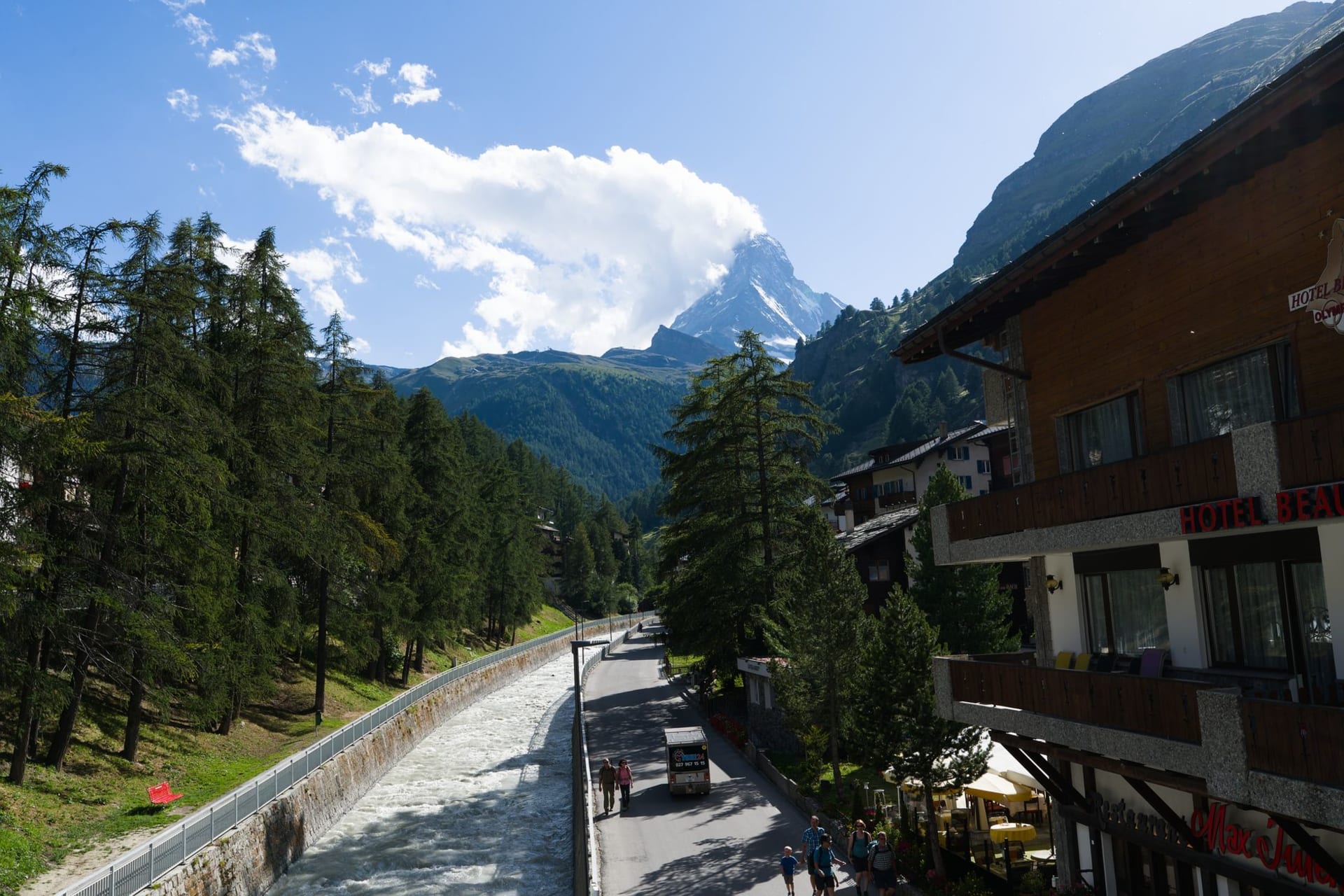
I’ve seen mountains. I’ve stood below the volcanoes of Mexico and hiked through the French Pyrenees as a kid. Nothing quite prepared me for the first time the Matterhorn appeared at the end of Zermatt’s main street — not gradually, not as part of a range, but as a single sharp argument against the sky. It’s almost too perfect, too steep, too photogenic to feel real. It looks like a logo of itself.
The village below it is car-free, which in practice means the air smells of pine and faintly of horse, and the only engines you hear are the little electric taxis ferrying luggage up cobblestones. That silence in a place so crowded with tourists is something I didn’t expect. It makes the mountains louder, somehow.
Going Up, Every Way Possible
Zermatt is a launching pad. The Gornergrat railway grinds up to 3,089 meters and deposits you on a terrace with the Monte Rosa massif on one side and the Matterhorn on the other — twenty-nine peaks over four thousand meters visible at once. I stood there in late September with almost no one around, breath visible, ears popping, and felt that particular vertigo that has nothing to do with height and everything to do with scale.
The Klein Matterhorn cable car goes higher still, to 3,883 meters, where there’s glacier skiing year-round and a tunnel drilled into the ice. Walking through blue-lit glacial walls with a group of Brazilian tourists in full ski gear was surreal in the best way. I bought a coffee inside the mountain. It tasted like altitude and absurdity.
The Village After Dark
Zermatt’s streets are narrow and lit warmly in the evenings. The fondue here is not a tourist gimmick — it’s what the restaurants know how to do, have done for generations, and do without apology. I ordered a half-and-half (half Gruyère, half Vacherin) at a place on the edge of the old quarter and ate it slowly while snow started falling outside. Lia said it was the most Swiss moment possible. She wasn’t wrong.
The bars stay open reasonably late. The Hennu Stall at the base of the slopes is famous, and for good reason — afternoon sun, cold beer, and people still in ski boots talking about lines they took. It’s joyful in a way that expensive places rarely manage.
The Walk That Doesn’t Require a Lift
Most people ride everything. I walked the Five Lakes trail in early October — a 9-kilometer loop past high-altitude lakes that each reflect the Matterhorn at a slightly different angle. The light in October is low and golden, the larches are turning amber, and there are just enough other hikers to feel safe but not crowded. At one point I sat on a rock above Stellisee for twenty minutes and did absolutely nothing. It’s the right response.
When to go: July through September for hiking and clear peak views. Late January through March for skiing with reliable snow. Avoid August if you want solitude — the trails are packed. Late September is the sweet spot: larches in gold, thin crowds, and the Matterhorn in that hard autumnal light that makes everything look carved.