Europe
Swiss Alps
"I expected postcards. What I found was altitude that rearranges your priorities."
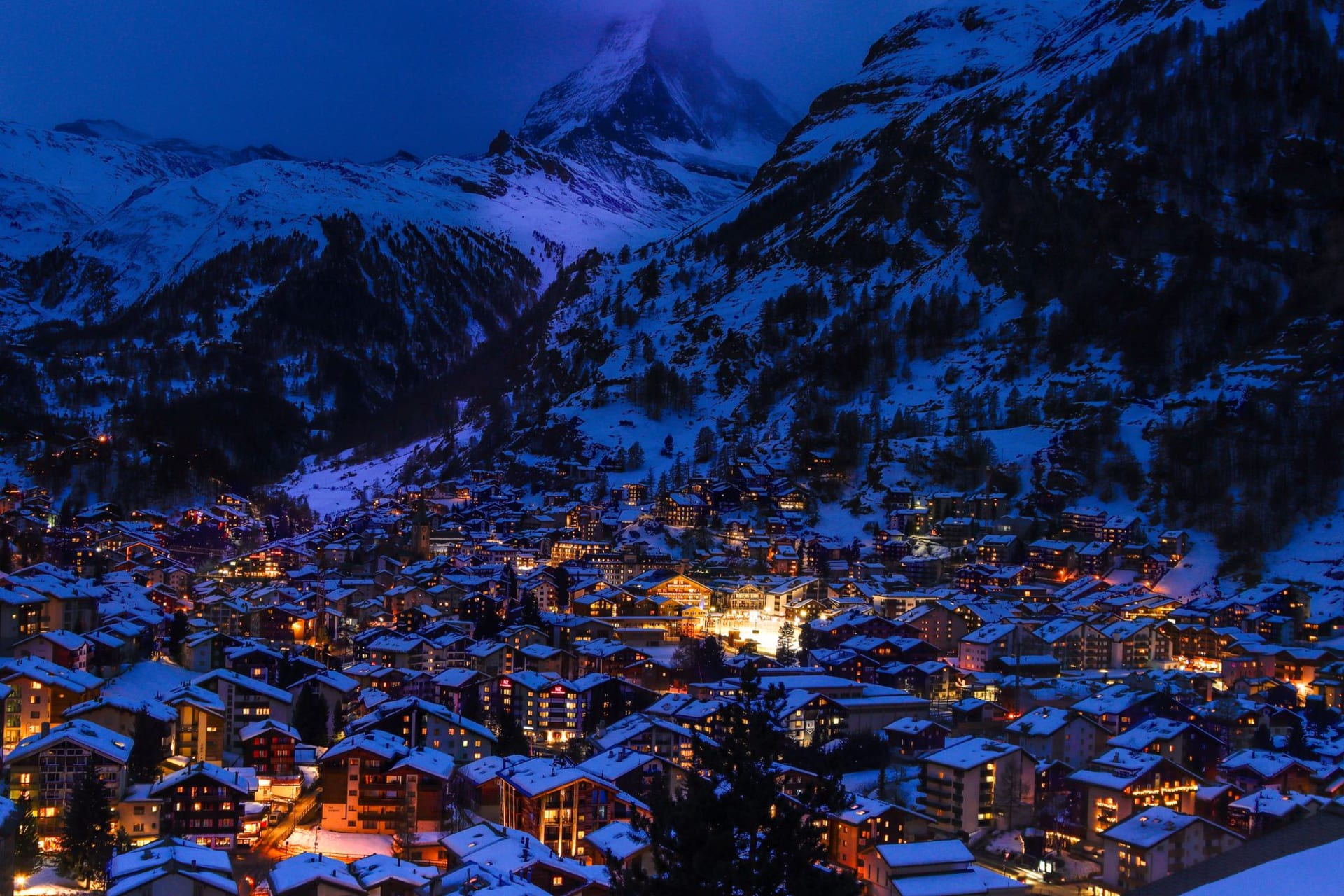
I arrived in Zermatt in November, which is the wrong season according to every ski resort and the right season according to me. The village was half-quiet, the tourist machinery not yet fully awake, and the Matterhorn was doing what the Matterhorn does — existing at a scale that refuses to be normalized no matter how many times you look at it. That pyramid of dark rock and white snow is genuinely surprising every time it comes into view around a corner, which is not something I can say about many famous landmarks. Most of them diminish on arrival. The Matterhorn compounds.
The Swiss Alps are a transportation system as much as a landscape. The Swiss have built trains that ascend to places no train should realistically reach — the Jungfraujoch at 3,454 meters, the rack railways threading up into Grindelwald and Wengen and Mürren, the Glacier Express crossing the Gotthard region in a slow diagonal that makes Switzerland’s width comprehensible. I took the train from Zermatt to Grindelwald over two days, changing at Visp and Interlaken, watching the Valais give way to the Bernese Oberland, and the shift in character between the two valleys — Latin and Germanic, wine and cheese — was as precise as a border on a map. In a country of four linguistic regions packed into a space smaller than Mexico’s Oaxaca state, the Alps are the dividing architecture. The mountains are not just scenery; they are the reason Switzerland is Switzerland.
The food in this part of the country requires honesty: fondue is better than you remember from the version you had elsewhere, raclette over a winter fire at a mountain hut is one of the simpler pleasures that traveling returns to you, and the rösti in the German-speaking valleys is comfort food that earns its place after a day at altitude. A glass of Fendant from the Valais — dry, slightly mineral, the kind of wine that works only in its place of origin — with a piece of aged Gruyère from a village fromagerie, eaten while looking at a mountain, is a combination that needs no improvement.
When to go: December to March for skiing (book accommodation months ahead). June to September for hiking with clear skies and wildflower meadows at altitude. My preference is October and November — fewer crowds, lower prices, the first snow on the high peaks, and the alpenglow in the early morning hitting the Matterhorn in an orange that you will not find in any other light.
What most guides get wrong: They treat the Swiss Alps as a luxury destination requiring luxury infrastructure. Yes, Switzerland is expensive — this is not a surprise. But the Swiss rail network is the point, not a complication. A regional transport pass, a trail map, and a willingness to eat lunch at a mountain restaurant rather than a hotel dining room changes the arithmetic entirely. The mistake is renting a car. The trains go everywhere that matters, and the view from the train is better than the view from the road.