The Other Engadine Village
Pontresina is six kilometers from St. Moritz. It might as well be a different country. Where St. Moritz has boutiques and helicopters, Pontresina has a main street of painted stone houses, a Romansh-speaking local culture that predates the ski industry by several centuries, and a slightly serious, slightly academic quality — it’s been a base for mountaineers and naturalists since the nineteenth century, and that energy is still present. The hotels here were built for people who came to climb things, not just look at them.
The village sits in the Bernina valley at 1,805 meters, facing east toward the Bernina massif. The light in the morning comes over the ridge and hits the painted facades of the old tower houses — the sgraffito patterns, geometric and floral designs scratched into the plaster — with a directness that makes the whole street look like it’s being deliberately illuminated.
The Bernina
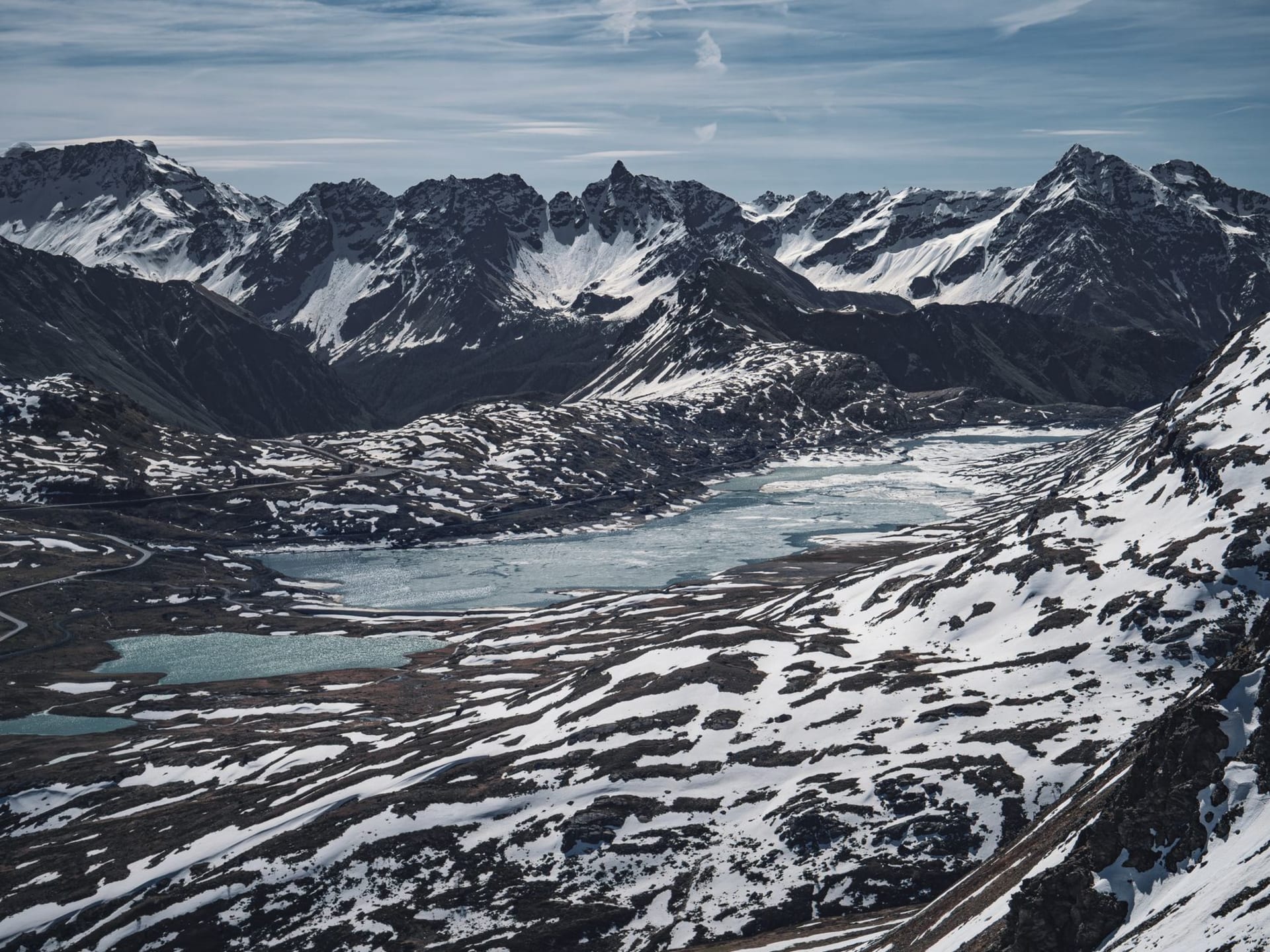
The Bernina massif, topped by Piz Bernina at 4,049 meters, is the highest peak in the eastern Alps. For non-climbers, the Diavolezza cable car at 2,978 meters and the Lagalb peak at 2,959 meters offer access to skiing in winter and extraordinary panoramas year-round. The glacier traverse from Diavolezza across the Pers Glacier — a guided winter ski route of about two hours — is something I’d place on a short list of the most surreal things I’ve done in the mountains. Blue ice, complete silence above the wind, the sense of being in a landscape that predates human presence by an inconceivable margin.
In summer, the Morteratsch Glacier trail is one of the better glacier walks in the Alps: a flat, easy path along the valley floor to the glacier’s snout, with marker posts showing where the ice edge stood in previous years. The retreat markers — 1900, 1920, 1950, 1980 — are spaced far enough apart to be genuinely sobering. By the 1990 marker you’re still a solid kilometer from the current ice.
Trains Through the Mountains
The Bernina Express, one of the great Alpine railways, runs through Pontresina on its way from Chur to Tirano in Italy. It crosses the Bernina Pass at 2,253 meters — the highest railway crossing in the Alps — via spectacular curved viaducts and through snowfields that look improbable for a scheduled rail service. The Landwasser Viaduct section near Filisur and the Brusio circular viaduct closer to Italy are both UNESCO World Heritage engineering landmarks.
I rode it on a September morning in both directions over two days, once in the panorama car looking north and once south. The southward journey descends from snow and granite into palms and Italian architecture over the course of about two hours. The transition is disorienting in the best way.
What Pontresina Does at Night
The village has no nightlife to speak of, which is the point. There are good hotels — the Hotel Saratz has been here since the 1870s in some form, and the reading room is lined with original expedition photos of Bernina ascents. There are a few solid restaurants serving the Graubünden pantry: barley soup, venison from the valley, Maluns (a fried potato dish specific to this canton that I find inexplicably comforting). The Gelateria Engiadinaisa makes ice cream with local Alpine milk that I thought about for weeks afterward.
When to go: July and August for full hiking season on the high trails above the tree line. January through March for skiing at Diavolezza and Lagalb, both well above snowline. September and October are ideal for the Morteratsch walk and valley hiking with minimal crowds — the light in October is extraordinary and the Bernina railway less packed. The Bernina Express runs year-round.