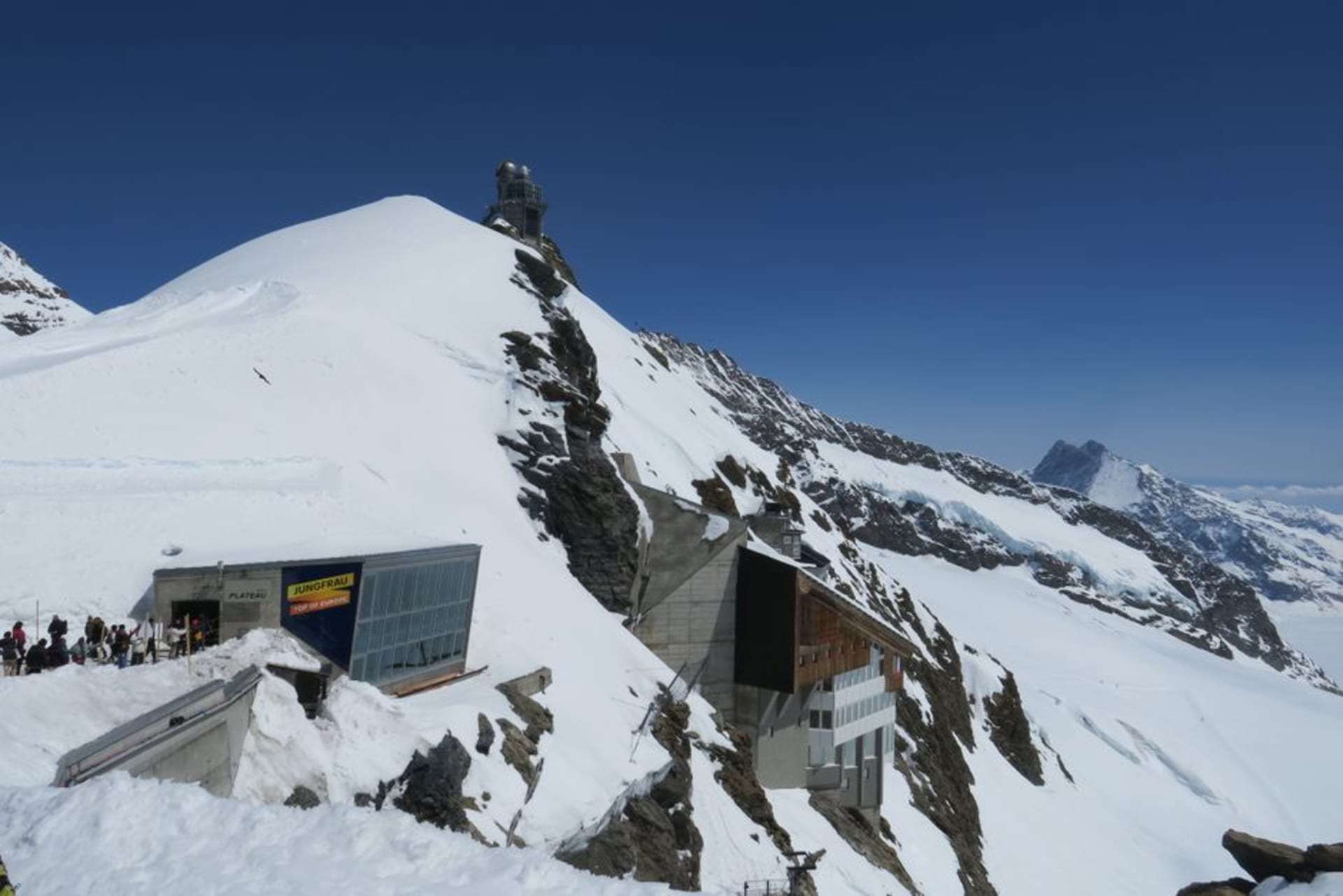
Jungfraujoch
"My ears popped three times on the way up, and I remember thinking that any train willing to do that to you had better be worth it — it was."
The 'Top of Europe' rail station at 3,454 meters, reached by a century-old cogwheel train tunneled through solid rock.

I’ll admit I went into Jungfraujoch half-expecting a tourist trap, the kind of thing you do because it’s famous and regret a little because of the price tag. The ticket from Interlaken is genuinely expensive, close to 200 francs round trip if you don’t catch a discount window, and for a while on the ride up I was doing math in my head about whether it was worth it. Then the train pulled into the final stretch, tunneled straight through the rock of the Eiger and Mönch since 1912, and stopped at little windows carved into the mountain where you can look straight down the near-vertical north face. That’s when I stopped doing math.
At the top, 3,454 meters up, the air genuinely feels different — thinner, sharper, and cold enough in September that Lia’s borrowed jacket wasn’t quite enough. We stepped out onto the observation deck and the Aletsch Glacier just unrolled in front of us, this enormous white river of ice stretching farther than felt possible, curving off between peaks toward Italy. I’ve seen glaciers before but never one from above, at eye level with the surrounding summits, and it rearranges your sense of scale pretty quickly.

What nobody tells you is how much of the visit happens underground, or at least under snow. There’s a whole complex tunneled into the mountain — an ice palace with sculptures carved into a glacier corridor, a restaurant, a gift shop selling absurdly priced chocolate, and long hallways that eventually spit you back out onto a snow terrace where you can actually stand outside. We spent longer than planned wandering the ice palace, running our hands along walls that stayed a near-constant minus few degrees regardless of the season, lit blue from somewhere inside the ice itself.
The cogwheel train itself deserves its own mention — this thing has been grinding people up through the mountain since before either World War, at a gradient that would be unthinkable for a normal train, and it still runs on more or less the same route. Sitting there watching the rock walls slide past the window, close enough to touch if the glass weren’t there, I kept thinking about the engineers who decided this was a reasonable idea in 1896.

By the time we got back down to Interlaken that evening, sunburned across the nose despite the cold — the altitude sun up there does not mess around — Lia admitted she’d had the exact same doubts about the price on the way up. Neither of us doubted it on the way down.
When to go: Aim for a clear-forecast morning, ideally June to September, and book the earliest train you can — clouds roll in over the glacier by early afternoon more often than not.
Keep exploring
More from Swiss Alps
 swiss-alps
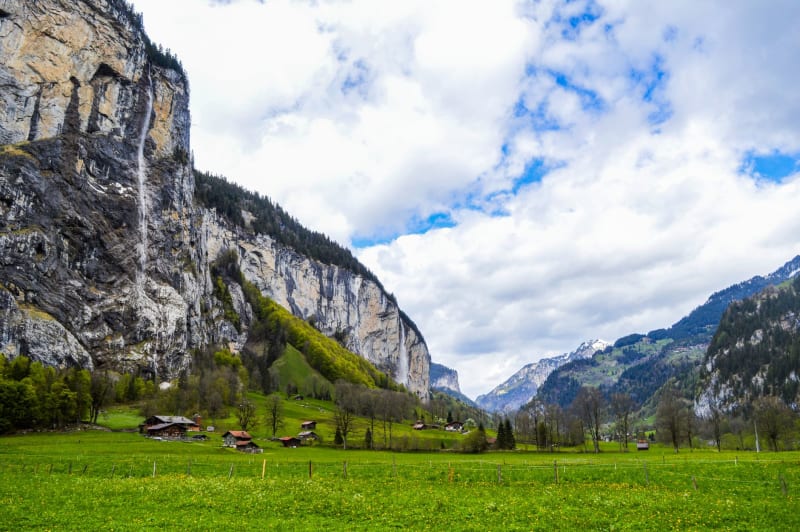
 Lauterbrunnen
A flat valley floor hemmed by vertical cliffs with seventy-two waterfalls pouring off them, a place so dramatic it reads like a stage set except that you're standing inside it.
Explore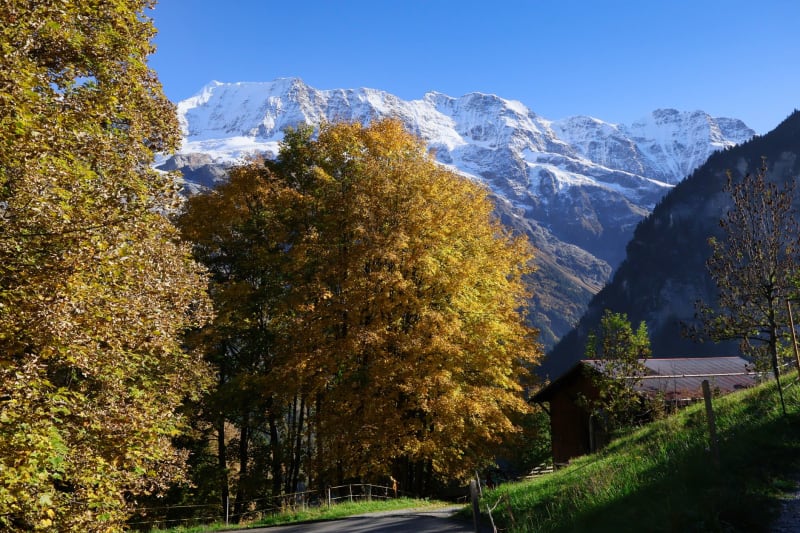 swiss-alps
 Mürren
A car-free village perched on a cliff ledge above the Lauterbrunnen valley with the Eiger, Mönch, and Jungfrau stacked across from it at eye level, a place so absurdly positioned it seems like a mistake someone decided to keep.
Explore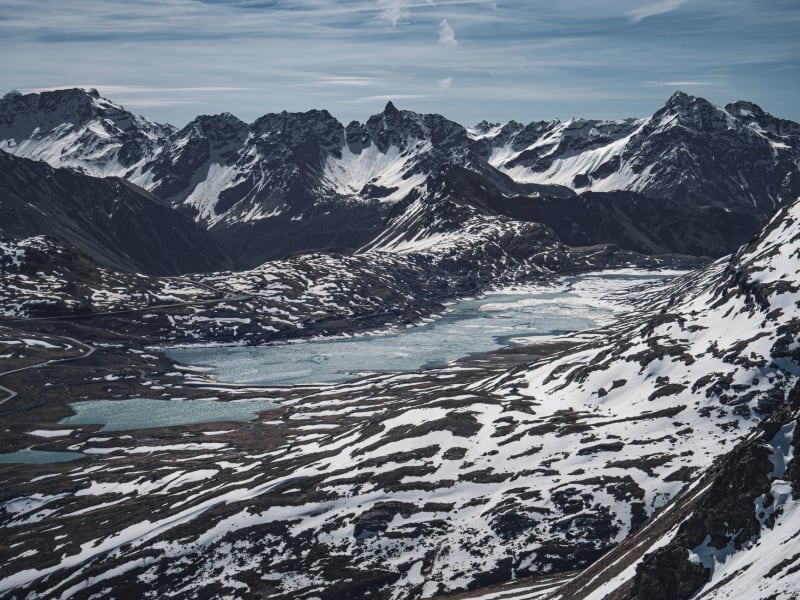 swiss-alps
 Pontresina
A Romansh-speaking village in the Bernina valley that serves as the quieter, smarter alternative to St. Moritz and the most accessible base for serious alpine terrain in the Engadine.
Explore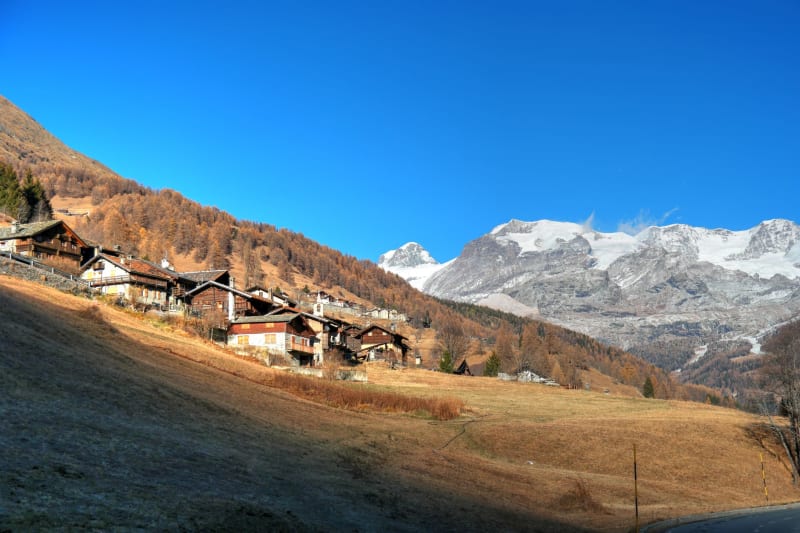 swiss-alps
 Saas-Fee
A car-free glacial village at the end of its own private valley, ringed by thirteen four-thousand-meter peaks and largely ignored by the people who go to Zermatt instead — which is their loss.
Explore swiss-alps
 St. Moritz
A high Engadine valley resort that invented the idea of the winter holiday and has been running on that reputation — and genuinely extraordinary light — ever since.
Explore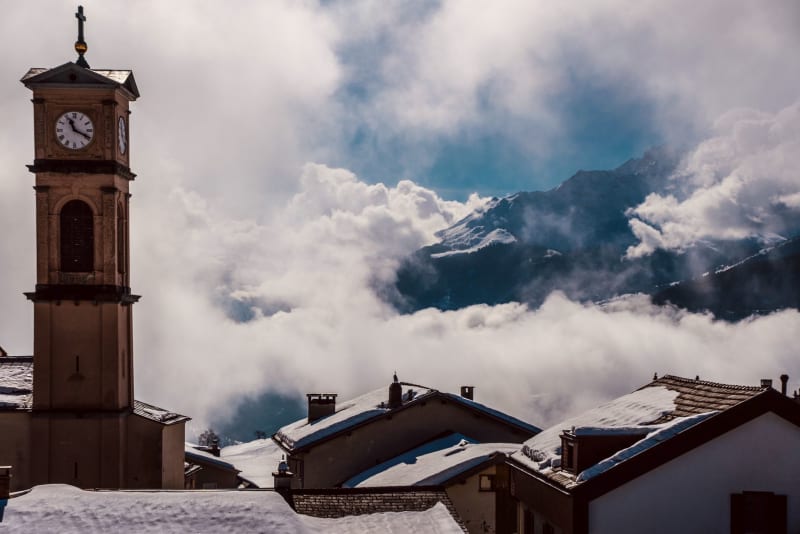 swiss-alps
 Verbier
A Valais resort perched on a sun-facing shelf above the Bagnes valley, famous for its off-piste terrain and for attracting a specific kind of person who arrives by private jet and leaves with frostbitten cheeks.
Explore