Kiruna
"The whole town is migrating. I felt less alone about my own restlessness."
A City That Picked Up and Moved
There is something philosophically bracing about arriving in a city that is in the middle of relocating itself. Kiruna’s old town center is being demolished and rebuilt two kilometers to the east because the LKAB iron ore mine — the reason the city exists at all — has eaten the ground out from under it. Buildings are lifted intact onto flatbeds and transported. A church. A clocktower. The mine gave Kiruna its reason for being, and now it’s consuming the city from below like a slow geological irony.
I walked the old town in its twilight state: some streets already ghosted, windows boarded, others still lit and inhabited. A woman walked a dog past a boarded hardware store. The supermarket was open, selling cloudberry jam and reindeer jerky. The transition felt neither tragic nor triumphant — just Swedish, pragmatic, ongoing.
Underground and Overground
The LKAB mine tour takes you 540 meters below the surface in a bus, not a cage elevator, which is disorienting in the best way. Down there, the rock is warm, the machinery is enormous, and the scale of industrial ambition required to pull iron from the Arctic earth becomes visceral. The ore body here is one of the largest in the world. The mine has been running since 1900 and it will run for decades more. The town above it is simply an inconvenience to be solved.
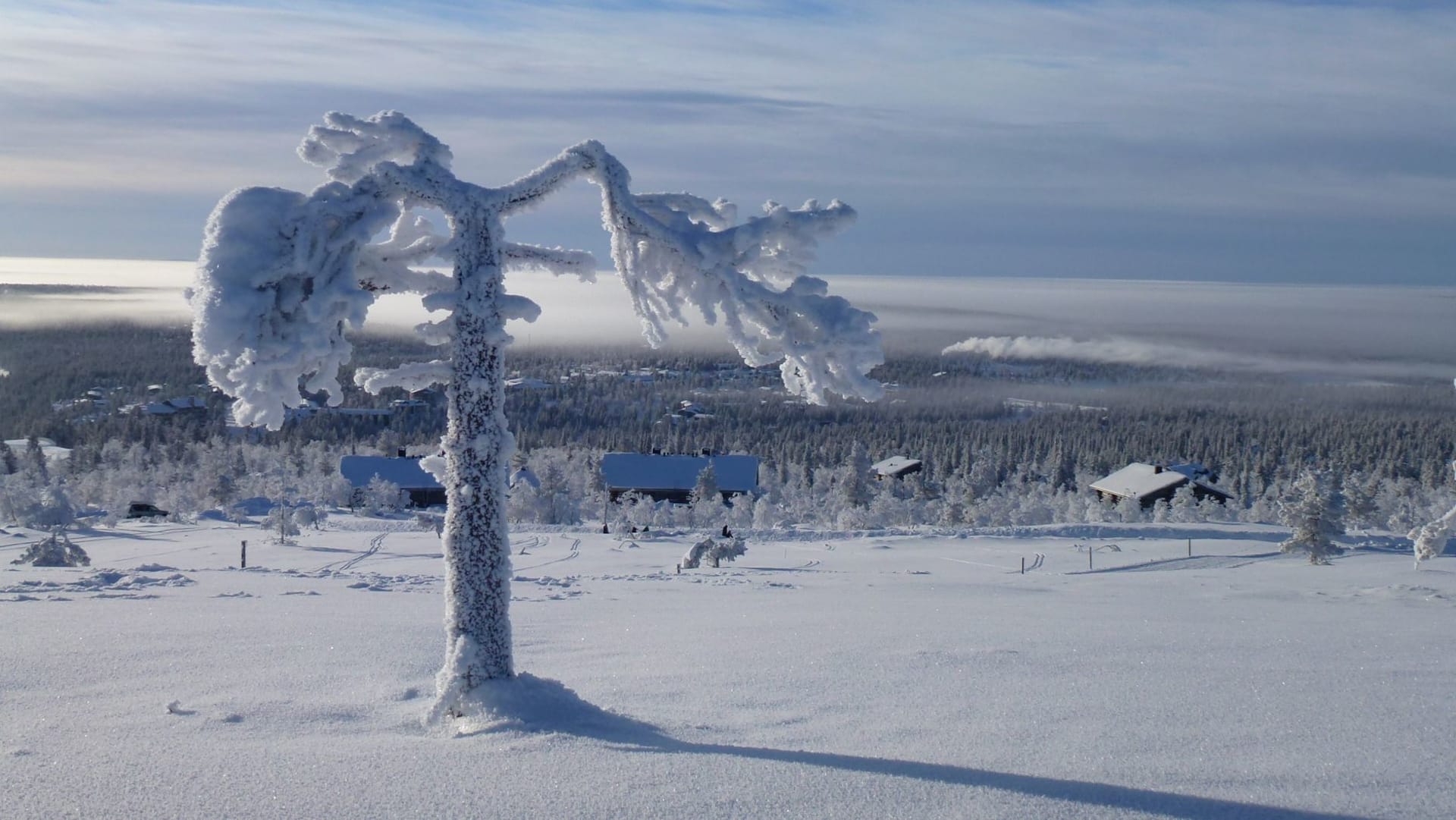
Back above ground, the light does things I couldn’t have anticipated. In January, the sun doesn’t rise — it grazes the horizon at noon and then falls back, leaving a two-hour blue hour that has no equivalent elsewhere I’ve been. The snow holds the color and gives it back slowly. I stood outside the new city hall building and watched the sky go from pale gold to violet to a blue so deep it felt pressurized.
Esrange and the Space Connection
Twenty kilometers east of town, the Esrange Space Center launches scientific balloons and sounding rockets into the stratosphere. It’s not generally open to visitors, but knowing it’s there adds to Kiruna’s particular brand of ambition — this is a place that mines the earth and shoots things into space, while also herding reindeer and making lingonberry sauce.
The Swedish Space Corporation has been here since 1964. On clear nights near the center, you can sometimes see stratospheric balloon lights drifting south. I thought one was a satellite until it changed direction.
The Icehotel Question
Everyone asks about the Icehotel, which is twenty minutes away in Jukkasjärvi. I’ll say this: sleeping in a room carved from ice at minus five degrees is exactly as cold and beautiful as it sounds, and the ice art inside is genuinely impressive. But the more interesting experience is the permanent warm cabin beside it, where you eat reindeer heart and drink cloudberry cider and feel like you’ve earned something by proximity to the cold.
When to go: December through February for northern lights and the blue polar twilight — the “blue hour” at noon is worth the cold alone. March brings more daylight and often clearer skies. Avoid midsummer unless midnight sun hiking is the goal; the town is quieter and the tourism infrastructure thinner then.