Björkliden
"The midnight sun here doesn't just shine — it negotiates with the water, and the water argues back."
Between Two Resort Towns
Björkliden sits on the shore of Lake Torneträsk, which is about as large as a small sea, between Abisko to the east and Riksgränsen to the west. The Ofoten Railway stops here — there’s a platform, a small station building, and then the mountain rising above you and the lake spreading below. It would be easy to overlook Björkliden as just a stop between more famous places, which is precisely why it’s worth stopping.
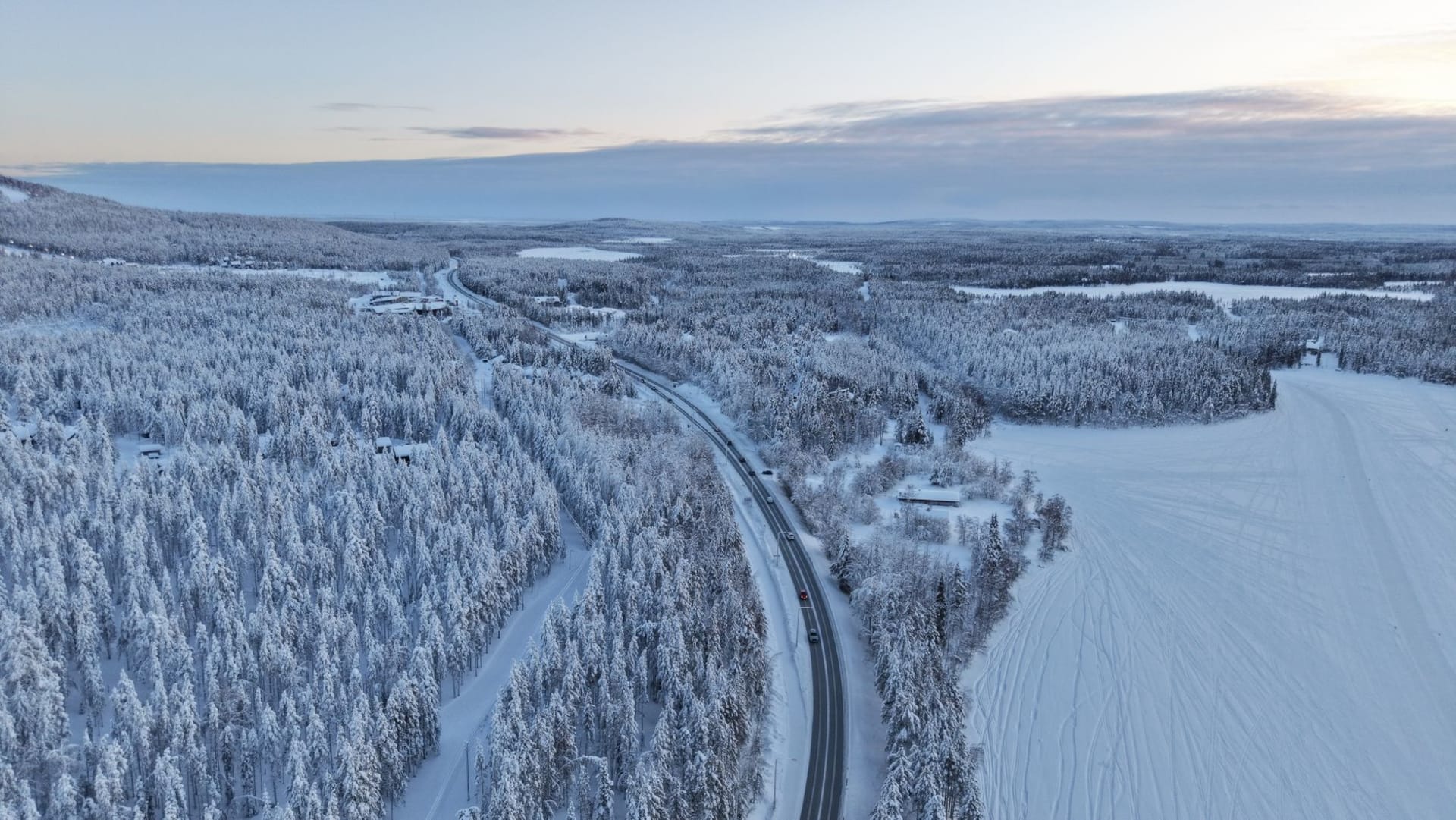
The resort — a hotel, a small ski area, and a scatter of chalets — occupies a south-facing slope above the lake. In winter, this means maximum sun exposure during the brief polar day. In summer, it means the midnight sun hits the slope and the water below it at angles that shift slowly through the night, turning the lake from silver to orange to a deep bronze, the far shore’s mountains catching the same light in sequence.
The Lake as Landscape
Torneträsk is sixty kilometers long and averages about seven hundred meters wide. In winter, it freezes into a flat white surface that locals use for ice fishing and, occasionally, snowmobile crossings. The ice is not always reliable everywhere — currents under the surface keep some sections open even in January — but the frozen sections give you access to a perspective on the mountains that’s impossible from shore: standing on the ice, the whole landscape opens up around you.
I walked out on the ice with a local guide one February morning, an hour before the short day began to lighten the southern horizon. The cold was minus twenty-seven. My breath froze on my balaclava within minutes. But the silence on the ice — no wind that morning, no traffic sound, nothing except the occasional crack of the ice settling — was so complete it felt like the absence of something I hadn’t noticed I was always hearing.
Skiing Without the Crowds
Björkliden’s ski area is small and unpretentious. There are enough runs to fill a day and the skiing is best described as fun rather than challenging. What it has that the larger resorts don’t is atmosphere: you’re skiing with mostly local families and a handful of visitors who specifically chose Björkliden over Riksgränsen, and the mountain feels genuinely uncrowded.
The back side of the ski area opens onto open terrain that more experienced skiers use for off-piste, with views directly over the lake. In late March, when the days are longer and the sun actually has warmth in it, the combination of spring snow and mountain views over Torneträsk is the most pleasant skiing I’ve found in Swedish Lapland.
Aurora on the Water
For aurora viewing, Björkliden has a practical advantage over Abisko: the hotel sits lower, and the lake surface provides a dark foreground for aurora photographs. On active nights, the lights reflect in the lake when it’s partially open, or in the snow-covered ice when it’s frozen, doubling the display.
I watched an aurora from the hotel’s hot tub one night in February — the kind of experience that should feel clichéd and somehow doesn’t when the curtains of light are actually moving above you and the hot water is keeping your hands functional.
When to go: February and March for the best combination of northern lights, some daylight, and manageable cold — also peak season for aurora reflection photography on the lake. Late May and June for midnight sun at its most dramatic. Summer walking from the ski lift up to the plateau is accessible July through September and offers sweeping lake views.