The Clear Sky Phenomenon
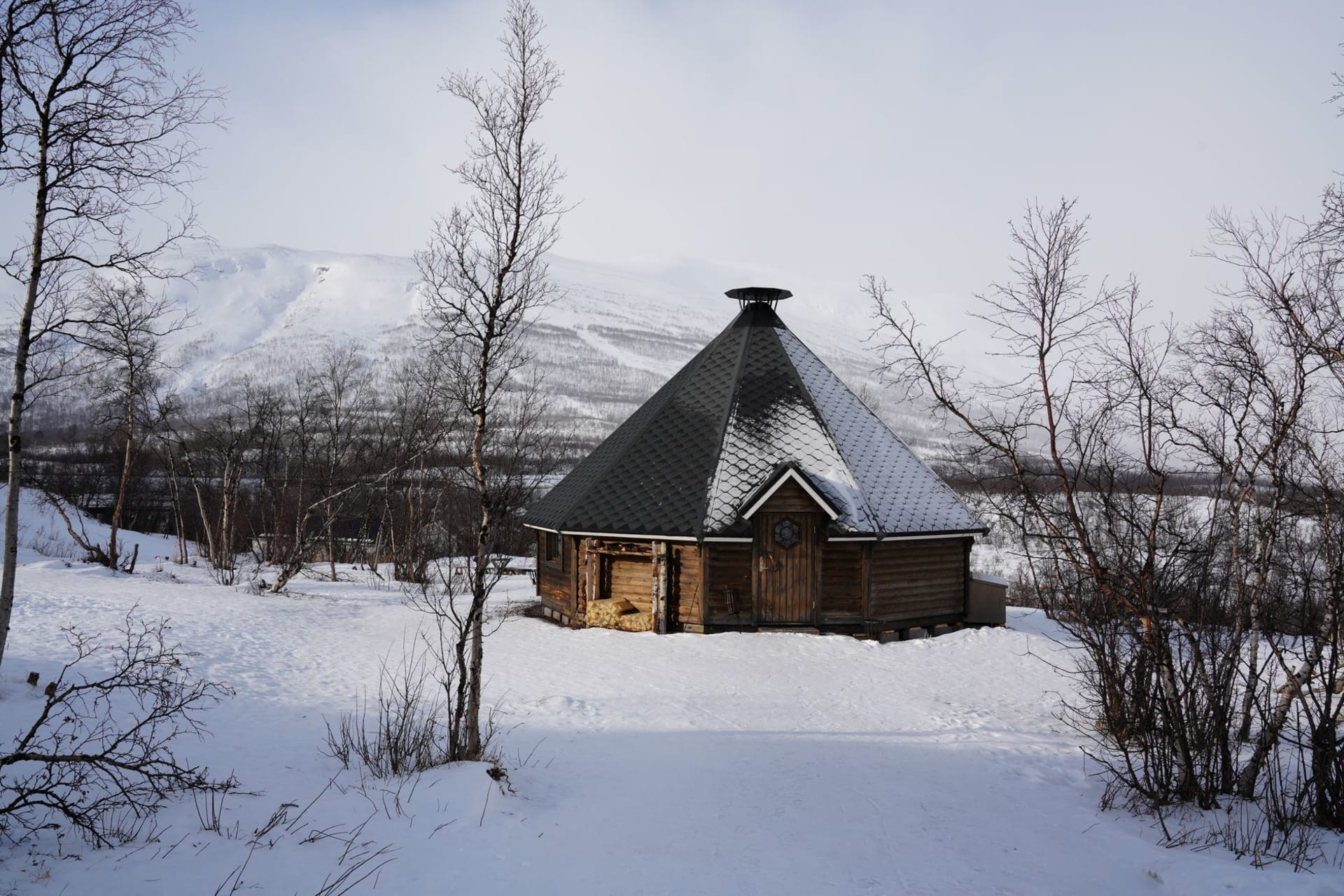
Abisko sits at the edge of Lake Torneträsk — which is so large it looks like a fjord, and in winter it becomes a flat white plain that extends past the horizon. What makes Abisko unusual among aurora destinations is meteorological: the mountains around it create a rain shadow that keeps local skies clear far more often than the surrounding region. The Swedish Institute of Space Physics has an aurora sky station on the mountain above the village precisely because the statistics here favor observation.
I’d read about this before arriving and was still skeptical. Clear skies are one thing; aurora is another. But my second night there, the KP index climbed, and what happened above Torneträsk was not a polite display. The light moved. Curtains of green with violet fringes shifted laterally across the sky faster than I expected, dancing is too gentle a word — it pulsed, it rearranged itself. I stood on the lake ice in minus eighteen degrees and forgot to be cold for twenty minutes.
The Mountain Railway and Nuolja
Getting to Abisko is unusually pleasant for somewhere this remote. The Ofoten Railway — originally built to haul iron ore from Kiruna to the Norwegian port of Narvik — passes through, and the train ride itself is worth the trip: frozen rivers, birch forest stripped bare, the sudden appearance of the Norwegian fjords as you cross the border. You arrive feeling like you’ve crossed into somewhere genuinely different.
Above the village, the Nuolja mountain chair lift runs in winter, delivering you to a plateau where you can ski back down on unmarked terrain or simply stand and watch the weather systems move across the lake. In summer, the same mountain is the starting point for hikes into the national park, where the birch trees grow no taller than your waist, shaped horizontal by wind.
Kungsleden Starts Here
Abisko is the northern terminus of the Kungsleden — the King’s Trail — Sweden’s most celebrated long-distance hiking route. The trail runs 440 kilometers south through mountain wilderness to Hemavan. In summer, it’s a genuine wilderness walk; in winter, the northern section becomes a ski touring route for people who know what they’re doing in serious cold.
I walked the first section south of Abisko, just a day’s worth, to the STF cabin at Abiskojaure. The terrain was flat enough to feel manageable and wild enough to feel earned. The Abiskojokka river ran beside the trail, partially frozen, audible under the ice. A pair of ptarmigan, white and fat in their winter plumage, watched me from a birch branch and didn’t move.
Eating and Staying at the STF
The Abisko Turiststation — the Swedish Tourist Association lodge — is the social hub of the village and the only place to reliably eat, drink, and dry your gear. It has a sauna, a drying room, and a cafeteria that serves elk stew and lingonberry pancakes. The wood stove in the common room is the best seat in the house. Lia and I ate dinner there every night, watching other hikers come in from the cold, red-faced and satisfied.
When to go: November through March for northern lights — February and March offer the best combination of darkness and more manageable cold. March also brings good light for photography. For summer hiking and midnight sun, late June through July. Avoid October and November for hiking; the trails can be icy and the STF huts close.