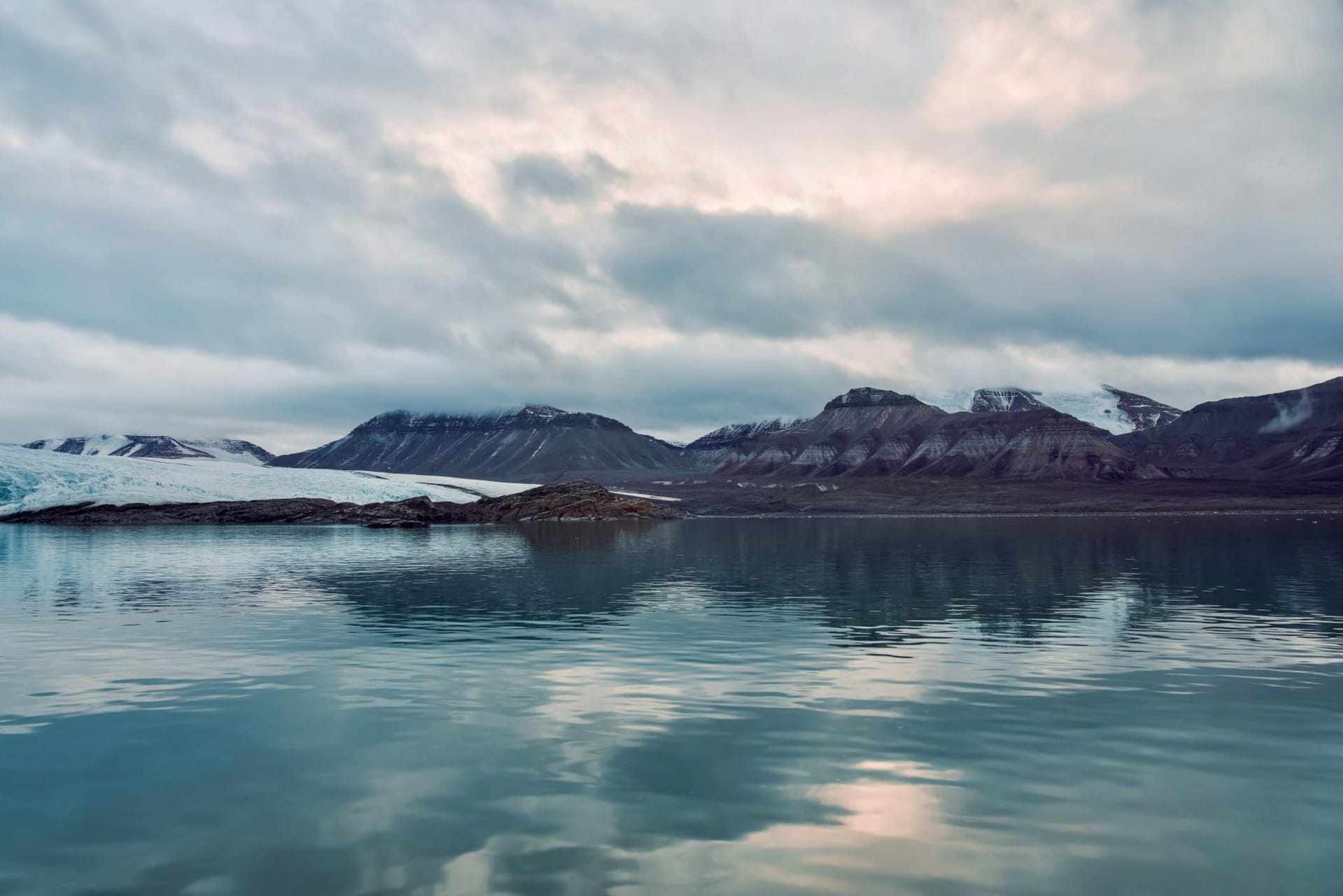
Edgeøya
"The walruses smelled like an argument between the sea and something that had been dead for a week."
The Island Nobody Visits
Edgeøya — Edge Island — is the third largest island in the Svalbard archipelago, after Spitsbergen and Nordaustlandet. It sits in the southeast, separated from the main island by Storfjorden, and has no permanent human habitation whatsoever. No research stations, no settlements, no old mines. Just 5,000 square kilometers of tundra, river plain, and coastline that functions as it always has, entirely without reference to whatever’s happening in the rest of the world.
This is not a destination you stumble into. You come here on an expedition vessel making a circumnavigation of Svalbard, or on a purpose-built wildlife cruise. The access windows depend on sea ice conditions in Storfjorden, which can be variable. In a good year, you can reach the island’s west coast in July. In a difficult ice year, you can’t.
Kvalpynten and the Walruses
The primary wildlife attraction on Edgeøya is the walrus haul-out at Kvalpynten, on the island’s western coast. When the zodiac approaches, you smell it before you see it: a dense, marine, animal smell with undertones of fish and something fermenting. Then the sound — low bellowing, the shuffle and clash of large bodies arranging themselves. Then the sight.
There were at least 200 walruses on the beach when we arrived. Males mostly, using Kvalpynten as a rest stop between feeding dives in the relatively shallow Barents Sea. They lie in piles, using each other’s bodies as pillows, their tusks visible in the heap. The guides landed the zodiac upwind and downwind from two separate directions to determine which would disturb them least, then beached us quietly and established a viewing position at a respectful distance.
The walruses tolerate attention with the bored confidence of animals that have no natural predators on land. One or two raise their heads to assess whether you’re worth dealing with, then put them back down. A young male at the periphery of the group regarded me for a sustained period with small reddish eyes, then made a sound like a large drain emptying, and lay down again.
The Tundra Interior
What Edgeøya’s interior offers, if you’re willing to walk far from the landing site with a guide, is something rarer than the walruses: actual Arctic solitude. The tundra here is flat and boggy in summer, the ground underlain by permafrost that makes your footing unpredictable. The vegetation is miniaturized — mosses, lichens, dwarf willows no taller than your ankle — but it’s dense enough in places to form a continuous carpet of color in late summer: russet and orange and pale yellow, with patches of small flowering plants that bloom and set seed in the narrow window between ice melt and refreezing.
Svalbard reindeer graze across these plains. They’re a subspecies unique to the archipelago, shorter-legged and stockier than mainland reindeer, adapted to surviving on what the tundra provides through nine months of cold. They move slowly and don’t startle easily. I watched a group of five cross a river in single file, each one pausing mid-river to look back at me before continuing.
Polar Bear Terrain
Edgeøya has one of the highest polar bear densities on Svalbard. The combination of walrus haul-outs and ringed seal populations on the coast makes it productive hunting territory. We saw two bears on the beach north of Kvalpynten, both monitoring the walrus herd from a safe (for the bears) distance. The bears don’t take on healthy adult walruses — the tusks are dangerous enough that a healthy male can defend itself. Bears watch for young, sick, or peripheral individuals.
When to go: July and August when sea ice in Storfjorden has typically cleared enough for expedition vessels. Ice conditions vary significantly by year — 2020 and 2021 were difficult access years; other years allow circumnavigation from early July. Always through organized expedition operators; there is no independent access.