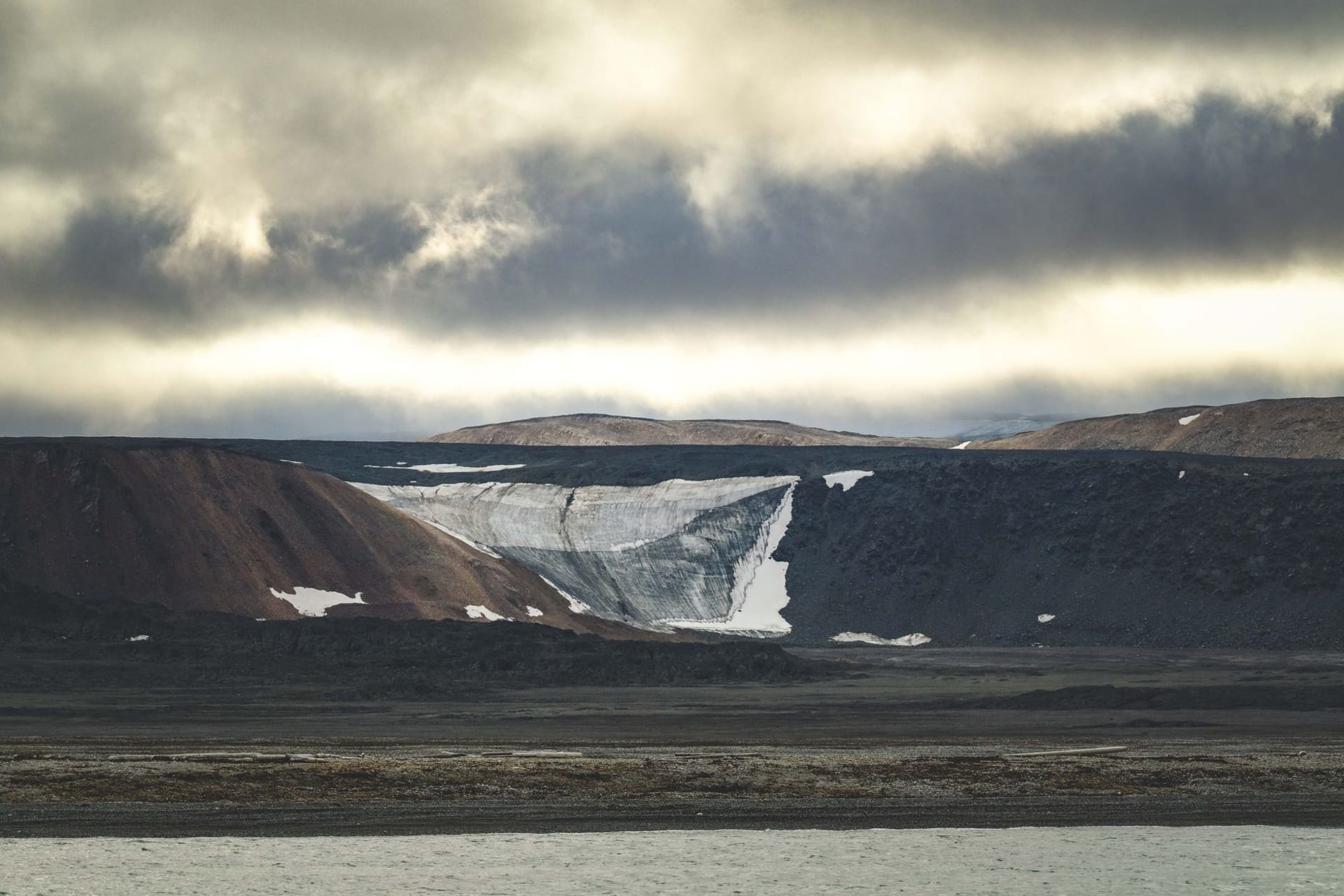
Barentsburg
"The bartender spoke four languages and had opinions about everything. The beer was Russian. So was the attitude — in the best possible way."
Norway’s Russian Neighbor
Under the 1920 Svalbard Treaty, all signatory nations — 46 in total — have the right to conduct commercial activities on the archipelago while Norwegian law applies. Russia has been exercising this right continuously since the 1930s, maintaining a coal-mining operation at Barentsburg that outlasted the Soviet Union, outlasted the economic logic of Arctic coal, and shows no sign of stopping. The settlement of around 400 people operates as its own pocket of Russian territory inside Norwegian jurisdiction. It is one of the stranger political arrangements I’ve encountered in travel.
Getting here requires a three-hour boat ride from Longyearbyen, most of which passes through Isfjorden — a fjord so large it feels like a small sea. In rough weather the crossing is genuinely unpleasant. I came in August on a calm day and stood on the bow for most of it, watching the mountains change color as the fjord narrowed.
The Town Reveals Itself Slowly
From the water, Barentsburg looks industrial and brown — coal dust has settled permanently into everything. The dock area is functional and port-smelling: diesel, brine, the chemical tang of coal. But walk up into the settlement and the Soviet aesthetic starts to make a strange beauty of its own. There’s a mural of Lenin overlooking the fjord. There are painted slogans in Cyrillic that my guide translated loosely as productivity and Arctic solidarity. The community center has a basketball court, a gym, and a pool. The greenhouse grows tomatoes and herbs under grow lights.
The workers here are mostly from Ukraine and Russia — the arrangement that predates recent geopolitics by several decades. My guide, a young Russian man who’d been in Barentsburg for eight months, explained the rotation system: six months on, then home, then back. He was cheerful about it in a way that suggested either genuine contentment or very good adaptation. He’d learned Norwegian because the nearest bureaucracy was in Longyearbyen.
The Bar and the Gift Shop
You come to Barentsburg through the tourist infrastructure but the real texture is in the details. The bar — possibly the most defensible claim for most characterful bar in the High Arctic — serves Russian beer on tap and local vodka produced in Barentsburg’s own small distillery. I had a glass of something labeled Arctic Fox that tasted like industrial spirits that had been sat next to a polar breeze for a month. The bartender offered a second without being asked. I declined, but barely.
The gift shop sells nesting dolls, ushanka hats, Soviet-era pins, and small replicas of the settlement itself. I bought a pin and wore it for the rest of the trip, which prompted a surprisingly long conversation on the boat back with a Norwegian birder who’d studied Soviet Arctic policy in the 1980s.
What It Actually Is
Barentsburg doesn’t perform itself for tourists. It’s a working settlement that tolerates tourists graciously. The coal mine is real. The community center is used. The children — there are families here, a school — play football on a gravel pitch below the Lenin mural with the fjord behind them.
When to go: June through August when boats run regularly and the fjord is open. Day trips from Longyearbyen are standard; some operators combine Barentsburg with a snowmobile crossing in winter (March–April), which gives you the added drama of traveling over sea ice.