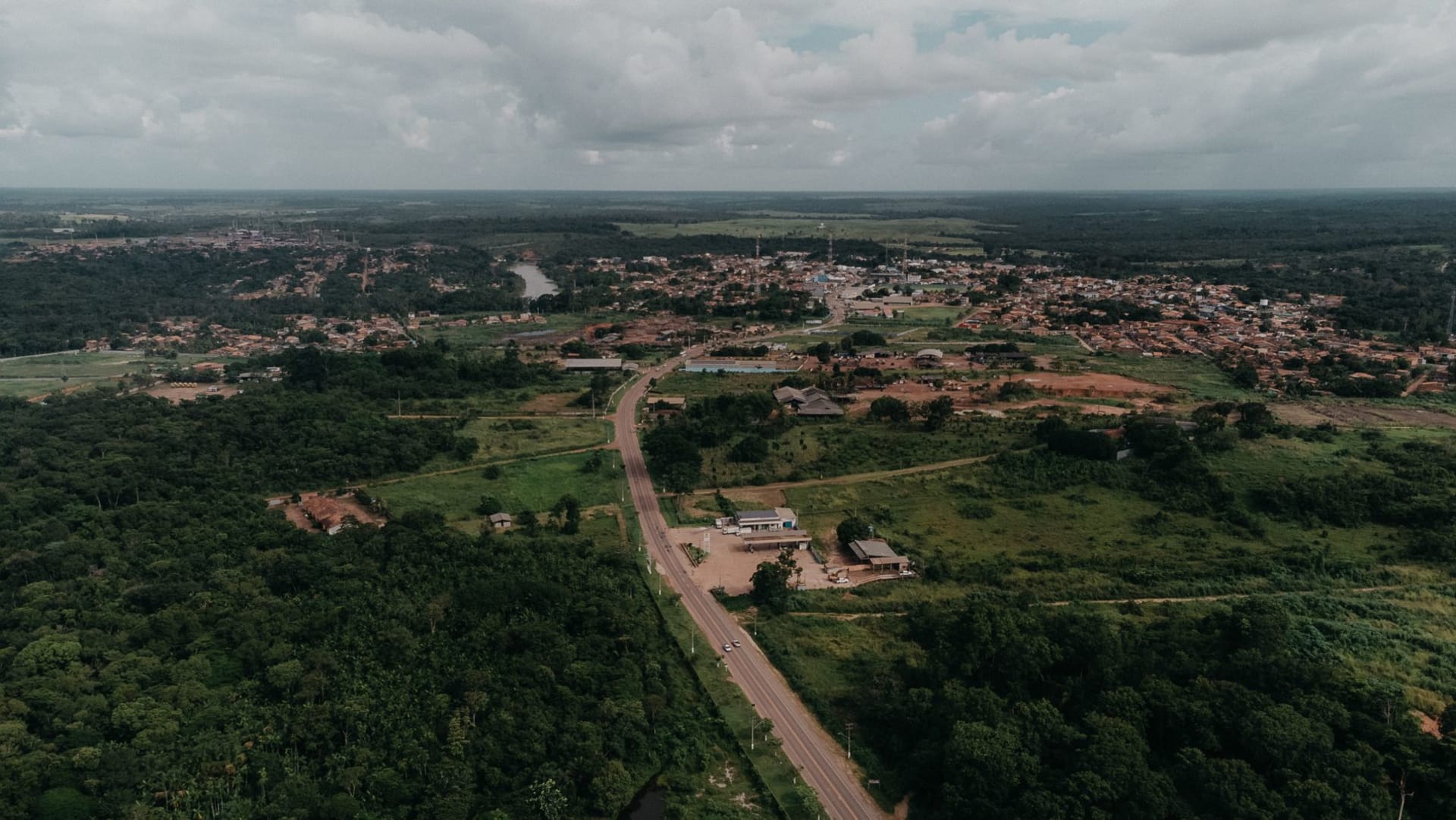
Nickerie is Suriname’s second city in the loosest possible sense of that term — it’s a proper town, with actual infrastructure and civic identity, but calling it a city requires generosity. What it is, more precisely, is the capital of the Nickerie District, a flat expanse of coastal lowland that produces most of Suriname’s rice and whose population is predominantly Hindustani Surinamese — descendants of indentured laborers brought from British India after the abolition of slavery changed the plantation economy.
I came here from Paramaribo partly out of the completionist instinct and partly because I’d been told the food was better than in the capital. Both claims turned out to be accurate.
The Rice Country
The drive west from Paramaribo to Nickerie takes three to four hours on a road that is eventually flat and eventually bordered by paddies. The landscape that opens up around Nickerie is striking in its complete horizontality — there is almost nothing vertical in the view except the occasional water tower. The paddies stretch out in every direction, green or gold depending on the season, with the narrow irrigation channels that keep this former swampland productive cutting geometric lines through the fields.
The rice here is serious. Surinamese long-grain has a specific character that I’d noticed in Paramaribo’s restaurants without being able to name it. In Nickerie, it comes from about three kilometers away, and the difference is legible.
The Food
The Hindustani Surinamese cooking tradition in Nickerie operates on a register that I hadn’t fully encountered in Paramaribo. Roti here is not the quick-service version — it’s made to order, wrapped around fillings that vary by the cook and the day. I ate at a spot run by a family whose grandmother, according to the son who served me, had learned the dal recipe in India before the family emigrated in 1920. Whether or not that specific provenance is accurate, the dal was extraordinary — creamy, dark, with a tempered-spice top that left a warmth in the chest for an hour afterward.
Surinamese Hindustani cooking incorporates local ingredients — the fish, the bitter greens, the coconut — in ways that feel fully naturalized rather than adapted. It’s its own cuisine, not a transplant.
The Corantijn River
The western edge of Nickerie runs into the Corantijn River, which is wide enough here that the Guyanese bank is barely visible. The river crossing to Springlands on the Guyanese side is possible but requires advance arrangement with the irregular ferry service. Most people don’t cross; they stand at the bank and look.
The river at this point is tidal and the flow reverses twice a day. Fishing boats work the tidal edges. Scarlet ibis from the coastal mangrove colonies come in to roost as the light fails — the same birds that appear in the Commewijne mangroves, unmistakably orange against a sky that goes pink and then dark.
Bigi Pan
A short drive from Nickerie, the Bigi Pan Nature Reserve is a coastal wetland of mangroves, mudflats, and shallow lagoons that functions as one of Suriname’s most significant bird habitats. The flamingo colonies here are sometimes in the thousands. Boat tours into the reserve leave from the nearby village and navigate through mangrove channels before opening onto the lagoon where the flamingos feed, their pink improbable against the flat grey water.
When to go: The dry seasons make road travel comfortable, but Nickerie is accessible year-round. The Bigi Pan flamingo colony is most impressive in the dry months (August–November) when water levels concentrate the birds in the lagoon. The rice harvest in the dry season also makes the surrounding countryside particularly photogenic.