Americas
Suriname
"Suriname is the place South America forgot to explain to the world."
I landed in Paramaribo on a Tuesday afternoon and walked out of the airport into air so thick with heat and humidity it felt like the city was wearing a coat. The taxi driver spoke to me in Dutch, then switched to Sranan Tongo when I looked confused, then landed on English with a grin that seemed to say: we’ll figure it out. That is, in some ways, the whole story of Suriname — a small country that has been figuring it out for centuries, layering languages and religions and cooking traditions until something entirely its own emerged.
Paramaribo itself is disorienting in the best possible way. The historic inner city is a UNESCO World Heritage Site, which sounds like a tourist-brochure fact until you are actually standing in front of it: Dutch colonial wooden architecture, painted in faded yellows and greens, sitting alongside a Hindu temple, a mosque, a synagogue, and a cathedral — all within a few blocks of each other. The scale is modest, nothing monumental, but that is precisely what makes it remarkable. This is a city where these things coexist not as a curated heritage project but as a lived reality. On Friday evenings I would watch men leaving the mosque and nodding to neighbors heading into the synagogue next door. It was the most matter-of-fact pluralism I have encountered anywhere.
The food is the other thing that no one warns you about. Surinamese cuisine is a collision of Javanese, Indian, Chinese, Creole, and Indigenous cooking, and it produces dishes that have no real equivalent anywhere else. Pom — a kind of oven-baked casserole made from grated pomtajer root with chicken — became my obsession by day three. Roti from the Javanese warungs near the central market, wrapped around potato and long beans and a serious curry, costs almost nothing and ruins you for less interesting food for weeks afterward. I ate at a different place every day and still left feeling like I had barely started.
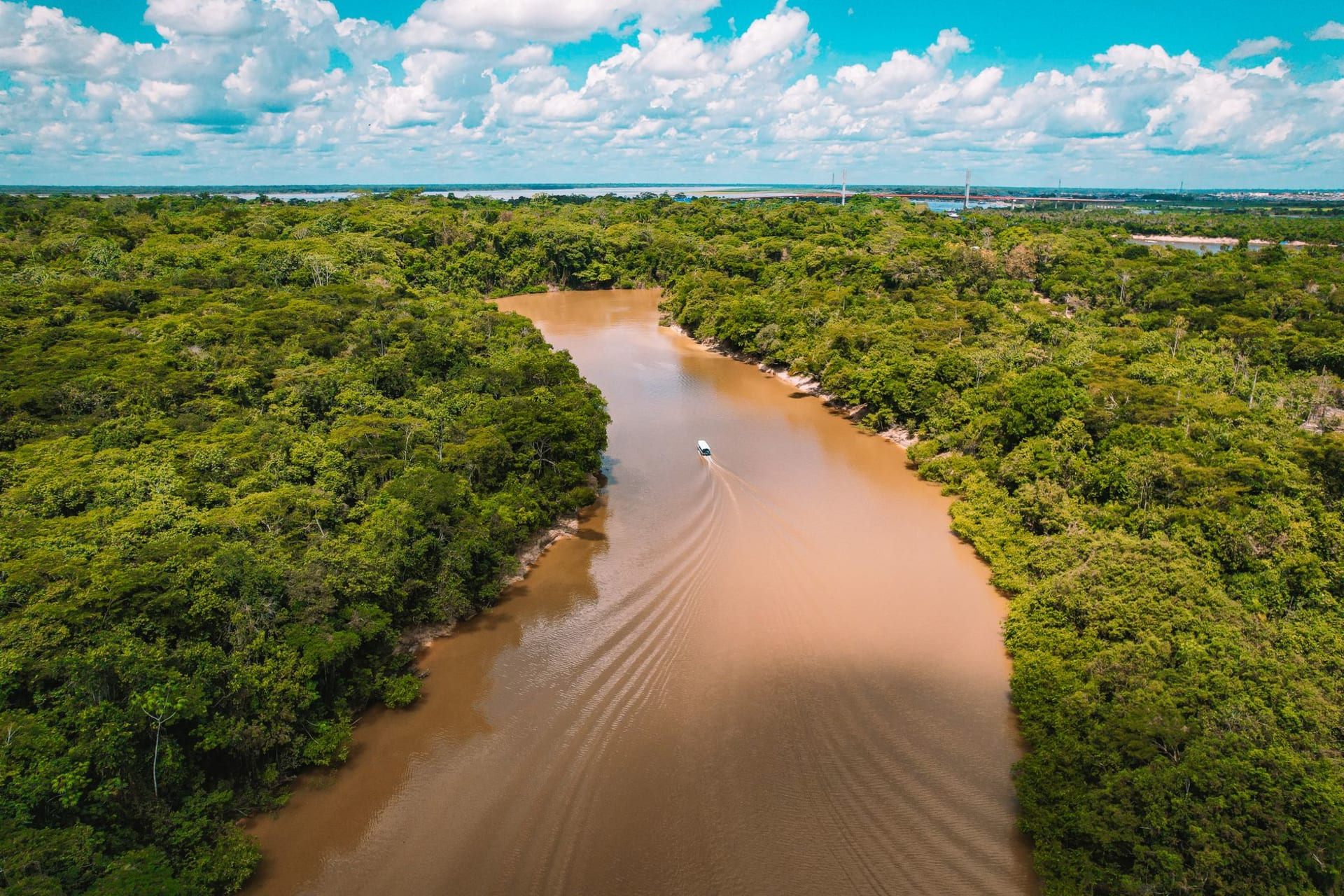
Beyond the capital, Suriname’s interior is almost entirely rainforest — the kind of dense, largely untouched primary jungle that is becoming rare in South America. The Maroon communities along the Suriname and Marowijne rivers are the descendants of escaped enslaved people who built their own cultures deep in the forest and successfully resisted Dutch attempts to recapture them. Visiting them is not a tourist attraction in any conventional sense; it requires time, intention, and ideally a local guide. But the experience of traveling upriver by motorized canoe, watching the forest close in from either side, is one of the more genuinely remote things I have done in years of travel.
When to go: February through April is the short dry season and the most comfortable time to visit Paramaribo. August through November is the main dry season and better for inland river trips and jungle exploration. Avoid May and June if you can — the heaviest rains make the interior difficult to navigate and the city unglamorous.
What most guides get wrong: They treat Suriname as a footnote to neighboring Guyana or French Guiana, packaging all three as a single “Guianas” region with interchangeable selling points. Suriname is not interchangeable with anything. The Javanese and Indian influence on its food, language, and social life makes it more closely related culturally to parts of Southeast Asia than to the rest of South America — and that specificity is the whole point. Go for the city, stay for the food, and then go upriver and understand why the Maroon communities have been protecting this jungle for three hundred years.