Bunaken
"The wall at Lekuan drops so far you can't see the bottom—and visibility runs to thirty meters."
First Descent at Lekuan
The reef wall at Lekuan drops so steeply and so far that you can’t see the bottom even with perfect visibility—and visibility in Bunaken runs to thirty meters on a good day, which is most days. I’d done enough diving in Thailand and the Philippines to think I understood what a wall dive was. Bunaken recalibrated that understanding in the first ten minutes of the first dive. The coral on the upper sections is a dense vertical garden, and below twenty meters the fish appear in numbers that seem miscounted—schools of fusiliers so thick they filter the light like a moving curtain, then part suddenly to reveal the wall continuing downward into blue.
Manado Tua on the Horizon
Bunaken is technically one island within a national marine park, and its neighbor Manado Tua—an extinct volcano that rises to a perfect cone—is always visible on the horizon when you surface. That view has become something of a visual shorthand for North Sulawesi, and it earns the status. The island itself is small enough to walk across in an afternoon, with a single village of fishing families who’ve adjusted with varying degrees of enthusiasm to having divers as neighbors. The warung meals—rice, grilled fish, sambal that arrived in three different shades of red depending on whose kitchen you ended up in—were better than they had any right to be given the distance from the nearest supermarket.
The Night Dive Question
I’m not a natural night diver. The darkness feels less peaceful than it does in daylight, and there’s always a small part of my brain convinced I’m about to become part of the food chain. But my guide at the guesthouse was persuasive in the way that Indonesian dive guides often are—quiet confidence rather than salesmanship—and I went. Mantis shrimp moved with startling speed across the sand. A small octopus flared pale and retreated under coral with a speed that made the transition look edited. The beam of my torch hit a sleeping Napoleon wrasse and we were equally startled by each other. I came back up a convert and booked another one for the following night.
The Guesthouse Circuit
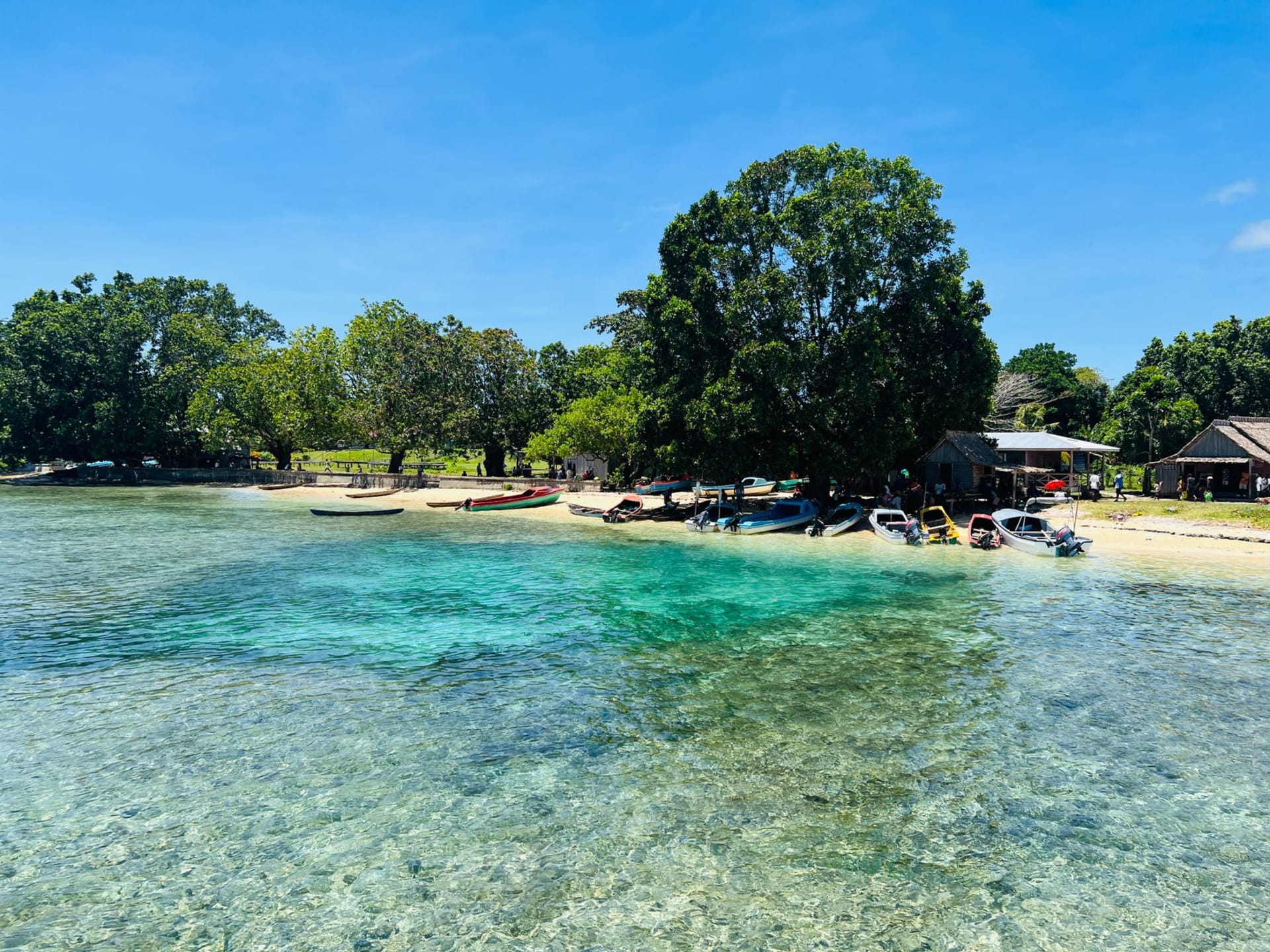
Accommodation in Bunaken runs from basic bamboo bungalows to better-equipped dive resorts, but even the budget options sit close enough to the water that you can hear it at night. I stayed at a family-run place that served breakfast on a wooden deck over the sea, and the distance between finishing coffee and beginning a dive was approximately four minutes. This is the operational advantage Bunaken holds over more developed dive destinations—the logistics don’t swallow the experience. There’s no bus to catch, no marina to navigate. You finish your coffee and roll off the deck.
When to go: April through November offers the calmest seas and best visibility. Peak diving months are June through August, when visibility frequently exceeds thirty meters and currents on the walls bring in the most pelagic traffic. Avoid December through February when the northwest monsoon makes the crossing from Manado rough. The boat from Manado’s main harbor takes thirty minutes; Manado has an international airport with connections throughout Indonesia and to Singapore.