Asia
Sulawesi
"The buffalo had already been chosen before I even understood what I was watching."
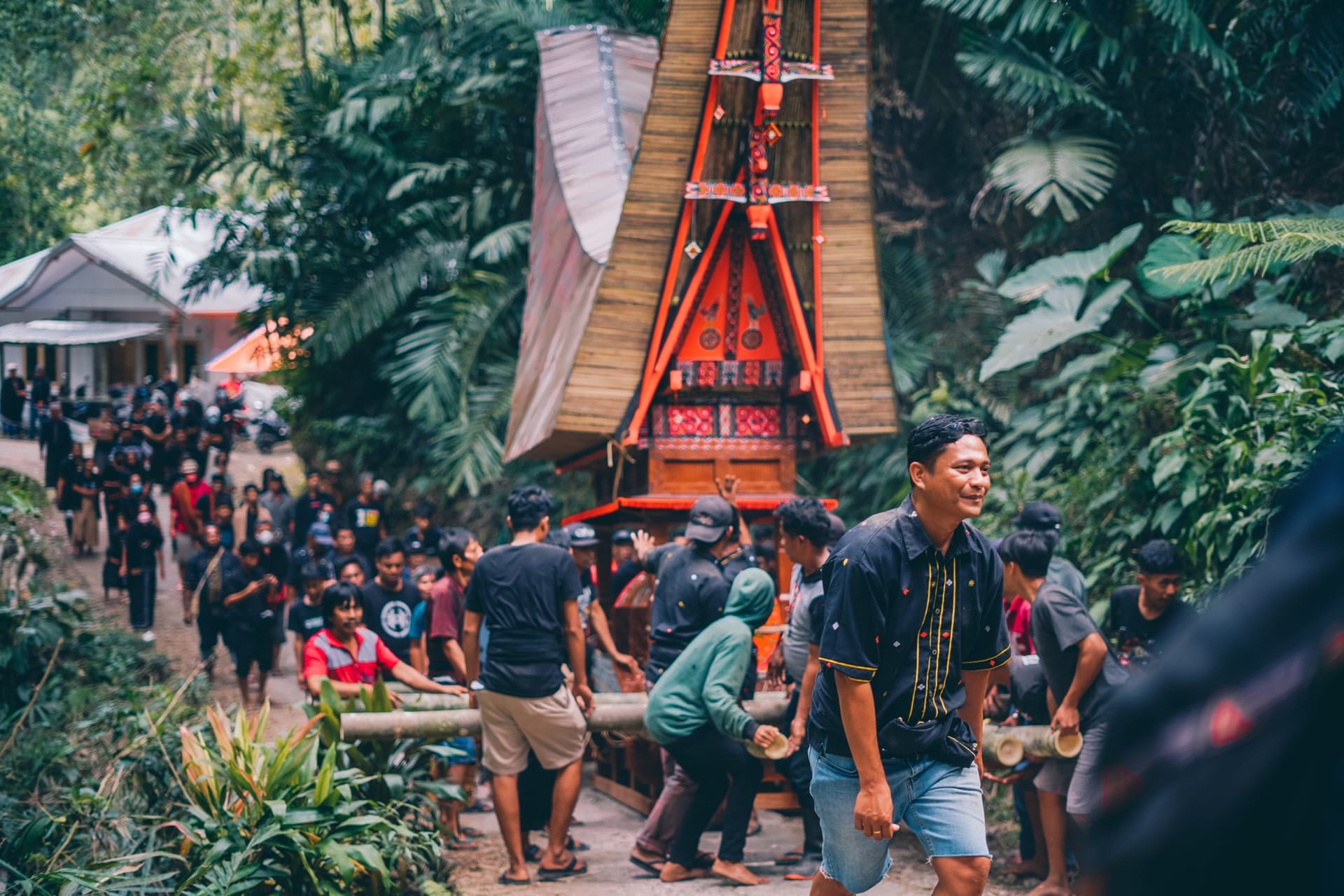
I arrived in Rantepao at dusk, squeezed into the back of a shared bemo that smelled of cloves and wet soil. The driver dropped me in front of a guesthouse run by a woman named Yanti, who handed me a plate of pa’piong — pork and vegetables steamed inside bamboo tubes over an open fire — and told me, almost as an aside, that there was a rambu solo’ funeral ceremony happening in a nearby village the next morning. I had come to Sulawesi without much of a plan. That changed immediately.
Tana Toraja in the central highlands is the reason most travelers make the effort to reach this island, and it earns the attention. The Torajan people build their tongkonan houses with curved roofs that sweep skyward like the prow of a boat, lacquered in geometric red, black, and gold. Buffalo horns stack on the front facade — one set per funeral, one per generation — turning family homes into quiet records of ancestral wealth. The funerals themselves are not morbid occasions. They are the most important social events a family can host: multi-day ceremonies with hundreds of guests, traditional music played on bamboo flutes, and the ritual slaughter of buffalo and pigs whose meat is shared with everyone present. I sat in a bamboo grandstand beside villagers who had traveled from Makassar and tourists who had flown in from France, and nobody seemed to think that was strange. Death, here, is communal.
Beyond Tana Toraja, Sulawesi spreads out into four peninsulas that point in different directions like an awkward starfish, and each arm has its own logic. In Manado, at the northern tip, the diving at Bunaken Marine National Park is some of the best I’ve done anywhere — vertical walls dropping into blue darkness, hawksbill turtles gliding past without so much as a glance in my direction. The food in Manado is famously fierce: tinutuan, a thick porridge of pumpkin, corn, and greens, followed by grilled skipjack tuna rubbed in sambal that keeps burning long after you’ve stopped eating. Between the highlands and the coasts, the road itself is a journey through rice terraces, cacao plantations, and market towns where men still wear the traditional ma’rante sarong on ordinary Tuesdays.
When to go: June through August is dry season and the most reliable time for travel. The highlands can be cool at night year-round — bring layers even if you’re coming from the tropics. Funeral season doesn’t follow the calendar: ceremonies happen throughout the year but tend to cluster when harvests are done and extended family can travel, roughly July to September.
What most guides get wrong: They treat Sulawesi as a single destination with Tana Toraja as the main course and everything else as a side trip. The island is actually four distinct experiences stitched together by long overland roads and short domestic flights — and the connections between them, the overnight buses and market mornings and random guesthouses, are half the point. Don’t fly straight in and out of Makassar just for the Toraja photos. Stay longer, move slower, and let the shape of the island surprise you.