Musawwarat es-Sufra
"We had a two-thousand-year-old temple entirely to ourselves, and a goat. Mostly the goat."
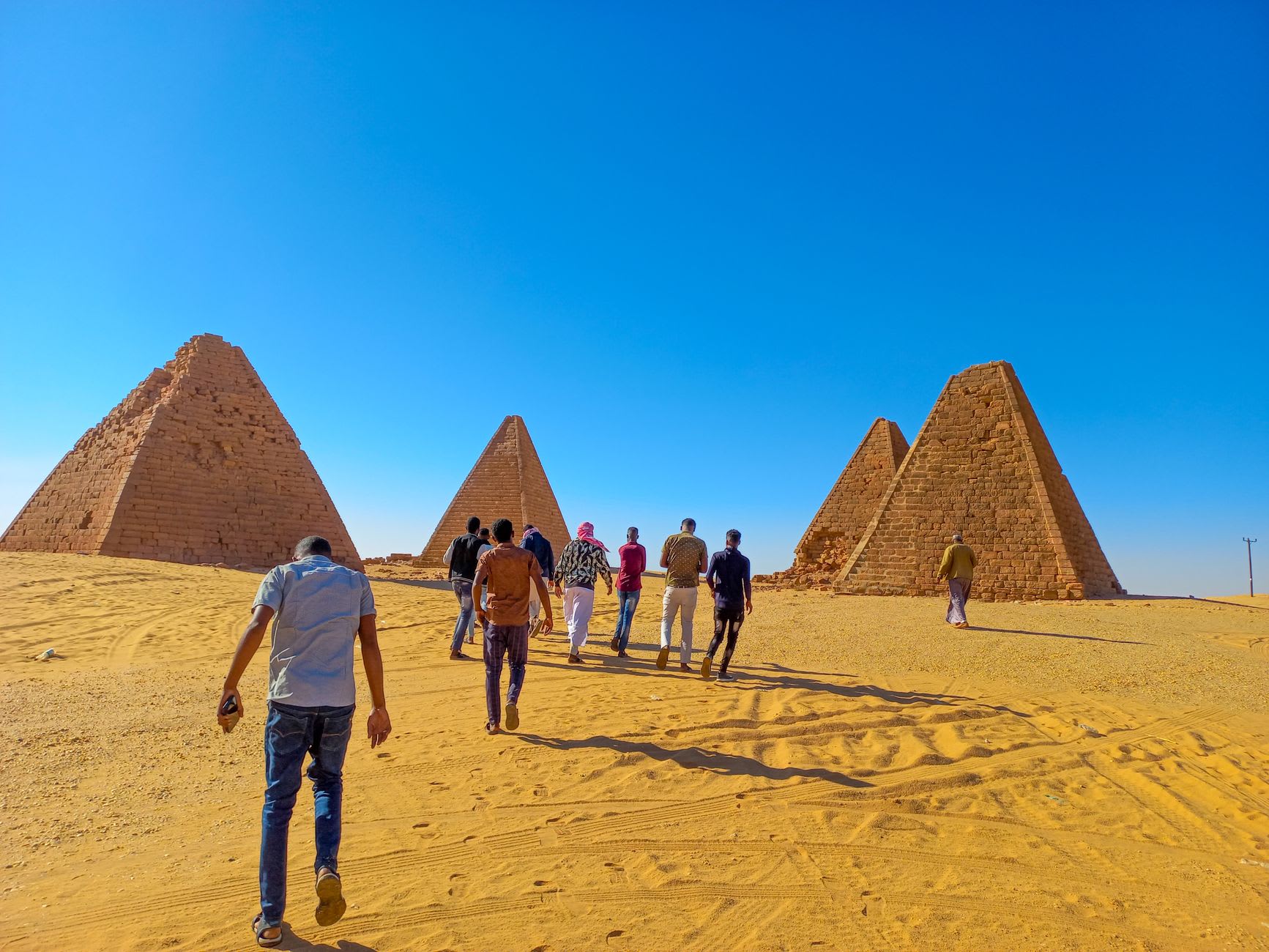
Sudan has more pyramids than Egypt and a fraction of the visitors, and nowhere did that strangeness sink in for me as completely as at Musawwarat es-Sufra. It lies in a wide desert valley east of the Nile, between the royal city of Meroe and the temples of Naga, down a sandy track that our driver navigated by instinct and by the position of a single distant acacia. When we arrived, there was no gate, no ticket office, no other car. There was a sweep of honey-coloured ruins, a custodian dozing in the shade, and a single goat that adopted us for the afternoon.
The Great Enclosure
The heart of the site is the Great Enclosure, the Hafir — a vast, baffling complex of temples, courtyards, ramps and corridors built by the kings of Meroë more than two thousand years ago, in the centuries when this Kushite kingdom traded and warred as an equal with Rome. No one is entirely sure what it was for. The labyrinth of low walls and ramped passages does not match any temple plan elsewhere, and archaeologists have argued for everything from a religious pilgrimage centre to a training ground for war elephants. The elephant theory is not idle: elephants are carved into the walls, and a great stone elephant stands guard at one corner, trunk and tusks worn soft by twenty centuries of wind-borne sand.
Lia and I wandered the corridors for over an hour and met no one. You can put your hand flat against the columns, trace the graffiti that Meroitic visitors scratched into the stone before the time of Christ, walk through doorways that no rope holds you back from. After years of shuffling past Egyptian monuments in roped-off herds, the freedom of it was almost disorienting. I kept waiting for a guard to blow a whistle. None came. Only the goat, clattering after us through the ruins with proprietary interest.
The Temple of Apedemak
A short walk away stands the Lion Temple, dedicated to Apedemak — the lion-headed warrior god of the Kushites, a deity with no Egyptian equivalent, fierce and entirely African. It was reconstructed in the twentieth century from its fallen blocks, and its outer walls carry superb reliefs: the king smiting his enemies, processions of gods, and Apedemak himself rising as a serpent from a lotus. In the low gold light of late afternoon the carvings deepen and sharpen, every chisel mark suddenly legible.

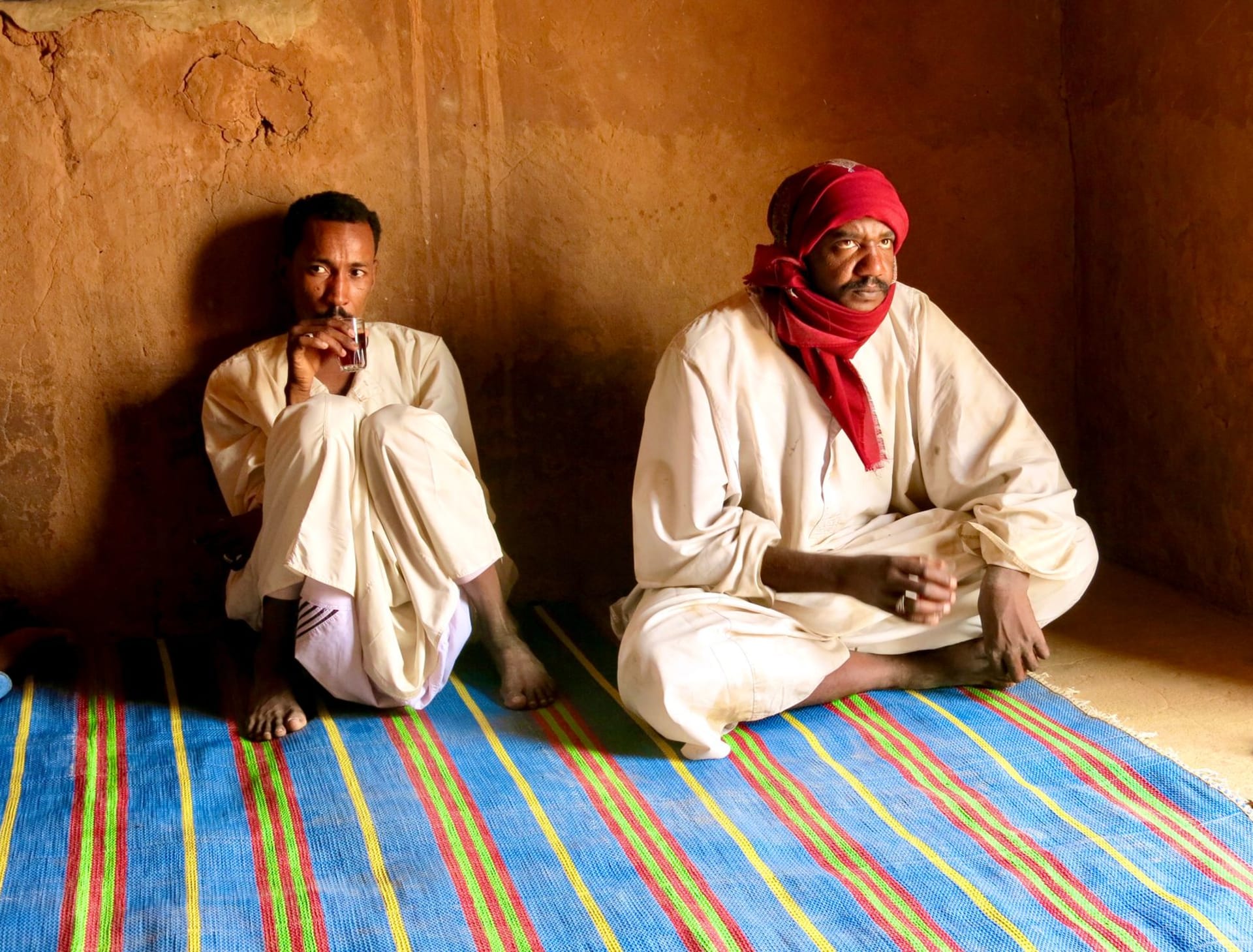
We sat against the warm temple wall as the sun went down and the desert turned from yellow to rose to a deep blue, and the custodian brought us scalding sweet tea in tiny glasses without being asked. I have stood before more famous monuments and felt less. Musawwarat gives you the rarest thing in the ancient-monument business: time, silence, and space to feel the weight of what you are looking at.
Practicalities: Musawwarat is usually visited together with Naga and the Meroe pyramids on an overland loop from Khartoum, with a 4x4 and a local driver-guide. Bring water, sun protection, and patience for the sandy tracks. Check current travel advice for Sudan carefully before any trip; conditions can change quickly.