Africa
Sudan
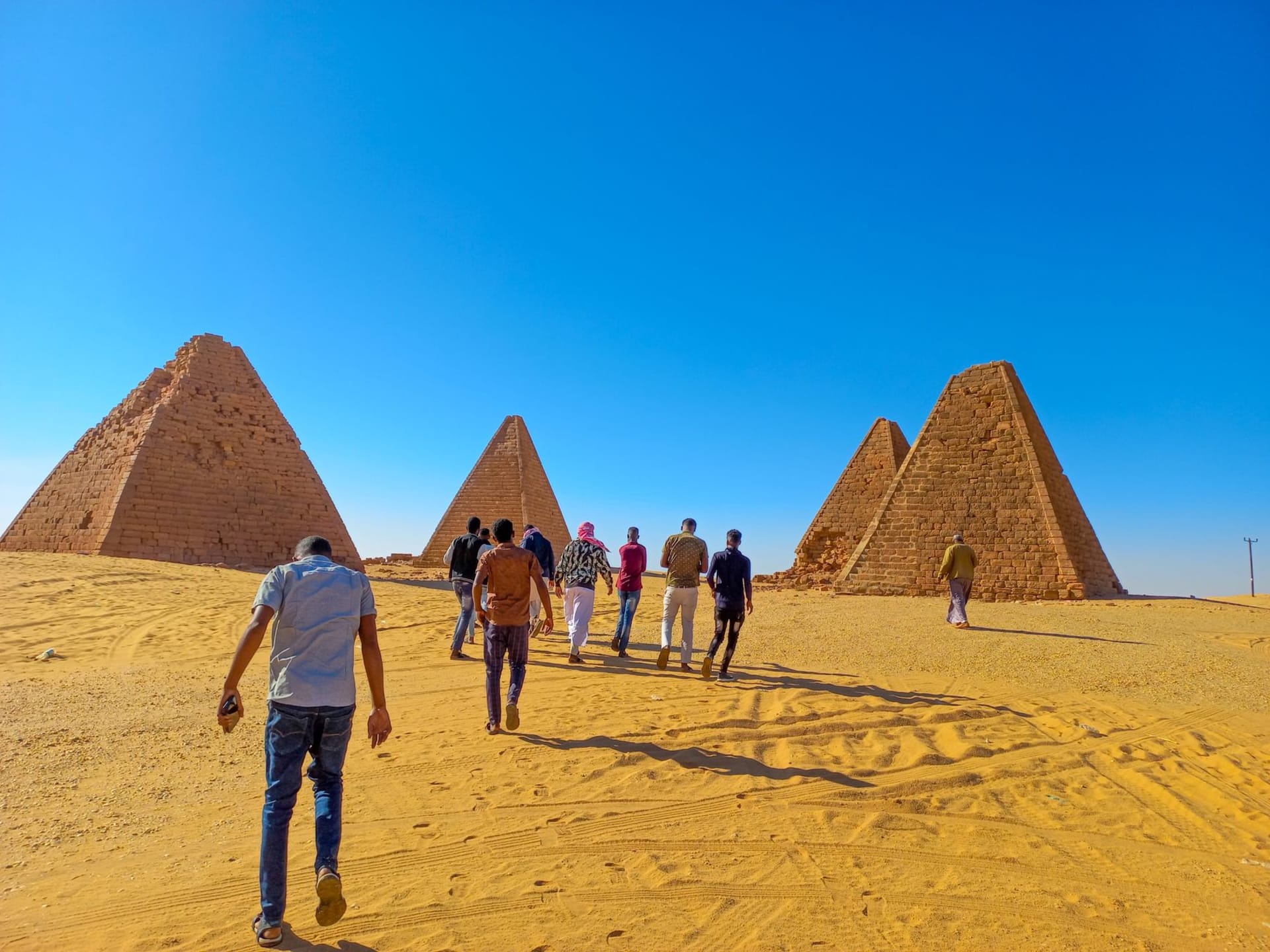
"The pyramids here are sharper, wilder, and completely uncrowded."
I arrived in Khartoum on an early morning flight from Addis Ababa, bleary-eyed and unsure what I’d actually gotten myself into. The taxi driver insisted on stopping for ful — a slow-cooked fava bean stew served in a cracked clay bowl with bread — before taking me anywhere near my guesthouse. I ate it on a plastic stool beside a roundabout while the city woke up around me. That breakfast set the tone for everything that followed.
Sudan is one of those places that refuses to give itself to you quickly. The pace is deliberate, almost stubborn. Tea houses open before dawn and close around noon. People sit and talk at length about nothing and everything. In the north, along the Nile, small agricultural villages appear between stretches of desert so flat and orange that the horizon looks painted. The pyramids at Meroe — and I cannot stress this enough — are not what you expect. They are steeper than the Egyptian ones, darker in color, and on the day I visited, I counted fewer than a dozen other people. You can walk up to them, touch them, sit at their base and eat a sandwich in the shade they cast. There is a caretaker. He brought me tea. I stayed two hours.
The stretch between Khartoum and Karima along the Nile is worth the overland journey. The ferry crossing at Karima, the hulking silhouette of Jebel Barkal at dusk, the ruins of Napata half-covered in wind-blown sand — this is the kind of travel that requires patience but pays back in proportion. Food stays simple: grilled meat, flatbread, salads of tomato and onion, sweet mint tea and sometimes an impossibly strong coffee. I ate well the entire time, never expensively.
When to go: November through February. The desert heat between April and September is brutal — 45°C is not unusual inland. The cooler months bring reasonable temperatures, clear skies, and the occasional morning mist rising off the Nile. Avoid the rainy season (July–August), when some roads in the south become impassable.
What most guides get wrong: Every article about Sudan begins with a warning that it’s difficult, dangerous, or closed to visitors. Some of that was true at various points. But what guides consistently miss is how straightforward the experience is for an independent traveler willing to do a little logistical work upfront. Visas, permits for certain archaeological sites, registering with authorities on arrival — it’s bureaucratic, not threatening. The hospitality I encountered was among the most disarming I’ve experienced anywhere. People stopped me on the street not to sell something but to ask where I was from and whether I’d eaten.