
The Train Through Tea Country — Six Hours That Rearrange Your Priorities
A blue train, open doors, emerald hillsides, and the slow realization that the journey is the destination Sri Lanka was built around.

Asia
"The country that fits a continent into an island."
An island smaller than Ireland that contains ancient cities, tea highlands, wild beaches, and one of the great train rides on earth.

Sri Lanka is absurdly compact for what it contains. In an area roughly the size of West Virginia, you can visit 2,500-year-old ruins, surf world-class waves, hike through tea plantations that look like green velvet draped over mountains, spot leopards in the wild, and eat rice and curry so good it redefines what you thought rice and curry could be. The distances are short — Colombo to Kandy is three hours, Kandy to Ella is a six-hour train ride through some of the most beautiful scenery in Asia — and the variety is unreasonable. No country this small should contain this much.

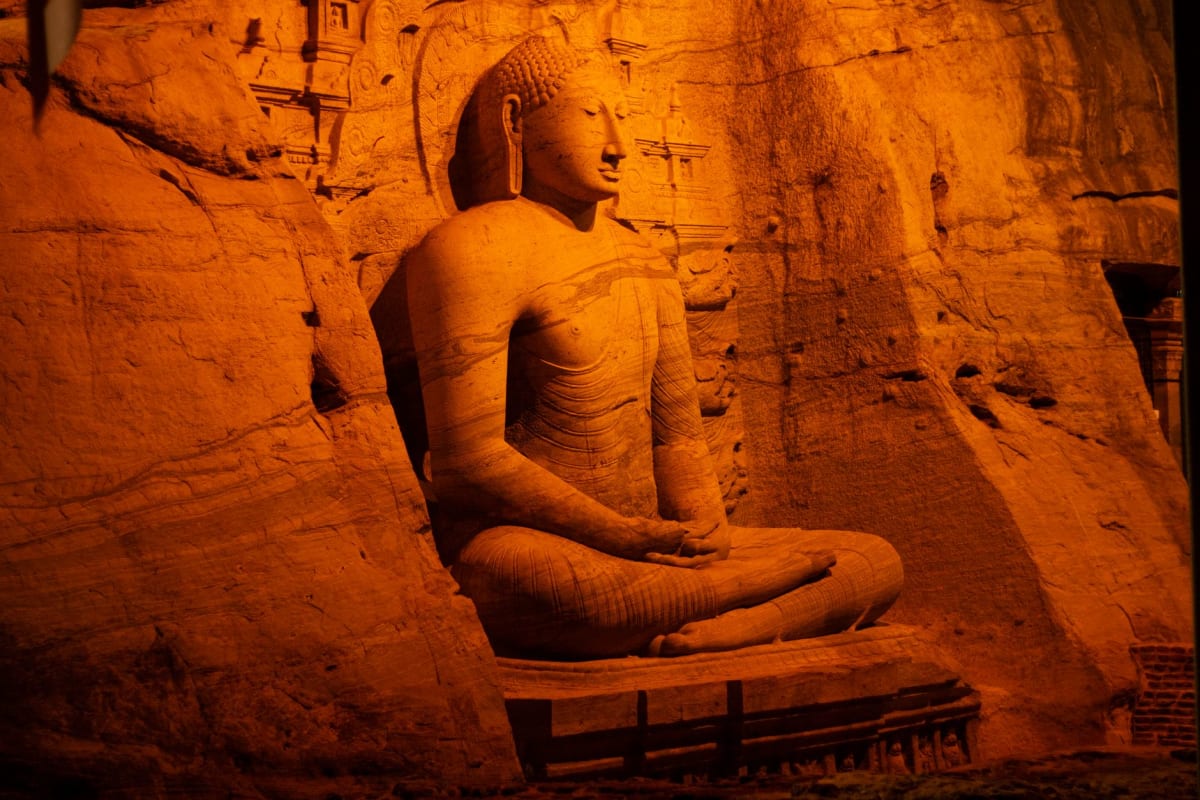
The Cultural Triangle in the north-central plains holds ruins that rival anything in Southeast Asia and draws a fraction of the visitors. Anuradhapura was the island’s first great capital, a spread of giant white domes and a sacred fig tree that pilgrims still tend. Polonnaruwa is the medieval successor, and its reclining and standing Buddhas carved from granite are easier to appreciate on a bicycle than on a bus.
Sigiriya is the famous one. The fortress on top of Sigiriya Rock rises abruptly out of the forest, with frescoes along the climb and a view from the summit across the plain. Go as early as you can, before the heat and the queue. Nearby, the Dambulla Cave Temple holds painted caves full of Buddha statues.
Kandy sits around a lake in the hills, home to the Temple of the Tooth, which holds a relic of the Buddha. If you can arrange it, the Kandy Perahera in summer is a procession of drummers, dancers and decorated elephants that carries on through the night. The Knuckles Range rises to the northeast, a rugged massif of forest and grassland that gets few visitors and is wonderful for walking.

The train from Kandy to Ella is the experience that defines Sri Lanka for most travelers, and deservedly so. The blue carriages wind through tea country with the doors open, mist rolling through, emerald hillsides falling away into valleys dotted with Tamil tea pickers in bright saris. Nuwara Eliya is the cool hill town in the middle of it, with tea estates and colonial-era villas. Haputale has quieter ridgelines.

Ella is a small village in a gap in the hills, with views down to the plains. The walk to Ella Rock takes a few hours, starts along the railway line, and finishes with a wide view over the valley. The Nine Arches Bridge is nearby, where the blue train crosses a curved stone viaduct through the trees, and standing there when it passes is worth the wait.

The south coast, from Galle’s Dutch colonial fort to the surf breaks of Mirissa and Hiriketiya, has the laid-back beach culture that Bali had twenty years ago. Galle’s fort is a walled old town of white-washed houses, cafés and a lighthouse, best at the end of the day. Mirissa is known for its crescent beach and for whale-watching boats in season.
On the east coast, Arugam Bay has a long surf point and a relaxed village feel, and Trincomalee has a deep natural harbour with beaches on either side. Far in the north, Jaffna is a Tamil city with its own food, temples and pace, and it is a different Sri Lanka again.

Eat everything. Rice and curry arrives as a small feast of vegetable curries, dhal, sambols and something fried, all for a modest sum at a roadside place. Hoppers, a crisp bowl-shaped pancake with an egg in the middle, are breakfast, and kottu roti, chopped on a hot griddle, is dinner, heard long before you see it.
Temples and shrines are living places, not monuments. Cover shoulders and knees, take off your shoes and hat before entering, and never pose with your back to a statue of the Buddha. Many sites sell separate tickets for foreigners, and the prices change, so check at the entrance. Carry small bills for tuk-tuks and snacks, agree on a price before you climb in, and expect to be offered tea wherever you stop for more than a few minutes. People are curious and warm, and a few words of Sinhala or Tamil, even badly pronounced, go a long way.
Trains are slow, scenic and cheap, but the popular seats on the Kandy to Ella line sell out, so reserve ahead if you can. A driver with a car is the easiest way to link the Cultural Triangle, the hills and the south, and many travelers hire one for a week or two. Roads are winding and traffic is busy, so allow more time than the map suggests. Buses are frequent and packed. For short hops on the coast, a tuk-tuk is hard to beat.
Pace yourself. It is tempting to try to see the ruins, the tea country, a safari park and the beach in ten days, but the best moments tend to come in the gaps: a roadside breakfast of hoppers, a monk walking along a rice paddy, a long rain shower watched from a veranda with a pot of tea.
When to go: Sri Lanka has two monsoon seasons affecting different coasts. The west and south coasts are best from December to April. The east coast is best from May to September. The hill country is pleasant year-round but driest from January to April. You can always find good weather somewhere on the island.
What most guides miss: They underestimate the food. Sri Lankan cuisine — fiery pol sambol, hoppers with egg, black pork curry, kottu roti chopped on a hot griddle at midnight — is one of Asia’s most underrated. Eat everything. Also, take the train. Every time there is a choice between a bus and a train, take the train.
Explore
 sri-lanka
One of the ancient world's great cities, where sacred trees and colossal stupas mark 2,000 years of Buddhist devotion.
Explore sri-lanka
Sri Lanka's surf capital — a languid east-coast bay where the waves are world-class and the vibe is barefoot.
Explore sri-lanka
A port city in perpetual reinvention, where colonial grandeur meets street-food chaos on every corner.
Explore sri-lanka
Five caves of gilded Buddhas and ceiling murals at the Cultural Triangle's most dramatic site.
Explore sri-lanka
A mountain village perched on the edge of a valley so green it looks like a painting left to dry.
Explore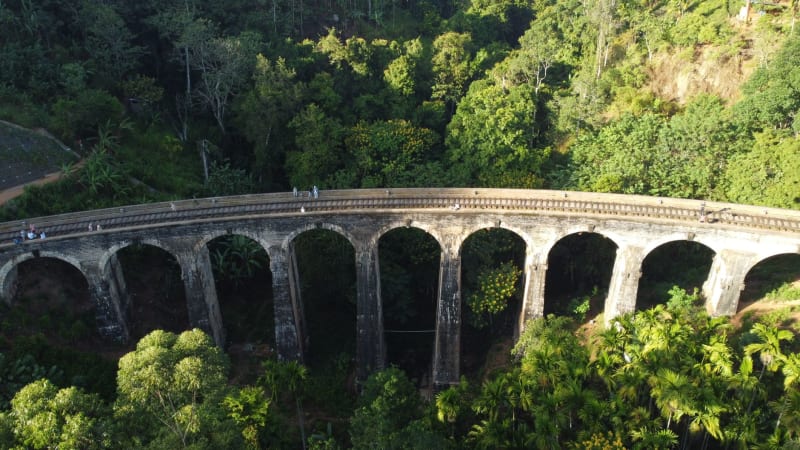 sri-lanka
A hike through tea estates above the mountain village of Ella to a summit with views across the southern lowlands.
Explore sri-lanka
A walled fort city where Dutch colonial architecture meets Indian Ocean sunsets and a thriving creative scene.
Explore sri-lanka
A ridge-top hill station where the whole of southern Sri Lanka spreads below the cloud line each morning.
Explore sri-lanka
Tamil Hindu culture, Dutch colonial forts, and vivid kovil gopurams at Sri Lanka's northernmost tip.
Explore sri-lanka
A sacred hill city wrapped around a lake, guarding the island's most revered relic.
Explore sri-lanka
The annual Esala Perahera festival sends a hundred caparisoned elephants through Kandy's torchlit streets.
Explore sri-lanka
A UNESCO biosphere of cloud forest ridges and forgotten villages east of Kandy, named for their knuckled appearance from below.
Explore sri-lanka
A crescent of golden sand on the south coast where blue whales surface just offshore.
Explore sri-lanka
A hill station above the tea country where colonial bungalows and misty estates evoke a bygone era.
Explore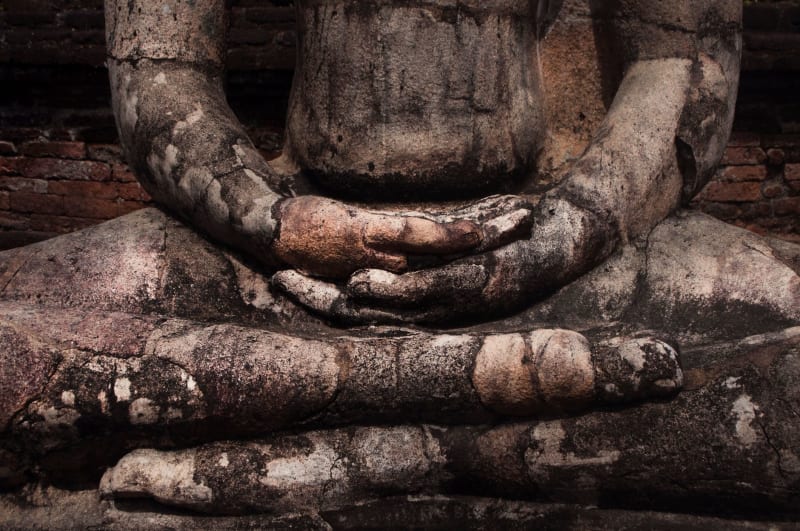 sri-lanka
A medieval royal capital scattered across the dry-zone plain, where you cycle from ruined palace to giant rock-carved Buddhas under flame trees, and the whole vast site is held together by a thousand-year-old reservoir the size of a sea.
Explore sri-lanka
A fifth-century fortress built atop a 200-metre rock column, rising from the jungle like a fever dream.
ExploreFree download
A curated PDF itinerary with honest picks, real restaurants, and the details that matter — the kind you'd actually print and bring.
Download the guide