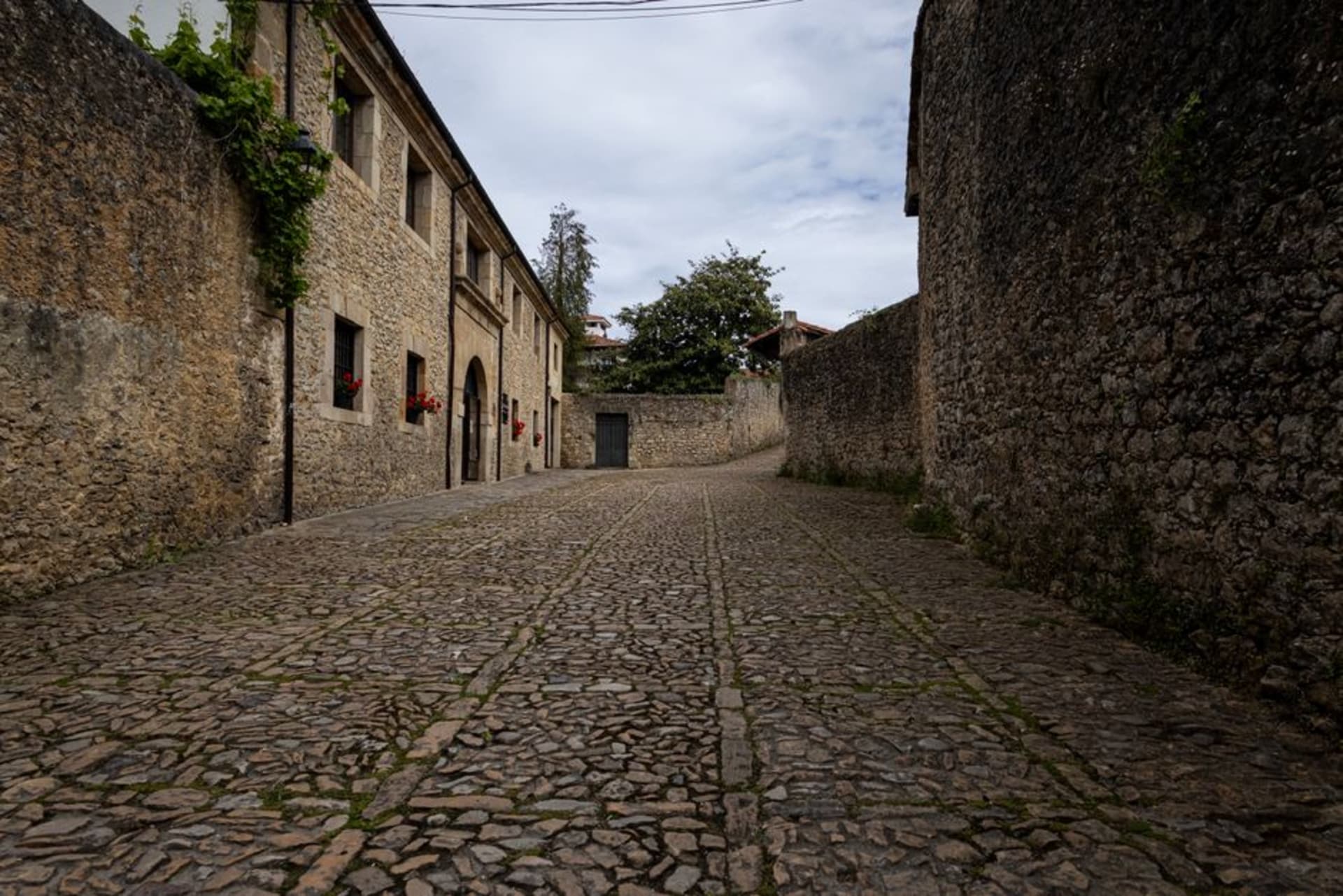
Santillana del Mar
"They call it the town of three lies, and I fell for every one of them happily."
A medieval village of honey-colored stone that has neither a saint named Santillana nor a sea, and somehow that riddle is the first thing anyone tells you.
Everyone in Cantabria repeats the same joke about Santillana del Mar before you’ve even arrived: it is “the town of three lies,” because it is neither holy (santi-), nor flat (llana), nor by the sea (del mar). I heard it from the woman who ran the guesthouse where I stayed, delivered with the weary satisfaction of someone who has said it a thousand times and still enjoys it. She wasn’t wrong to enjoy it. The name is a corruption of Santa Juliana, the martyr whose relics drew pilgrims here in the ninth century, and the town sits a few kilometers inland from the coast, tucked into low green hills that only pretend to be flat.
What isn’t a joke is the stone. Santillana del Mar is one of the best-preserved medieval towns in Spain, and walking down Calle de las Lindas or through the Plaza Mayor feels less like sightseeing and more like trespassing on a film set that happens to be seven hundred years old and fully inhabited. The houses are grand rural palaces built by Cantabrian families who made their money in the Americas and brought it home to carve into coats of arms above their doorways — heraldic shields, sun motifs, the occasional skull-and-crossbones warning meant to remind passersby of mortality. I spent a good hour just tilting my head back at lintels, trying to decode which families had married which.
The Collegiate Church and the Cave Nobody Sees First
At the eastern end of town stands the Colegiata de Santa Juliana, a Romanesque church built to house the saint’s remains, with a cloister of carved capitals — vine leaves, biblical scenes, a few grotesque faces that the stonemasons clearly enjoyed more than their subject matter demanded. I sat in that cloister for a while, out of the wind, and it was one of the quietest fifteen minutes of the whole trip.
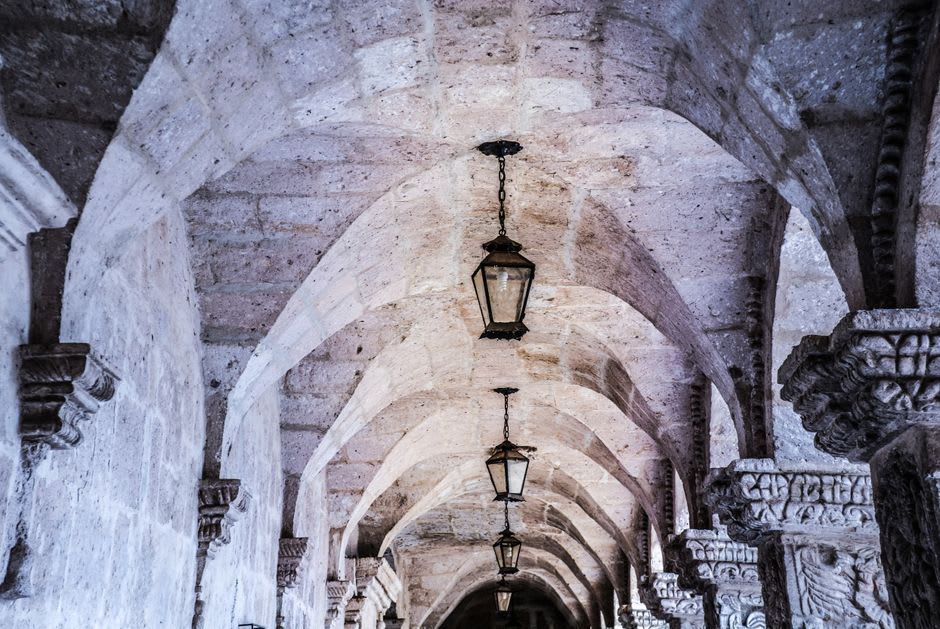
But the real reason Santillana del Mar exists on most itineraries at all is two kilometers away, underground. The Cave of Altamira holds Paleolithic paintings of bison, deer, and horses so accomplished that when they were first shown to scholars in 1880, most refused to believe prehistoric people had painted them — the technique looked too sophisticated, the pigment too confident. Picasso is supposed to have said, after visiting, that after Altamira “all is decadence.” The original cave is closed to protect the paintings, but the museum next to it built a meticulous full-scale replica, the Neocueva, using the same techniques and materials the original artists worked with. Standing in that dim reconstructed chamber, looking up at a ceiling of ochre bison rendered with more anatomical honesty than most Renaissance paintings manage, I felt the vertigo you get from touching something genuinely ancient — 36,000 years, give or take, which makes the medieval stone up the road look almost contemporary.
Slow Streets and Quesada
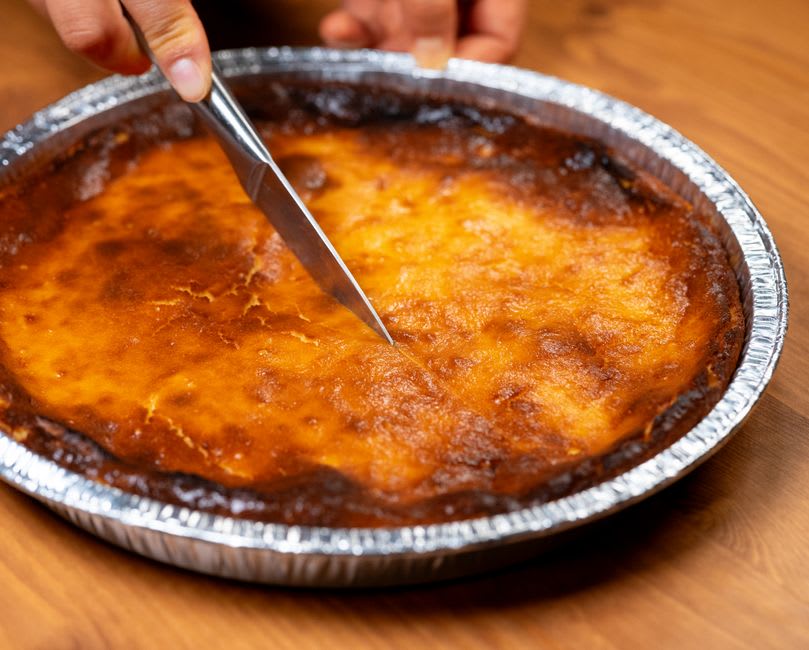
Back in town, Santillana del Mar rewards nothing but slowness. There isn’t a single must-see monument you tick off and leave — it’s the whole ensemble, the way morning fog sits in the valley and burns off by midday, the smell of woodsmoke from restaurant chimneys even in shoulder season, the local quesada pasiega (a dense, lightly sweet cheesecake made with fresh cow’s milk from the surrounding pastures) sold in nearly every bakery window. I bought a slice from a shop near the Plaza de las Arenas and ate it walking, which the owner seemed to find slightly scandalous — this is a food meant to be eaten seated, apparently, with coffee.
The dairy farms that ring the town aren’t incidental scenery, either — Cantabria’s entire identity is bound up with its cows, its green hills, its rain. Santillana del Mar just happens to be the postcard version of that landscape, dressed in stone instead of pasture.
When to go: Late spring (May–June) and early autumn (September) bring mild weather and thinner crowds than August, when Spanish domestic tourists fill the town’s few hotels; book the Altamira Neocueva tickets in advance regardless of season.