Alicante
"Alicante makes you climb for its best view, and then makes sure you never forget it was worth the climb."
A Mediterranean port city guarded by a castle carved into a mountain, where the palm-lined seafront and the tapas bars of the old quarter run on completely different clocks.
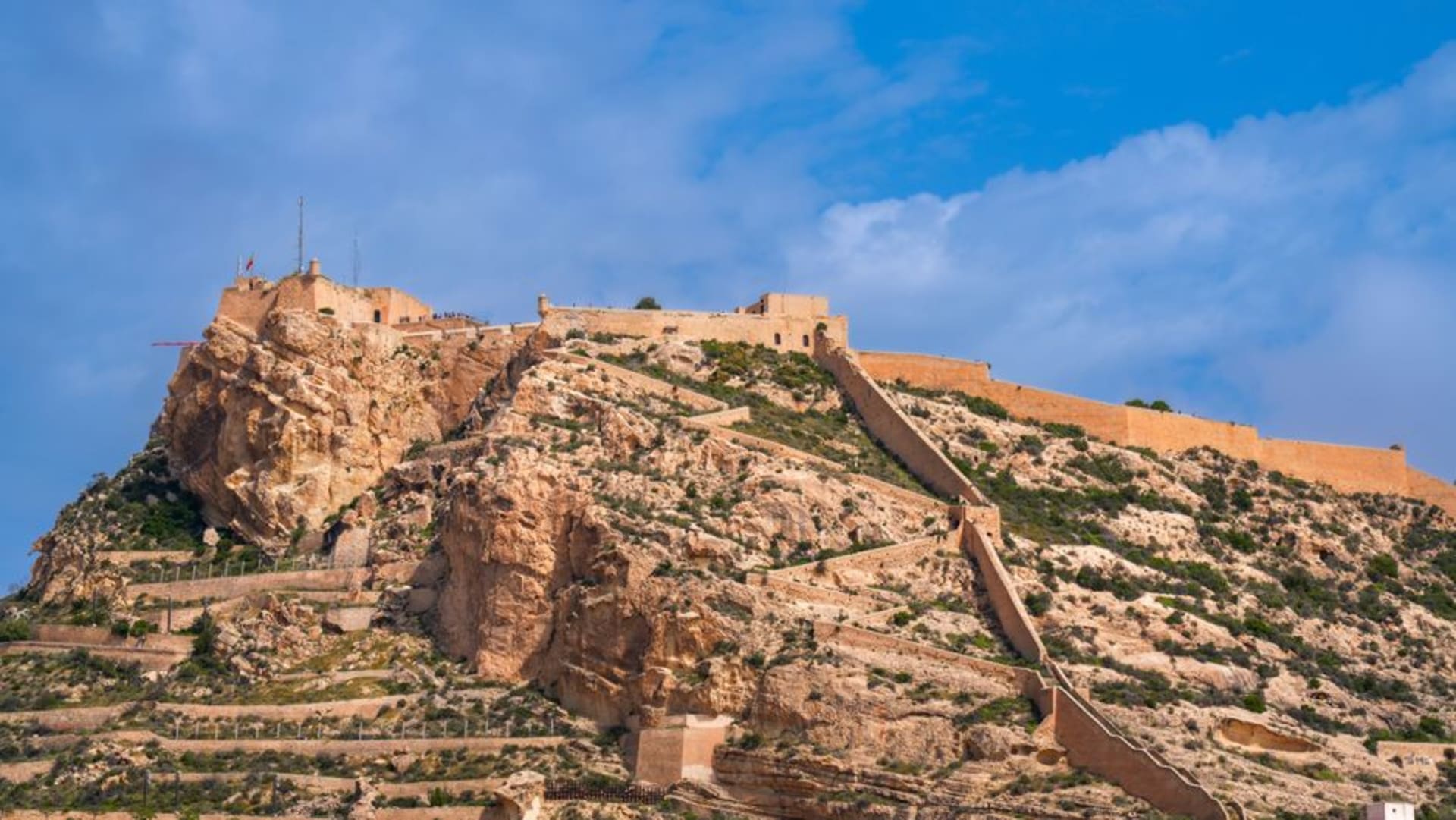
The Castillo de Santa Bárbara sits on top of Mount Benacantil like it grew there, which in a sense it did — the fortress incorporates the bare rock of the hill directly into its walls, and the whole structure has watched over this stretch of the Costa Blanca since at least the 9th century, with roots that may go back further still to Iberian and Roman fortifications on the same outcrop. I took the elevator carved into the mountainside from the Postiguet beach rather than the switchback path, which felt slightly like cheating until I stepped out onto the ramparts and stopped caring about how I’d gotten up. The whole bay opens out below: the marina crowded with masts, the old town’s tiled roofs, and beyond it the Mediterranean doing that particular flat, hard blue it does along this coast in the hours before sunset.
A City Built for Walking Slowly
Alicante’s most photographed stretch is the Explanada de España, the palm-fringed promenade along the harbor paved with nearly six million marble and terrazzo tiles laid in a rippling wave pattern — a design finished in the 1950s that still makes the whole boulevard feel like it’s gently in motion underfoot. I walked it at the hour when the evening paseo gets going, families and old men playing dominoes at little folding tables under the palms, ice cream stands doing brisk business, everyone moving at exactly the pace the promenade seems designed to enforce. It’s touristy, sure, but it’s also just how this city actually lives — the ritual predates the tourists by generations.

El Barrio and the Blue Doors
Behind the harbor, the old quarter known as El Barrio (officially the Barrio de Santa Cruz) climbs the lower slope of Benacantil in a tangle of narrow streets, whitewashed houses, and flowerpots crammed onto every windowsill and doorstep. Front doors here are famously painted in bright, almost defiant colors — blues, yellows, reds — a tradition locals maintain partly out of pride and partly, I was told over a plate of arroz a banda one evening, as a quiet form of neighborhood identity that survived decades when this hillside was one of the poorer parts of the city. Now it’s dense with small bars, and the local rhythm of tapeo — moving from bar to bar for a small plate and a glass of wine at each — is alive here in a way that doesn’t feel staged for visitors. I had oysters and grilled sardines at a bar barely big enough for six people, and gambas al ajillo two doors down, and neither meal cost what a fraction of that quality would have cost me back home.
Alicante was also, worth remembering, the last Republican-held city on mainland Spain before Francisco Franco’s forces took it in the final days of the Civil War in 1939 — a fact the city doesn’t dwell on for visitors but that adds a layer of gravity underneath its cheerful seafront persona, if you know to look for it. Between the beach, the castle, and the old quarter, it’s a city that rewards exactly the kind of unhurried, half-planned wandering I try to build every trip around.

When to go: May, June, and September offer warm seas without the peak-August crowds and heat; the castle views are best an hour or two before sunset, when the light turns the bay gold.