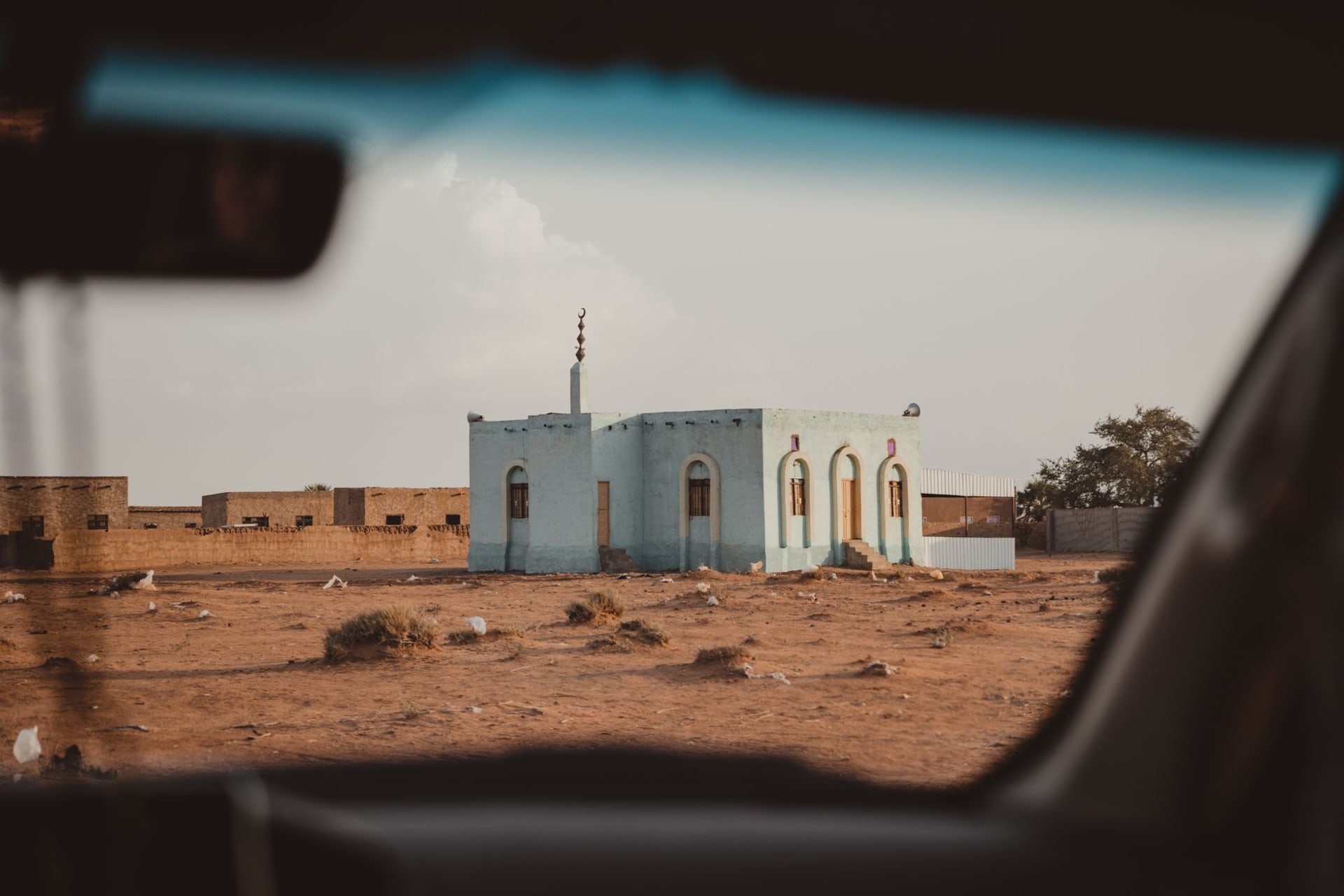
Mundri is not on most itineraries. It sits in the bend of the Nile where the river turns east after coming north from Uganda, a small administrative town in Western Equatoria State that functions as a trading point for the farming communities in its hinterland. I ended up there by a combination of circumstance and road conditions — a route I had planned elsewhere became impassable after two days of rain, and Mundri was where the car could reach. I stayed for four days and left wishing I’d planned it from the beginning.
The Nile Bend
At Mundri, the White Nile — still called the Albert Nile this close to the Ugandan border, though the naming conventions shift depending on who you ask — makes a significant curve. The river is narrower here than at Juba, faster, and flanked by forest that comes down close to the water in places. I found a spot on a bluff above the river where you could see the bend clearly, the water silver in the morning light, a cattle egret working the shallows on the far bank. I sat there for most of one morning with bad coffee from a thermos and did not regret a single minute of it.
The current moves visibly at Mundri, which it doesn’t further north where the gradient flattens. Small fishing dugouts move with and against it, the paddlers reading the water in ways that reflect generations of practice.
Moru Country
The Moru people are the dominant group in the Mundri area, agriculturalists who have farmed this corridor between the Nile and the Congo basin for centuries. Their villages are arranged around compounds where extended families share cooking fires, and the agricultural calendar governs daily rhythms in ways that the town barely interrupts.
I walked out to a village about six kilometers from Mundri with a schoolteacher named Agnes who was returning home for the weekend. The path ran through a mixture of cultivated fields and secondary forest — groundnut plots, cassava gardens, a sorghum field with birds working the edges. Agnes pointed out plants along the way that her grandmother had taught her as medicines, wild greens that went into the pot, a tree whose bark treated fever. The knowledge was dense, specific, and casually held.
Forest Edge
The forest around Mundri is on the eastern edge of the Congo basin forest system — not the dense closed-canopy rainforest of Yambio further west, but a transition zone where forest patches alternate with savanna and cultivation. The bird life reflects this ecotonal richness: forest species from the west, savanna species from the east, and the river corridor species threading through both. I’m not a dedicated birder but even I noticed the volume and variety by comparison with other places I’d traveled in the country.
The sounds at dusk from my guesthouse veranda were layered in a way I hadn’t experienced elsewhere in South Sudan: insects, frogs from the river, something large moving through undergrowth I couldn’t see, and somewhere a radio playing a gospel song in Moru. The night insects produced a sustained high note that rose and fell with the temperature.
When to go: October through February is the most comfortable window. The equatorial location means Mundri receives rain year-round, but the heavy season (May–September) makes roads very difficult. The river is scenic in all seasons but most manageable for travel around it between November and March. Confirm road conditions from Juba before departing — this part of Western Equatoria can be cut off after significant rainfall.