Bor
"The cattle move at their own pace. Everything in Bor eventually learns to do the same."
Bor sits on the east bank of the White Nile in Jonglei State, about 190 kilometers north of Juba by road — though “by road” is a phrase that earns its air quotes here depending on the season. I reached it on a small charter flight over a landscape that, from the air, looks like the earth is still deciding whether to be land or water. Floodplains spread out in every direction, green and silver, punctuated by the dark lines of cattle tracks worn into the soil over generations.
The Cattle Camp Reality
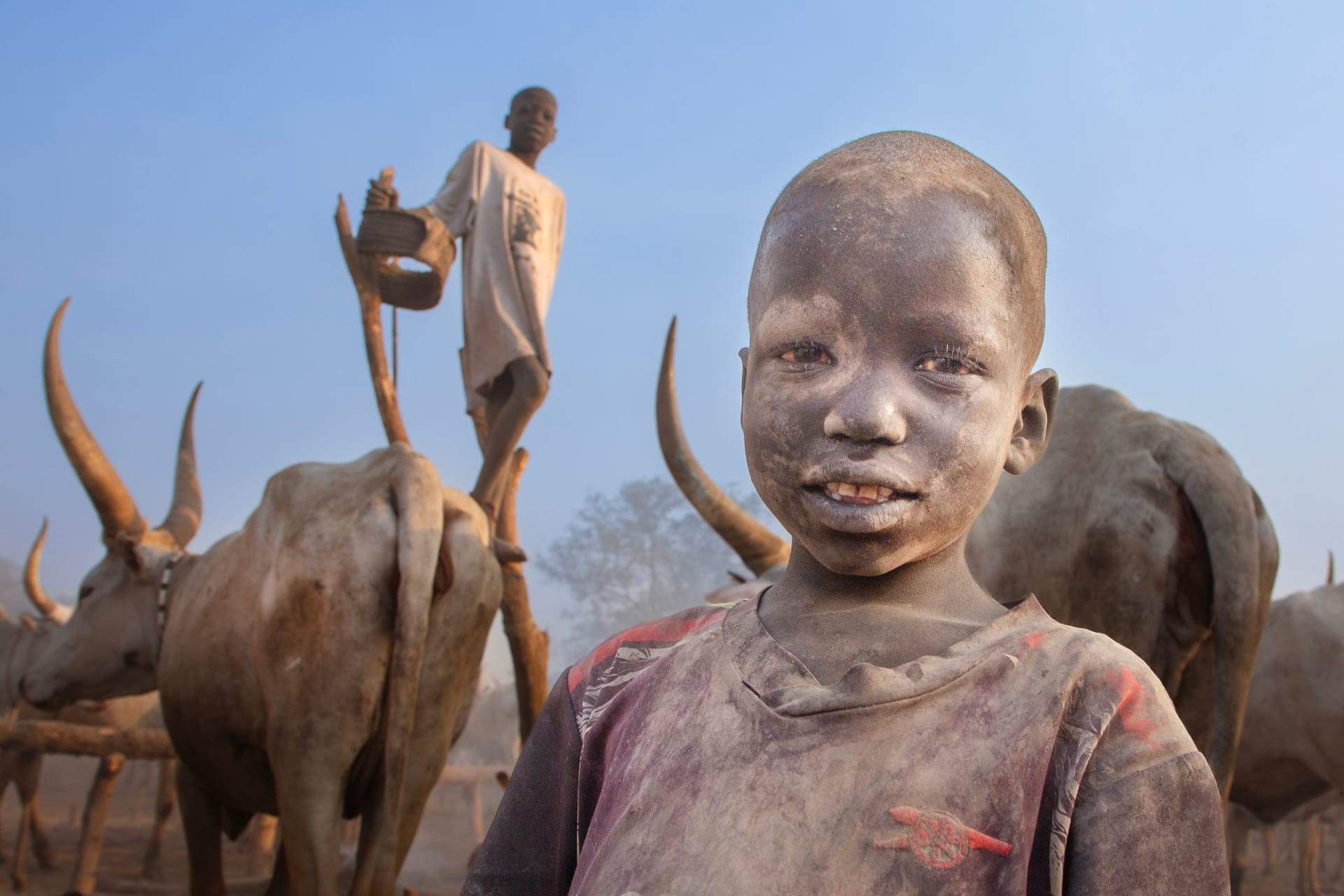
The Dinka are inseparable from their cattle, and Bor is as close to the center of that world as I’ve been. I visited a cattle camp on the outskirts of town in the early morning — the hour when the fires are still smoldering and the air smells of dung smoke and dew together. Dozens of long-horned Ankole cattle stood in loose formations, their horns trained by rope into elaborate curves over years. Young men moved among them with an ease that made me understand the word “herder” differently: this isn’t occupation, it’s relationship.
The cattle are currency, bride wealth, status, spiritual anchor. A man with many cattle is a man of consequence; a man who loses them has lost something that money can’t describe. I talked through a translator with an elder who had walked his herd south during the flooding years. His account of that movement — hundreds of kilometers on foot, the cattle guiding as much as being guided — had the matter-of-fact quality of someone describing weather.
A Town That Keeps Coming Back
Bor has been destroyed and rebuilt more than once. The town was a flashpoint during the civil conflicts of the 1990s and again in 2013. The evidence is written in rooflines — new construction next to the blackened shells of buildings no one has had the resources to demolish. Yet the market on the main street functions with full conviction: sacks of grain, women selling fried bread at plastic tables, motorcycle taxis revving at the junction. The Nile brings flooding annually and the town absorbs it, moves livestock to higher ground, and returns.
That resilience isn’t photogenic in the way tourism usually wants things to be. It’s more interesting than that — a lived stubbornness that you feel in the way people carry themselves.
On the River at Dusk
The Nile here moves wide and slow. I spent an evening sitting above the bank watching fishermen bring in flat-bottomed boats as the light dropped — the sky going pink and then the specific deep orange of central African dusk that you can’t capture accurately in a photograph, though you’ll try. The calls between boats, the sound of nets, the distant lowing of cattle being brought in for the night. Bor after dark is quieter than Juba in ways that feel earned.
If you come expecting infrastructure, you’ll be frustrated. If you come expecting honesty about what it means to build and rebuild a place repeatedly, you’ll find it here in abundance.
When to go: December through March is the dry season and the most accessible window. The Nile floods between June and October, making roads around Bor impassable and cutting off cattle camps. April and May can be transitional and unpredictable. Always confirm current security and road conditions before traveling to Jonglei State.