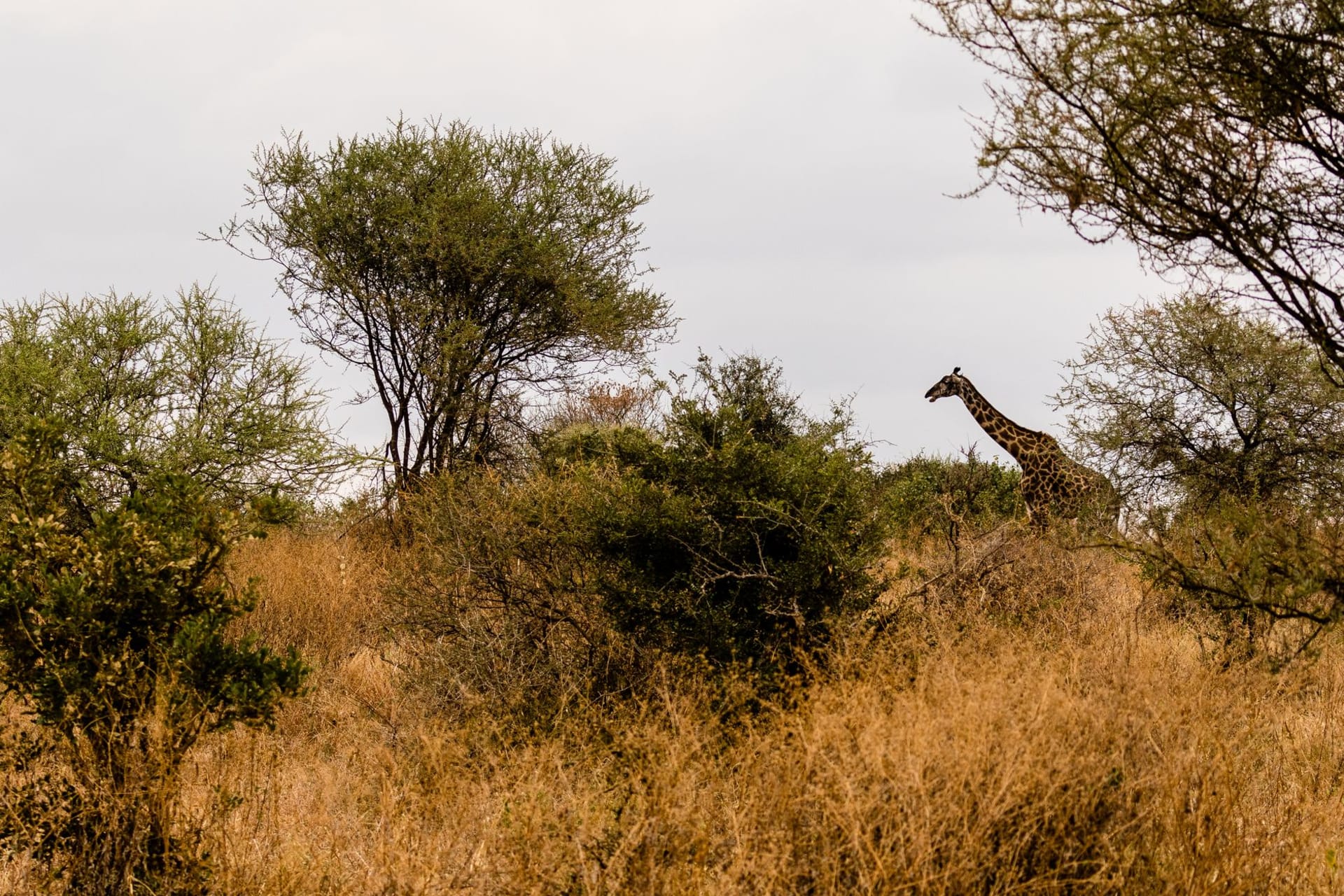
Boma National Park
"I had read that the migration here rivals the Serengeti's. What I had not read is that almost no one comes to see it."
Some places are hard to get to because the road is bad. Boma is hard to get to because, in a sense, there is no road — you fly in on a small chartered plane over a green-gold immensity that goes on past the horizon in every direction, and you understand within minutes why this is one of the least-visited great wildernesses on the planet. Lia gripped my arm during the descent, not from fear but because below us, suddenly, the grassland was moving. Not wind. Animals. Tens of thousands of them, flowing.
A Migration Almost No One Sees
Boma sits on a high plateau in eastern South Sudan, near the Ethiopian border, and together with the Bandingilo grasslands to the west it forms the stage for the migration of the white-eared kob — over a million antelope, by the surveys, moving in a great seasonal loop, joined by tiang and Mongalla gazelle. The numbers put it in the same conversation as the Serengeti. The difference is that here there is no fleet of safari vehicles, no lodge with a swimming pool, no other tourists at all. There was us, our guide Simon, a ranger with a rifle, and a horizon full of animals.
I will be honest about what this is and is not. It is not comfortable. Years of conflict have left South Sudan with almost no tourism infrastructure, and the park’s protection has been fragile, threatened by poaching and instability. We camped rough, ate what we carried, and the heat in the middle of the day was a physical weight. But standing on a low rise at dawn while the kob streamed past on both sides, close enough to hear hooves and breathing, I felt something I have felt only a handful of times: the sense of being a guest in a world that does not need me, that is simply, enormously busy with the business of being alive.
The People of the Plateau
Boma is not empty of people. The Murle and other communities live on and around the plateau, herding cattle in a landscape where cattle are wealth, identity, and history all at once. Simon, himself South Sudanese, was careful to remind us at every turn that we were passing through homelands, not a void. We shared tea one evening with a group of herders who regarded my camera with amused tolerance and Lia’s attempts at greetings in Murle with genuine delight.

I would not pretend this is a trip for most travellers, and I would not encourage anyone to go casually. But I am glad beyond words that we did. Boma is what the great African plains were before they were managed, fenced, and photographed into familiarity. To witness the migration here is to see something both magnificent and genuinely precarious, and to be reminded that the map still has wild corners left in it.
Practicalities: Boma is reachable only with serious logistical support — charter flights, permits, experienced local operators, and current security clearance. Conditions and access change with the political situation; never travel here without up-to-date advice and a trusted ground partner. This is expedition travel, not a holiday.