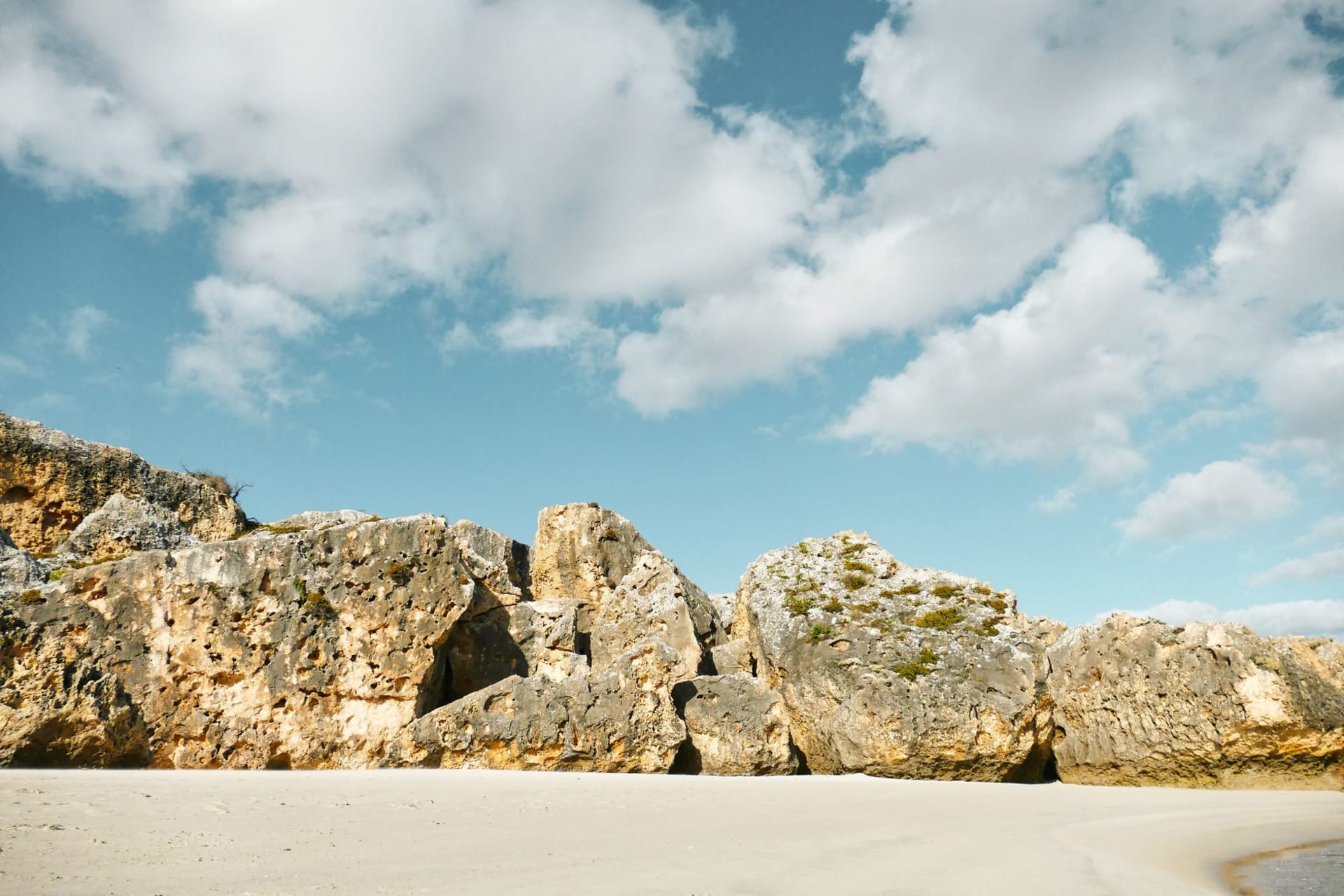
Kangaroo Island
"The sea lion looked at me with complete indifference and went back to sleep."
The Ferry Crossing
The ferry from Cape Jervis takes forty-five minutes and the Southern Ocean does not always cooperate. The morning Lia and I crossed, the swell was running two metres and about a third of the passengers went very quiet very quickly. I stood on the deck in the wind and watched Kangaroo Island come into focus through the spray — the cliffs first, then the dark bush behind them — and thought: this is the right way to arrive somewhere that doesn’t have a bridge.
The island has been cut off from the mainland long enough that its wildlife evolved without many of the mammalian predators that hit Australia’s fauna so hard elsewhere. This means you encounter animals here with a frequency and proximity that takes adjustment. A wallaby hops across the road in front of the car and it’s not a wildlife sighting, it’s a traffic delay.
Seal Bay
Seal Bay Conservation Park is the reason many people come to the island, and it earns that status. You walk down onto the beach accompanied by a ranger and find yourself among a colony of Australian sea lions who are fundamentally uninterested in you. They’re resting, mostly — these animals spend days at sea hunting and then come ashore to sleep it off in the sun. Some of them were close enough that I could hear them breathing.
What I wasn’t prepared for was the smell: a deep, marine-salt-and-animal smell that gets into your clothes. Nor was I prepared for how expressive their faces are up close. A large male raised his head, assessed me with wet dark eyes, and settled back down. I’d been assessed and found irrelevant. That felt about right.
Flinders Chase and the Remarkable Rocks
The western end of the island is Flinders Chase National Park, and it has that quality of remote country that makes you aware of how far you are from anything. The Remarkable Rocks are granite boulders balanced on a coastal dome, sculpted by wind into shapes that look engineered — orange and grey and streaked with lichen, lit up extraordinary colours at golden hour.
I went back at dusk, after most other visitors had left, and sat on the rock platform while the light went from amber to deep red. The wind off the Southern Ocean was sharp enough to require a jacket even in March. Below, the swell broke against the cliff base in a sound that was almost rhythmic.
The Food That Comes From Here
Kangaroo Island produces things that appear on restaurant menus across Australia: a specific honey made by Ligurian bees brought to the island in the 1880s and kept isolated ever since; marron freshwater crayfish; oysters from American River; a cheese made at the Island Pure dairy that has a distinct grassiness from the pastures.
The island’s restaurants and producers let you eat through this in a way that feels earned. I had oysters at a shack near Penneshaw, the shells still cold from the water, with nothing but lemon and a glass of local Chardonnay. Simple to the point of perfection.
When to go: October through April gives you warmth and accessible roads throughout the island. September is beautiful for wildflowers and birdlife with smaller crowds. Avoid school holiday periods in December-January if you want Seal Bay and Flinders Chase with room to breathe.