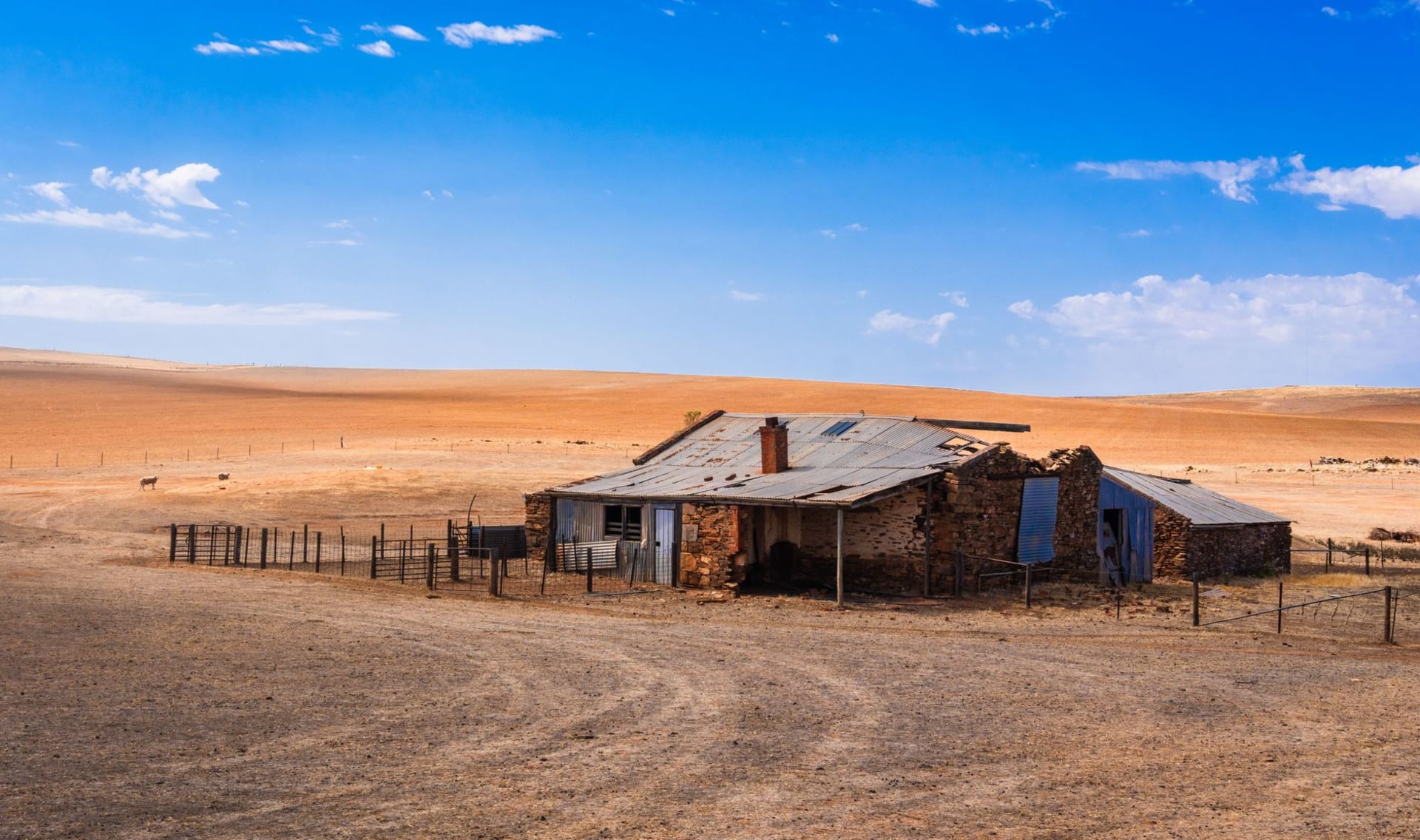
Flinders Ranges
"Five hundred million years of sediment, and not a person in sight."
Arriving in Outback Time
The drive north from Adelaide takes you through the Clare Valley and then the land changes. Slowly at first — the vineyards thinning, the colour of the soil shifting from the dark chocolate of the hills to something drier and more orange — and then decisively, once you pass Quorn, you’re in a different Australia. The distances between things expand. The horizon drops. The sky gets larger than it has any right to be.
I’d seen photographs of the Flinders Ranges but photographs can’t do the thing that happens to the light here. At different hours the quartzite ranges change colour in a way that feels theatrical but is entirely geological — deep red at sunrise, almost purple at midday, ochre and gold at dusk, and then briefly, just before dark, something close to violet.
Wilpena Pound
The centrepiece of the ranges is Wilpena Pound, a natural amphitheatre formed by ancient folded ridges that enclose a valley roughly twelve kilometres long and eight across. From the air it looks like a crater. From the inside, which you access on foot, it feels like walking into a space that was designed — a bowl of grey-green bush ringed by walls of quartzite, the ghost gums white against the stone.
I did the walk to the Wilpena Pound lookout in the early morning and was back before nine, before the heat made the exposed ridgeline unpleasant. The view from the top — the interior of the pound dropping away on one side, the Flinders Ranges extending north toward Arkaroola on the other — is one of those landscapes that makes you understand immediately why Aboriginal people have considered this country significant for sixty thousand years.
Brachina Gorge and Deep Time
The geological trail through Brachina Gorge might be the most legible stretch of deep time I’ve encountered. Signs along the road explain what each layer of rock represents — some of these sediments are six hundred million years old, from the Ediacaran period, before complex animal life existed. There are fossil impressions in the rock walls of creatures that have no living relatives.
I stopped the car repeatedly, mostly for no reason I could articulate. The gorge is narrow enough that the walls shade the road, and the creek bed — dry when I was there — winds between red boulders. Yellow-footed rock wallabies sat on outcrops and watched me with the incurious patience of animals that have never learned to fear people efficiently.
Rawnsley Park and the Stars
At night, this far from Adelaide’s light pollution, the Milky Way does what it’s supposed to do in photographs but doesn’t always do in person — it appears as a genuine structure in the sky, a dense band of stars with depth and variation, not just a smear of light. Staying at Rawnsley Park or the Wilpena Pound Resort means falling asleep to the sound of nothing, which takes some adjustment if you’ve been living in cities.
The cold at night surprised me even in autumn. I woke at four in the morning and stepped outside and stood in the dark looking at the sky for longer than I’d intended, getting cold, not caring.
When to go: April through September is the window. The ranges are genuinely dangerous in summer — temperatures above forty degrees, no shade on the ridges, and emergency services far away. Winter nights are cold but days are perfect for walking: crisp, clear, manageable.