Getting There Is the Point
The Eyre Peninsula doesn’t give itself to you easily, which is most of its appeal. Port Lincoln is a five-hour drive from Adelaide or a short flight, and once you’re out on the peninsula proper — heading west toward Coffin Bay, north toward the Nullarbor — the roads thin and the distances between fuel stops become relevant information. I checked the range on my hire car with more frequency than usual.
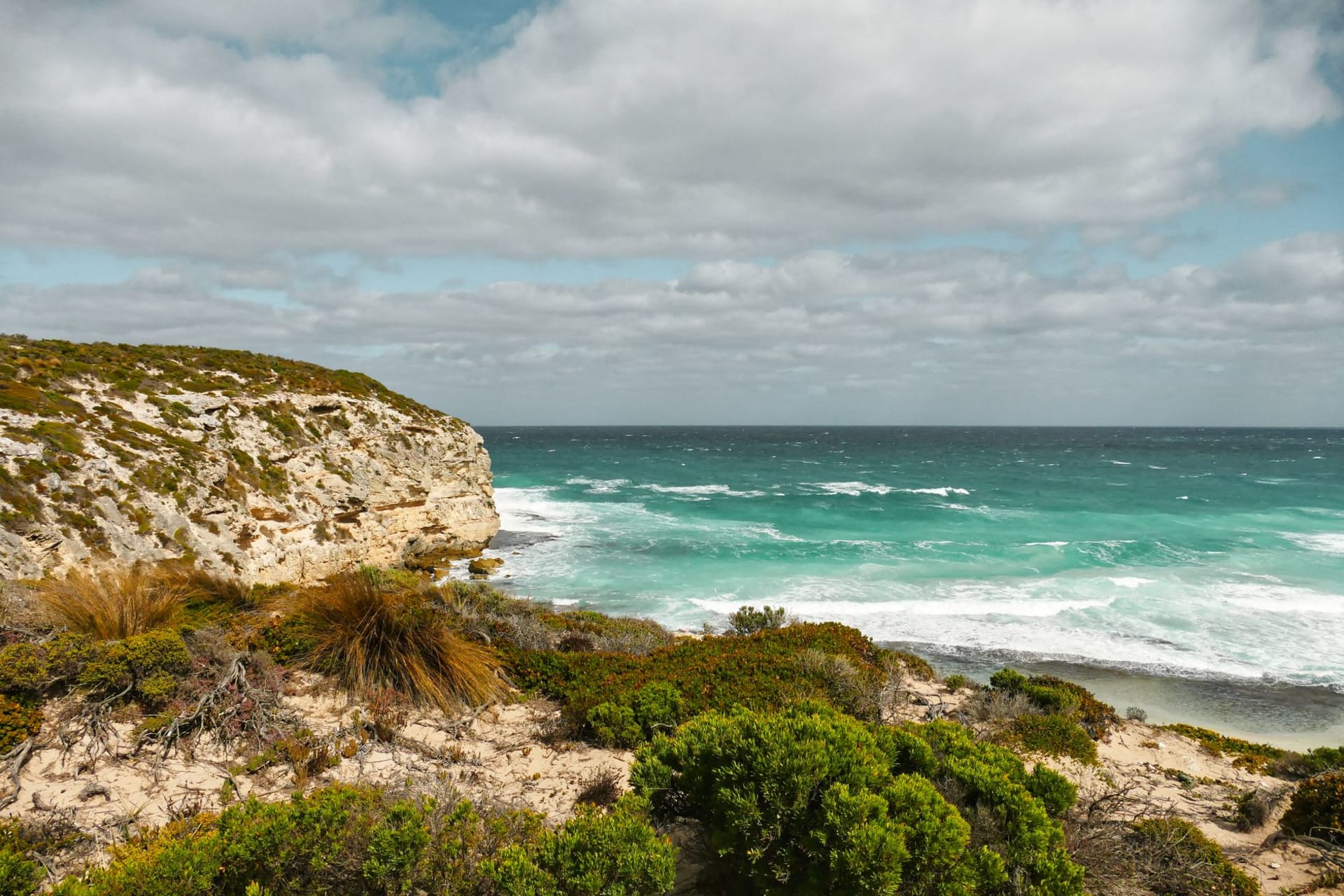
That separateness has preserved something. The peninsula’s coastline — alternating between white-sand beaches, limestone cliffs, and sheltered gulfs — has the quality of place that hasn’t been entirely processed for tourism. Coffin Bay National Park, at the southwestern tip, has tracks passable only by four-wheel drive and beaches where you spend an afternoon without seeing another person.
Coffin Bay Oysters
The reason people who don’t otherwise think about oysters know the name Coffin Bay is simple: the oysters here are exceptional, and they’re exceptional because of where they grow. The bay is cold, clean, nutrient-rich, and tidal — the oysters spend years tumbling in mesh cages as the tides cycle, developing shells that are dense and meat that has a salinity and sweetness in specific proportion.
I did an oyster tour with a local farmer who pulled cages from the water and opened them on the spot with a knife and a confidence that comes from doing something thousands of times. The oysters were cold from the water, metallic at first hit and then sweet and briny, with an aftertaste that lingered. I ate them with nothing. You don’t need anything with a Coffin Bay oyster.
Port Lincoln and the Seafood Economy
Port Lincoln is the largest tuna-fishing port in Australia and takes this status seriously. The Tunarama Festival in January involves, among other things, a tuna-throwing competition, which gives you a sense of the local culture. But the more sober and arguably more interesting aspect of Port Lincoln’s seafood economy is what ends up on the tables of the restaurants around the waterfront.
I had a plate of southern bluefin tuna crudo at a restaurant overlooking Boston Bay that stopped the conversation entirely. The fish had been caught that morning, which is the kind of thing that gets said often in fishing towns and usually isn’t quite true. In Port Lincoln it is true.
Swimming with the Predators
The Neptune Islands, offshore from Port Lincoln, are home to one of Australia’s largest populations of Australian sea lions and, consequently, one of the most reliable places in the world to observe great white sharks. There are operators running cage-diving excursions and, for the braver or perhaps more reckless traveller, freediving encounters.
I did the cage dive. I’m not sure what I expected — something perhaps more dramatic or cinematic. What I got was a four-metre white shark gliding past the cage with a kind of effortless directional calm, not especially interested in me, going about its morning. The experience was less terrifying than I’d prepared for and more awe-inducing than I’d expected. Those are different things.
When to go: November through April for warm water and the best diving and snorkelling conditions. March is ideal — post-summer heat, the oyster season in full swing, and enough visitor infrastructure operating without peak crowds. Winter closes some national park tracks and the sea can be rough; factor this in if boat trips are on the plan.