Coober Pedy
"The motel room was carved into a hill. It was twenty-two degrees inside. Outside it was forty-four."
The Drive In
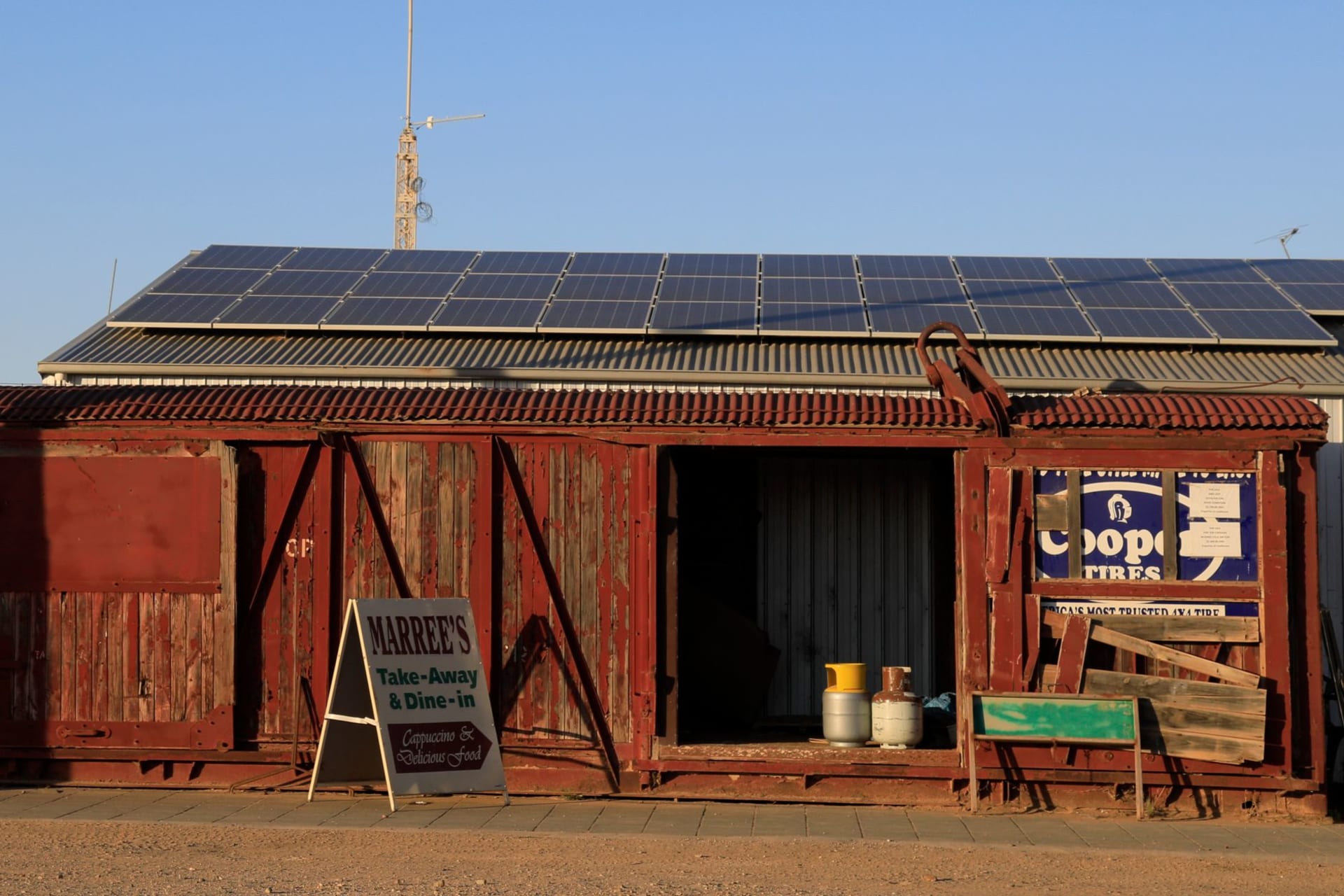
The Stuart Highway north from Port Augusta is one of those roads that recalibrates your sense of distance. There’s nothing in the conventional sense of nothing — no towns, no fuel, no trees after a while, just low saltbush and then increasingly just red-brown rubble flat to every horizon — for six hundred and fifty kilometres until Coober Pedy appears. Or rather, until the white conical mullock heaps appear on the horizon, which is the first indication that you’ve arrived somewhere: those pale mounds of excavated earth piled next to mine shafts, hundreds of them, covering the hillsides around the town like a geometrically deliberate landscape art project.
Nothing looks like Coober Pedy. I’ve seen photographs and they are accurate and somehow still inadequate.
Why They Go Underground
Coober Pedy’s signature fact — that a significant portion of its residents live underground in homes called dugouts — is often presented as quirky tourism but is actually just logic applied to an extreme environment. When I arrived in April (shoulder season, manageable) it was forty-one degrees at two in the afternoon. By midsummer this becomes forty-eight or fifty. No insulation system above ground keeps a building comfortable in those conditions without industrial air conditioning. Underground, the sandstone maintains a constant eighteen to twenty-two degrees year-round.
I stayed in a dugout guesthouse and can report that it is not claustrophobic — the rooms are larger than you expect, carved broad with generous ceiling height, and there’s a particular silence underground that is total and extremely conducive to sleep. You also lose track of time in a way that is initially disorienting and then becomes part of the point.
The Opal Economy
Coober Pedy produces most of the world’s opals — around seventy percent, depending on who’s counting — and the town exists because of them. Walking the main street, which is short and functional and has a certain frontier directness about it, you pass opal showrooms and opal polishing operations and shops selling mining equipment. Every conversation eventually gets back to opals.
I spent an afternoon at an opal show and spent money I hadn’t planned to spend. This is apparently the standard Coober Pedy outcome. An opal in the right light does something unusual: the colour shifts as you move it, flashes of red, green, blue, violet appearing and disappearing. There’s no other stone that does exactly this. The salesperson at the shop I visited was Greek-Australian, third generation in Coober Pedy, and explained the geological conditions — an ancient inland sea, silica deposits, millions of years — with the fluency of someone who has given this explanation many times without finding it less interesting.
The Breakaways
Thirty kilometres north of town, the Breakaways Reserve offers a landscape that makes the town feel positively lush by comparison. These are flat-topped mesas and eroded ridges in colours that change through the day — ochre, white, a deep red-brown — in a landscape so stark it was used as a stand-in for other planets in film productions. That choice makes sense immediately when you’re standing there.
The light at the Breakaways at sunset is something I want to try to describe accurately: the white formations turn gold and then deep orange and the shadows go purple and for about twenty minutes everything is the colour of something I’ve never seen matched anywhere else.
When to go: April through September is the window for everything. October is already pushing into heat. Summer in Coober Pedy is genuinely dangerous for outdoor time and should be treated accordingly; everything happens underground or not at all.