Laas Geel
"I kept forgetting to take notes because I kept forgetting to do anything except look."
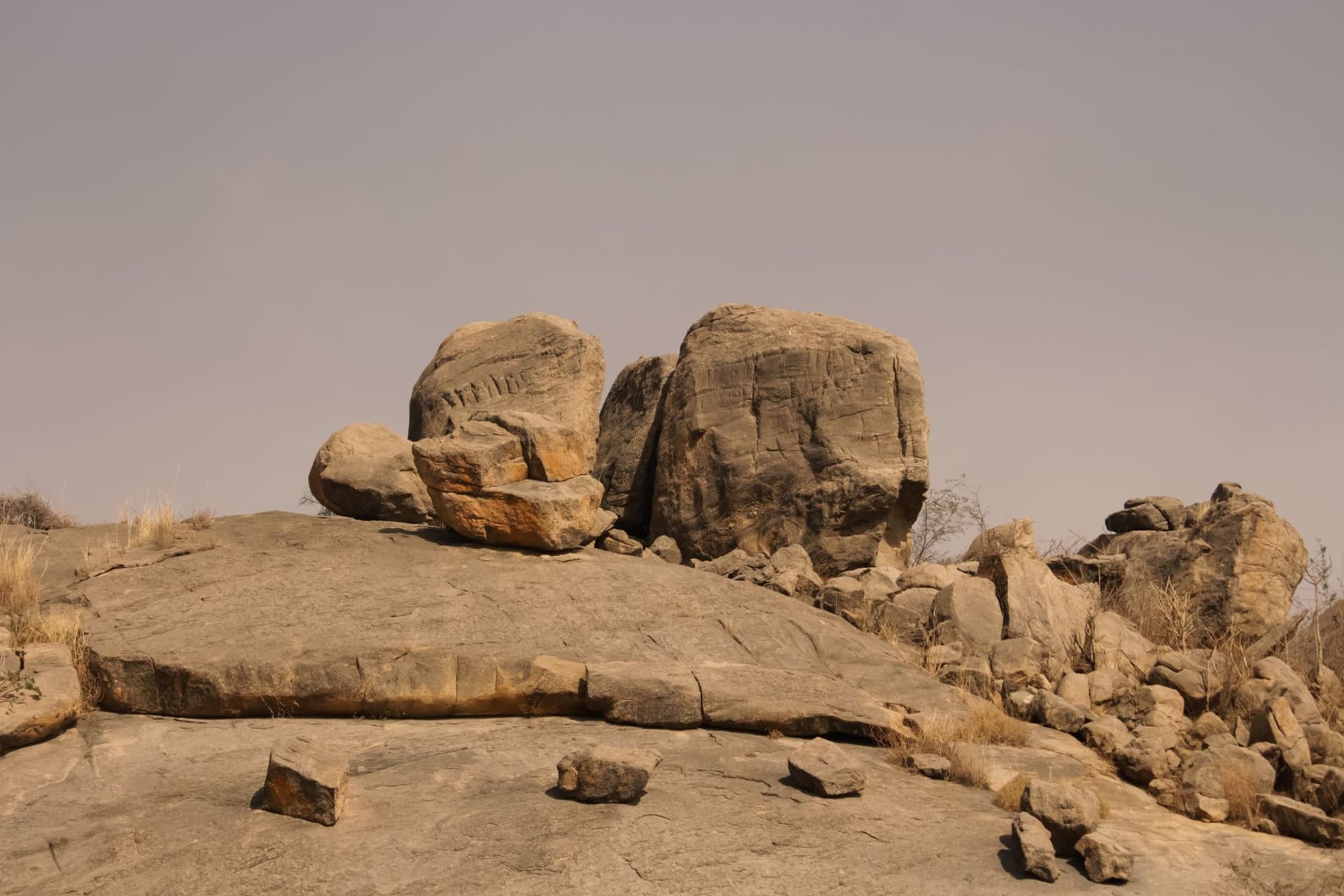
Laas Geel does not announce itself. The road from Hargeisa runs northeast through dry acacia scrubland for about an hour, and then a small painted sign appears at a turnoff, and then a dirt track, and then a cluster of granite boulders large enough to shelter under — and inside those boulders, paintings. Many, many paintings. Made somewhere between nine and eleven thousand years ago and still, preposterously, there.
Under the Rock: What Was Left Behind
The caves at Laas Geel are technically shallow granite shelters rather than deep caverns, which is part of why the paintings survived: protected from direct rain, sheltered from wind, the ochre pigments have oxidized into the stone itself over millennia. Entering the first shelter, the eye adjusts, and then the figures appear — cattle with long horns and detailed, lovingly rendered coats, human figures with raised arms, what appear to be dogs, geometric shapes whose meaning is anybody’s guess.
The cattle, specifically, are extraordinary. The artists who made these images clearly cared intensely about cattle — the animals are depicted with textured hides, specific coat patterns, graceful postures. Each one is distinct. Whatever relationship these people had with their herds, it was not casual.
I moved through the site slowly, crouching to see lower panels, leaning close until the painted surface was inches from my face. The pigments are still vivid in places — burnt sienna, white, the occasional black. A French archaeological team discovered the site officially in 2002, though local herders had always known it was there. The name itself means “watering place of the camels” in Somali.
The Landscape Around It
Part of what makes the visit work is the landscape itself. The scrubland approaching Laas Geel is open and huge, the light a flat, bleaching white by midday that throws the granite outcroppings into sharp relief. Baboons bark from the rocks. Vervet monkeys observe from a distance. At dawn, when the light is oblique and orange, the whole site takes on a quality that feels, without much effort, genuinely ancient.
The site guard — a young man from a nearby village who spoke careful, precise English — explained that his family had been caretakers of the caves for generations before the official discovery. He knew which shelters to visit in which order, which panels were most important, where to stand to catch the best light on the most detailed paintings. His knowledge was more useful than any guidebook I had.
Reaching the Site and What to Bring
From Hargeisa, Laas Geel is roughly 60 kilometers — arrange a vehicle in the city, as public transport doesn’t serve the site. The track to the shelters is a short, easy walk from where vehicles park. There is no formal visitor infrastructure beyond a basic entry system managed by the Ministry of Tourism; bring your own water, snacks, and a hat. The site is well worth combining with other excursions in the Hargeisa region.
No photography restrictions apply to the paintings themselves from a distance, but the priority is to not touch the surfaces, however tempting the proximity becomes.
When to go: October through March, in alignment with Somaliland’s dry season. The walk between shelters is exposed, so early morning arrival is strongly recommended — the site is best in the first hours of light, both for comfort and for the quality of how the paintings look.