Africa
Somalia
"The most misread country I've ever stood inside."
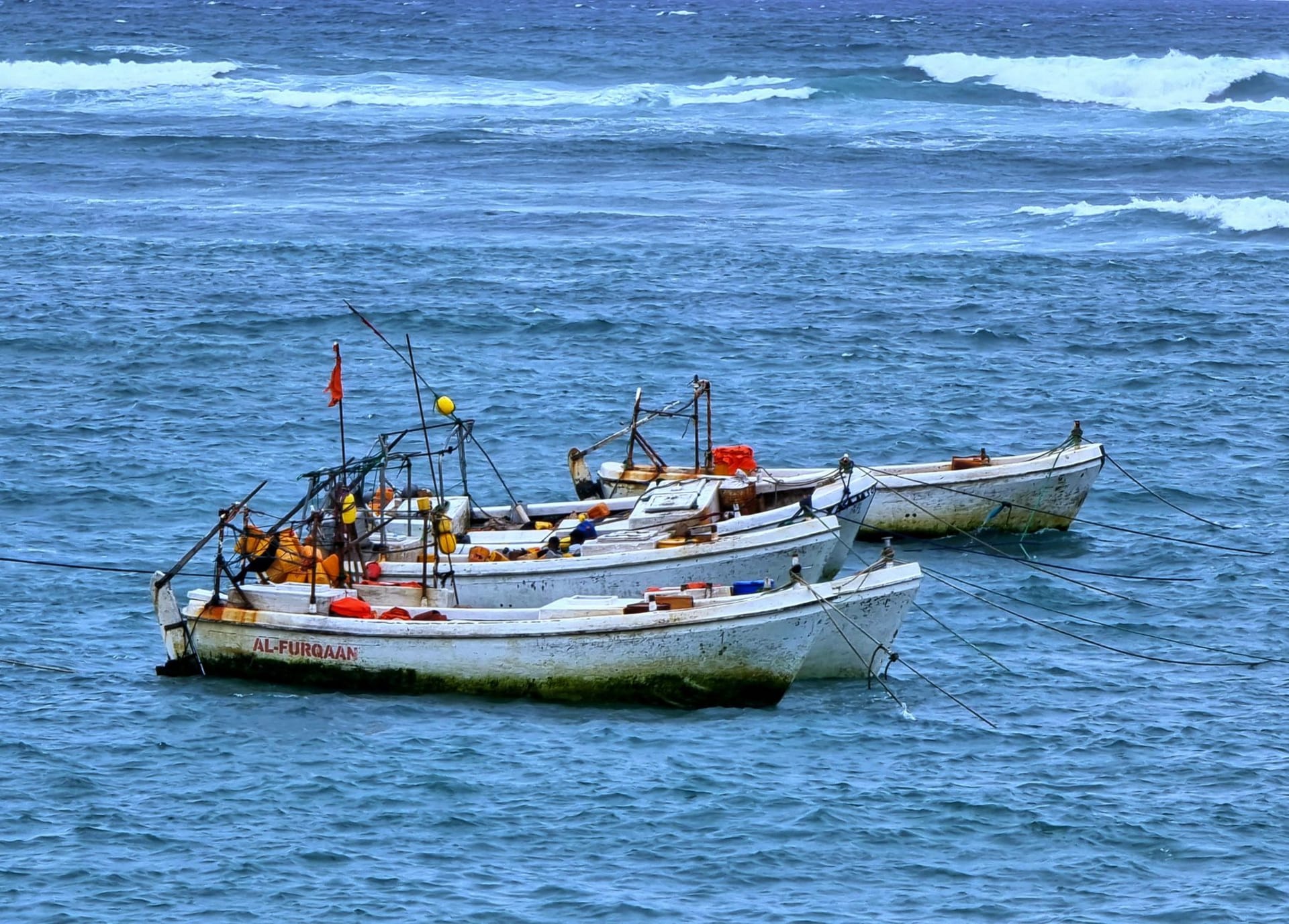
The first thing I noticed stepping out near the port of Mogadishu was not the heat, though it was absolute, and not the noise, though the city hums with the particular energy of a place rebuilding itself in real time. It was the light on the water. The Indian Ocean here is a shade of blue I don’t have a word for — somewhere between turquoise and cobalt, too vivid to look like anything other than a postcard, except nothing about this place is performing for tourists. Those fishing boats dotting the harbor have been there in various forms for a thousand years, part of a seafaring culture that once connected the Horn of Africa to Arabia, Persia, and the Swahili coast in a web of commerce that the rest of the world has largely forgotten.
Mogadishu itself is a contradiction in motion. Colonial Italian architecture — crumbling but still legible — sits next to freshly poured concrete. The Bakara market is overwhelming in the best sense: goat meat, imported fabric, frankincense resin sold by the scoop, and the specific smell of a city that runs on trade. The old Hamarweyne district near the waterfront still shows the bones of what was once called the White Pearl of the Indian Ocean. You have to look past the damage to see it. Most people never try.
The coast north of the capital toward the Somali Riviera — a stretch of beach that Somalis themselves use for swimming and picnics on weekends — is genuinely beautiful in a way that feels almost surreal given every assumption I carried in with me. Camel milk tea taken in the shade of a corrugated metal shelter, bitter and faintly sweet, tastes like nothing I’ve had anywhere else. Canjeero, the spongy Somali flatbread fermented slightly like injera but thinner, eaten with honey and ghee for breakfast, is one of those simple food memories I can still reconstruct exactly.
When to go: December to March is the most comfortable window, with the northeast monsoon keeping temperatures manageable and the Indian Ocean relatively calm. Avoid the April–June and October–November monsoon periods if you’re hoping to spend time on the coast. The interior regions have their own microclimate rhythms, but for Mogadishu and the coast, the cooler dry season is the clearest entry point.
What most guides get wrong: Most guides don’t exist, and the ones that do are usually written by people who have never been there. The story that reaches the outside world is almost exclusively one of conflict and crisis — which is real, and which any traveler needs to research carefully and honestly before going. But it is not the whole country. Somalia has a functioning capital, a coastline of extraordinary beauty, a literary oral tradition that puts most cultures to shame, and a diaspora that has been quietly rebuilding infrastructure for decades. The risk calculus for travel here is genuinely different from most destinations, but the reflex to treat Somalia as purely a place of danger, with nothing worth encountering, is its own kind of blindness.