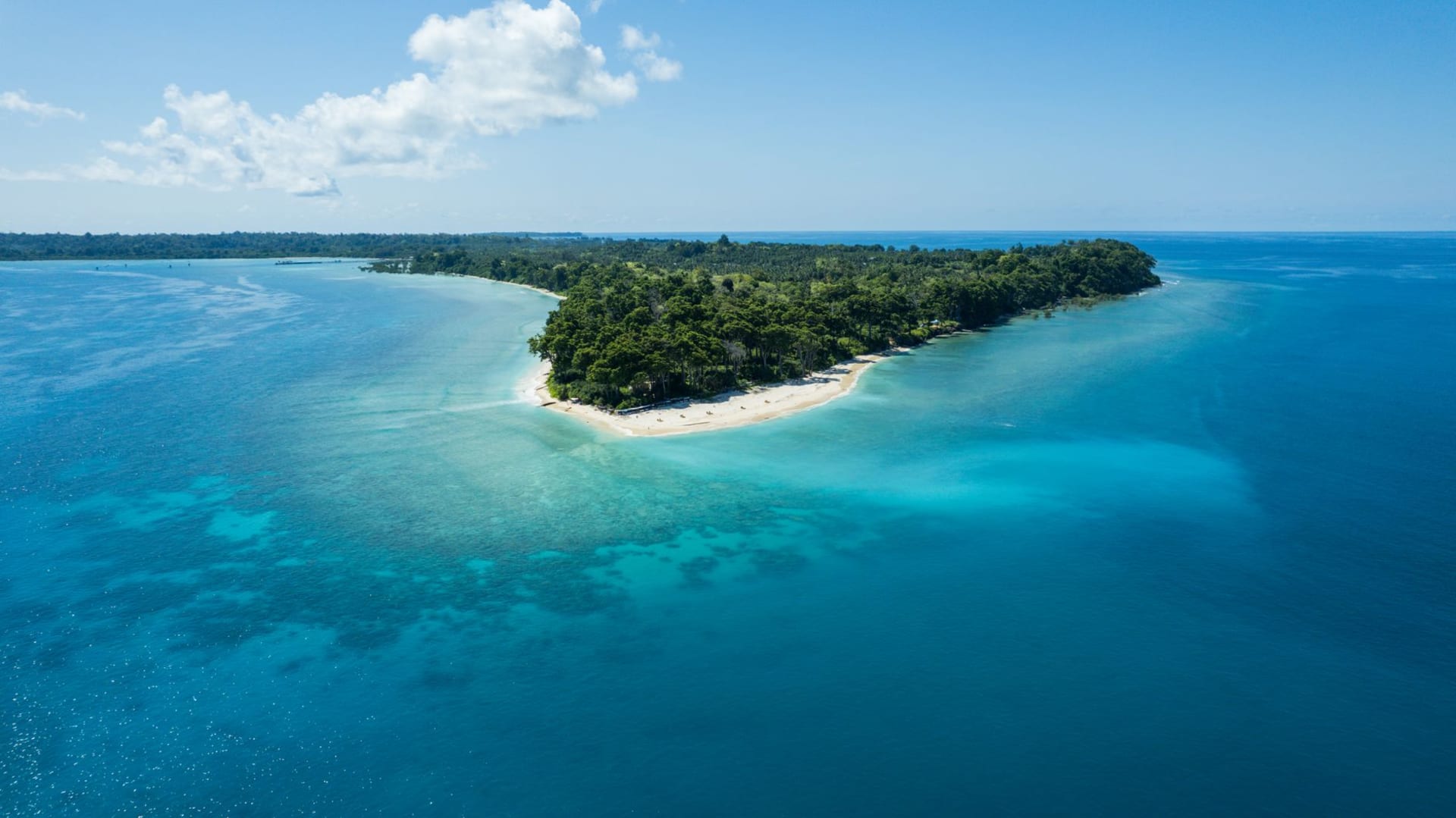
Makira
"I asked how often foreigners come here. The guesthouse owner thought about it and said: 'Last year, maybe two.'"
Makira — also called San Cristobal — sits at the southeastern end of the main Solomon Islands chain, which is to say it sits at the southeastern end of the chain that already sits at the edge of the region that travellers have already largely skipped. Getting there from Honiara involves either a small plane to Kirakira (the provincial capital, population modest, infrastructure basic) or a multi-day ferry ride that is genuinely not for the fatigued or schedule-dependent.
I took the plane, which was the right call. The flight over the central Solomons and then out over open water to Makira takes about forty-five minutes and offers a view of the island’s dramatic profile — a volcanic ridge running the length of the island, forests coming nearly unbroken to the coast, the southern coast facing an open ocean that has no significant land between it and Antarctica.
Kirakira and the North Coast
Kirakira is a small, purposeful town with a market, a government office block, a hospital that serves the whole province, and a guesthouse that is clean and run with the particular efficiency of somewhere that doesn’t see enough visitors to get complacent about standards. The north coast near Kirakira has a road of sorts — red laterite, passable in dry weather — and villages spaced along it at intervals that require either a vehicle or the kind of walking pace that accepts you’re not going anywhere quickly.
The kastom practices on Makira are among the most intact in the Solomons. Ceremonial cycles — weddings, funerals, first-birth rituals — are governed by protocols that have not been substantially modified by either colonial administration or Christianity, in some cases because the missions that arrived here were more accommodating than elsewhere, and in others because the isolation simply preserved what it found.
The South Coast Reef
The south coast is the real discovery. Facing the open Pacific, the southern reef is exposed to swells that keep casual visitors away — but between the larger swell events, in calm patches, the diving and snorkelling here is on a level that the more accessible Western Solomons can’t quite match. The fish biomass is simply higher: coral trout of a size you don’t see on regularly dived reefs, shark species doing their indifferent patrolling, and a coral structure that shows no fishing pressure to speak of.
I went out on two mornings with a local fisherman who guided me to reef sections he knew from fishing rather than diving, which meant the orientation was practical and precise. He pointed at the water in a particular spot and said “big fish here,” and he was correct.
Kastom and Community
The easiest wrong thing to do on Makira is to arrive without introduction to a village. The kastom structure means that entering community land — which is most land on the island — without proper introduction creates genuine social friction. The right approach is to ask at your guesthouse for introductions, which are arranged through family and church networks with an ease that makes the formality feel functional rather than bureaucratic.
I visited a village east of Kirakira where a traditional ceremony had concluded the day before, and where the detritus of it — woven decorations, the remnants of a feast, a long oven trench still warm — was being cleared with an efficiency that suggested everyone had done this before. A man who spoke good English explained the ceremony to me while helping carry banana-leaf bundles. He seemed pleased that I found it interesting, and genuinely curious about what ceremonies we have in France that involve comparable community effort.
When to go: April through November gives the best conditions on both coasts. The south coast is most accessible May through August when the Pacific swell is at its lowest. Makira’s isolation means planning is essential — book flights and accommodation (options are extremely limited) well in advance, and build extra days into your itinerary for weather-related delays on the return to Honiara.