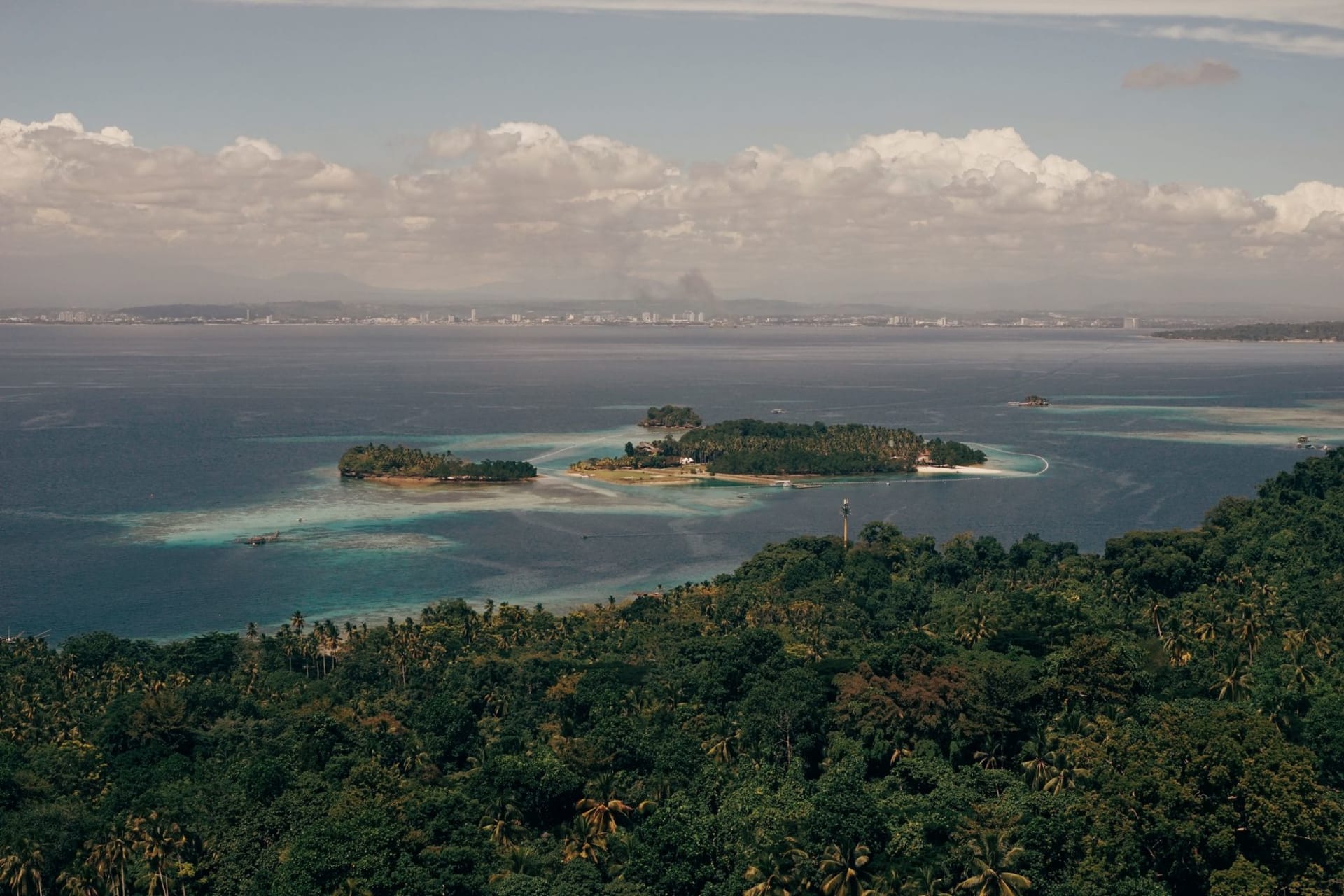
Guadalcanal Hinterland
"The jungle here is so thick that the battle maps from 1942 look like guesswork. They mostly were."
Most people who come to Guadalcanal spend their time in Honiara or out along the coast. The interior — a mountain spine reaching over 2,000 metres, cut by river systems that run north and south to the sea — is treated as background scenery. This is a significant oversight. The Guadalcanal hinterland is one of the more extraordinary landscapes in Melanesia, and the fact that it was the site of some of the most brutal fighting of the Pacific War adds a layer to walking in it that’s hard to get anywhere else.
I spent three days going inland from Honiara, first up the Mataniko River canyon and then further east toward the Lungga River valley, using guides arranged through a local trekking operator. The guides were from Guadalcanal villages and knew the terrain at the granular level — they knew which river crossing held in wet weather, where the trail branched into disused paths, which ridges gave views and which simply gave effort.
The Mataniko Canyon
Thirty minutes by minibus from central Honiara, the Mataniko River enters a limestone canyon that feels like a different geological era from the coast. The walls are fifteen to twenty metres high in places, hung with ferns and mosses, and the river at the bottom runs over dark rock into pools the colour of milky jade. A waterfall drops into the upper pool, and the acoustic effect in the canyon — the water sound bouncing between the walls — is genuinely strange, a kind of white noise that blocks everything else.
We crossed the river six times on the walk, using stepping stones in the dry season. The guide mentioned, without particular emphasis, that in the wet season this section floods completely and is impassable. The canyon walls bore watermarks several metres above the current level that I found both impressive and clarifying about the scale of the seasonal change.
The WWII Interior
Moving east and inland brings you into the areas where the most intense ground fighting of the 1942-43 Guadalcanal campaign took place. Bloody Ridge and the Matanikau River line — names that appear in almost every serious account of the Pacific War — are not abstractions here. They’re places with specific terrain: a grassy ridge that offered no cover, a river crossing where machine gun placement meant that approaching from certain angles was not survivable.
My guide, Thomas, is the grandson of a man who was a carrier — Solomon Islander labour used by both sides to move supplies through terrain that defeated vehicles entirely. He talked about this with the particular specificity of family history rather than textbook history: his grandfather carried rice for Americans up the ridge north of the Matanikau, was paid in canned food, remembered the smell of the jungle after artillery.
Waterfalls and Village Stays
The hinterland is scattered with villages accessible on foot from the road, some of which offer basic homestay accommodation. The approach requires going through proper channels — introduction via your guide, permission sought from the community — but once arranged, the experience of sleeping in a village in Guadalcanal’s interior gives a context for the landscape that no guesthouse in Honiara can replicate.
Several rivers have impressive waterfalls accessible by half-day walks. The Tenaru Falls, east of the Tenaru River (site of a 1942 night attack and its catastrophic repulse), involves a walk through secondary and primary forest and ends at a two-tier waterfall with a swimming pool cold enough to be shocking.
When to go: May through October is the reliable dry season for inland walking. Rivers are lower, tracks firmer, and the risk of being caught by flash flooding in a river canyon is significantly reduced. The hinterland receives more rainfall than the coast even in the dry season, so carry rain gear regardless of month. The wet season from December to March makes most interior trails impractical without specialist equipment and local knowledge.