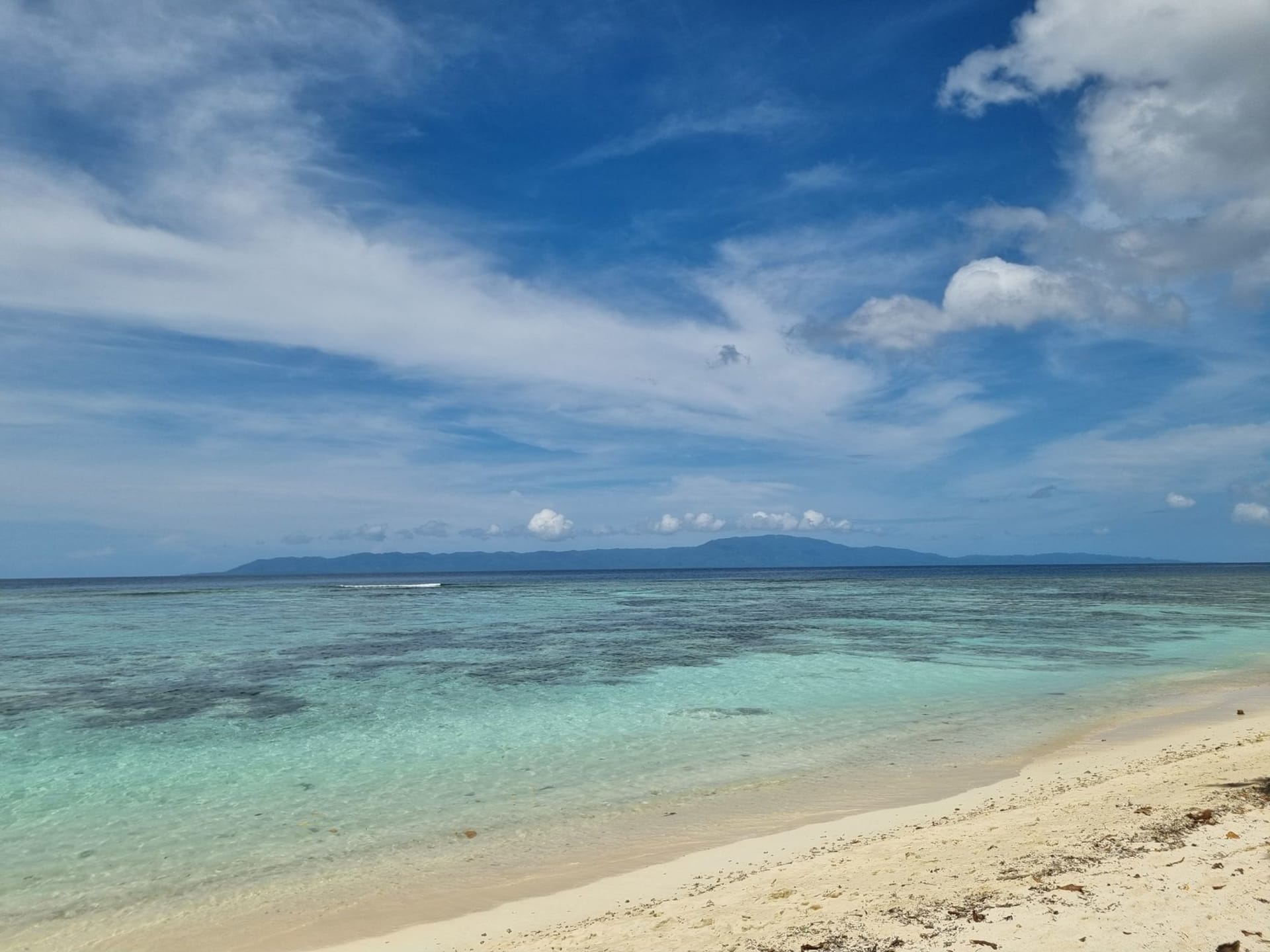
Gizo is the kind of place that looks like nowhere from the air — a small island town with a corrugated iron market building, a single main street, and a harbour where supply boats come and go. Then someone mentions that JFK’s torpedo boat is fifteen minutes away by dinghy, lying in twenty-eight metres of clear water, and the place recalibrates entirely.
I arrived by speedboat from the Seghe airstrip, sitting on the bow with my bag wedged between my knees, watching Kolombangara — a perfect volcanic cone — get bigger as we crossed the channel. Gizo sits in the Gizo Strait in the Western Solomons, and it’s the main hub for diving the region. The town itself is small enough to walk end to end in twenty minutes, with an easy, low-key energy that comes from a place comfortable with its own obscurity.
Diving the History
PT-109 sank here in August 1943 after a Japanese destroyer cut it in two during a night engagement. The young Lieutenant Kennedy swam his surviving crew to safety — a story everyone vaguely knows from history class. The wreck itself is less dramatic than you might imagine from the mythology: a few recognisable sections of hull, encrusted now with coral, home to a large family of lionfish. But diving it carries a particular weight that purely natural sites don’t.
The Japanese destroyer Toa Maru is a better dive on purely visual terms — larger, more intact, at a depth where the hull sections still read as a ship rather than scattered debris. I spent forty minutes on it and came up wanting more, which is the sign of a good wreck.
The Gizo dive operators — notably Dive Gizo and Fatboys, based on a dock over the water outside town — know these sites with the easy familiarity of people who’ve been diving them for years. Briefings are detailed and unhurried.
Above Water
Lia and I spent an afternoon circumnavigating Gizo Island on foot, a walk of a few hours along tracks that alternated between open coconut plantation and dense secondary forest. The island has a few villages where children regard strangers with cheerful suspicion, and where you’ll be offered young coconut with a machete before you’ve properly introduced yourself.
The market in the centre of Gizo runs every morning and has everything from fresh reef fish to local vegetables to the kind of strong instant coffee that seems to be a Pacific institution. I ate grilled fish wrapped in banana leaf from a woman running a small fire grill outside the market building — it cost almost nothing and was better than meals I’ve paid twenty times as much for elsewhere.
Kennedy Island
A short paddle by kayak from the main town sits a small sandy islet that JFK allegedly swam to after PT-109 went down, dragging an injured crew member by a life jacket strap clenched in his teeth. It’s called Kennedy Island now, with a slightly awkward colonial-memorial-tourist-attraction quality to it. But the paddle out at dawn, before the day heats up, through calm water with kingfishers working the mangrove edges, is worth doing regardless of the historical pretext.
Fatboys resort does good kayak rentals and is a nice place to eat if you want to spend a day eating on a dock over the water.
When to go: May to October is optimal — the dry season brings calm seas, good dive visibility (often 25 to 40 metres), and manageable heat. Gizo is also worth considering in the shoulder months of April and November when there are fewer divers and the reefs are equally good. Avoid January to March: wet season swells affect boat operations and visibility drops noticeably.