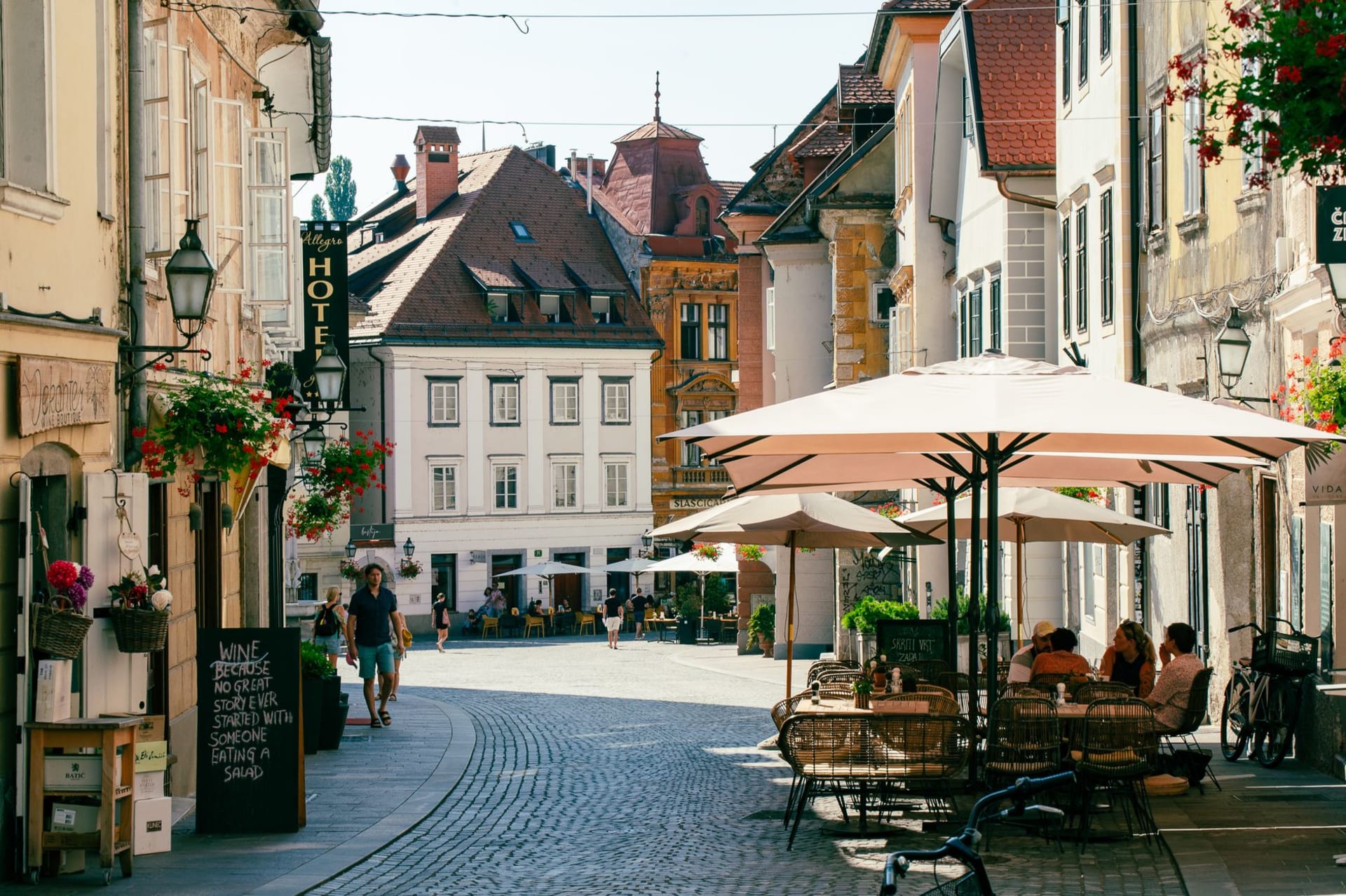
Ptuj
"Ptuj kept being better than I expected, quietly, without making any fuss about it."
Every country has a town that holds more history than its current size suggests it should. In Slovenia, that town is Ptuj. It has been continuously inhabited since at least Roman times — it was Poetovio, a significant legionary camp and river crossing on the Amber Road — and you feel this layering not in any single monument but in the way the streets organize themselves around the castle hill with the particular logic of a place that has had two thousand years to work out its own geometry.
The Castle Above the Drava
I arrived in late afternoon when the western light was hitting the castle’s pale stone directly and the Drava River below it was catching the same horizontal sun. The river here is wide and slow-moving — nothing like the cold mountain torrents in the northwest of the country. Ptuj sits at the edge of the Pannonian plain, where Slovenia opens up and flattens and the wine country begins in earnest, and the Drava moves through it at the pace of somewhere with nowhere urgent to be.
The castle is now a regional museum, and it’s a good one: four floors of arms and armor, period furniture, Orpheus monuments salvaged from the Roman town, instruments including the Ptuj lute, and an entire section given over to Kurent figures. Kurent is the carnival mask native to this region — a shaggy sheepskin suit with a feathered headdress and cowbells tied at the waist, worn in a February procession called Kurentovanje that is meant to chase winter out of the valley. The festival draws crowds from across Slovenia and the figures in the museum cases — dozens of them, slightly different from village to village — are unsettling in the best possible way, the kind of thing that makes more sense when you understand it’s older than the castle holding it.
Wine and the Lower Town
The streets below the castle are small-town Austro-Hungarian in their bones: churches, a Dominican monastery that looks older than it is, a 6th-century Mithraeum in a basement (Mithraic mystery cult, Roman soldiers, underground ritual chamber), a medieval tower with a clock face visible from most of the old town. Ptuj is wine country — the Haloze and Štajerska regions extend in all directions — and the wine bars in the lower town keep the pace of somewhere unconcerned with trend cycles. I drank a glass of Šipon at a place with four tables and no menu on the wall. The woman running it brought olives without being asked. I stayed two hours.
Saturday Market
The morning market near the Minorite church is the kind of market that still sells what people in the region actually eat rather than what tourists want to find in a market. Dried mushrooms, homemade elder vinegar, early strawberries in season, horseradish roots that smell like something is trying to clear the room. A man selling small rounds of cheese wrapped in cloth. Ajvar in mason jars with handwritten labels. I bought provisions and ate lunch on a wall above the river looking at the castle on its hill, and spent some time thinking about the Roman soldiers who had crossed the river at roughly this spot for three hundred years, and whether any of them had also stopped to look at the hill and think about how long they’d be staying.
Getting the Pace Right
Ptuj rewards slowing down. The town is small enough to walk completely in a morning and deep enough to fill two days if you let it. The Roman finds in the museum alone take time to absorb properly — tombstones, carved portraits, the road network that once ran through here. Give the Mithraeum at least thirty minutes.
When to go: Ptuj works year-round. February’s Kurentovanje carnival is the specific reason to plan around a particular date — book accommodation well ahead as the town fills entirely. Late spring and early autumn offer the best weather without summer crowds. The wine region surrounding the town is at its most compelling in September and October during harvest.