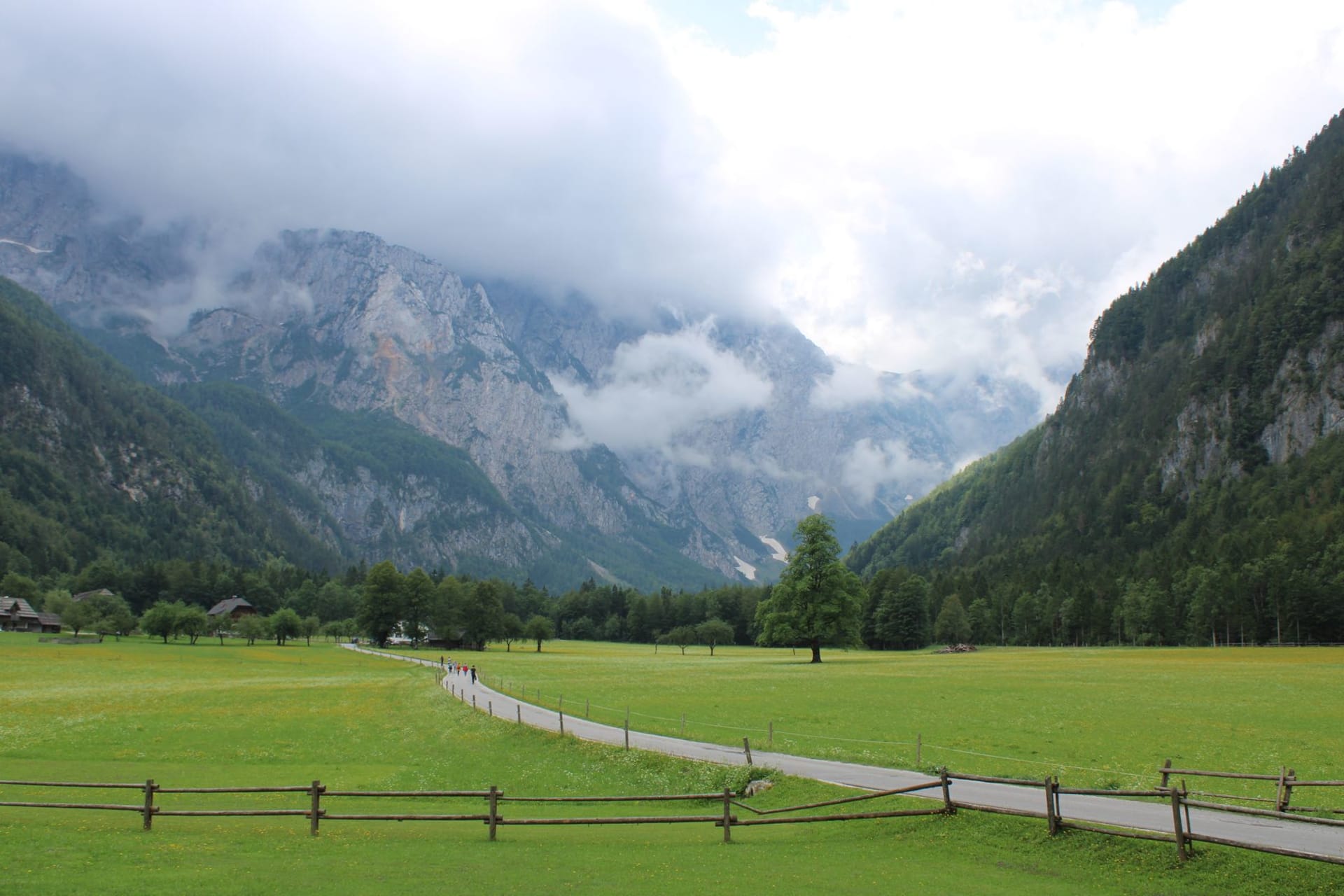
Logarska Dolina
"We sat at the base of the waterfall for almost an hour before either of us thought to leave."
A glacial valley tucked into the Savinja Alps where working farmsteads share meadows with 2,000-meter peaks and the only waterfall in Slovenia worth driving a narrow mountain road to reach drops 90 meters off a cliff into cold silence.

The road into Logarska Dolina narrows as it climbs. I spent more time than was probably safe watching the valley open up in the rearview mirror instead of the road ahead — the Savinja Alps assembling themselves behind us into something that required looking at, even from the wrong direction. Lia was the one reading the map. She was better placed for it.
The Valley That Nobody Mentions
Logarska Dolina is a glacial valley in Slovenia’s Savinja Alps, and it exists in most guidebooks as a footnote to whatever else is being discussed. We found it because Lia had read about a waterfall. We arrived expecting something modest and found instead a valley stretching six kilometers beneath peaks rising above 2,000 meters, with a farmhouse inn at the end of the gravel road serving cold-smoked trout, and a silence so complete you could hear the river from the car park. The Savinja River begins here — it’s barely a river yet at this point, more a fast clear stream that you can step across in places — and carries the cold off the surrounding peaks in a physical way that makes the temperature in the valley floor consistently several degrees lower than the entrance.
Rinka Waterfall
The Rinka is the highest free-falling waterfall in Slovenia: 90 meters, a single drop off a limestone ledge at the valley’s head, visible from the car park as a white thread against grey rock. The walk to the base takes about twenty minutes on an easy path alongside the Savinja. At the base the water fans across the rock face rather than falling in a single column, and the mist carries down-valley carrying a mineral coolness you can feel on your face before you’re close enough to see the detail of the drop. The sound builds gradually as you approach — first a low frequency in the chest, then the full roar. We ate the bread we’d bought in Mozirje sitting on a boulder in the spray and stayed for the better part of an hour before realizing neither of us had thought about leaving.
The Working Farms
What distinguishes Logarska from Slovenia’s more famous alpine valleys is the farmsteads scattered through it. These aren’t heritage reconstructions or agritourism operations built to resemble farms. They’re functioning ones — cattle, hay bales drying on wooden frames called kozolec, milk sold from a small window in the farmhouse wall at a price written on a card. They happen to occupy a landscape of genuinely embarrassing beauty without drawing particular attention to the fact. The Robanov Kot valley, a smaller side valley accessible by a rough track a few kilometers back from the main road, has a handful of these farms and almost no visitors. I drove up it in the wrong gear for most of the ascent and didn’t care enough to correct it.
Late Light
The valley is west-facing at its open end and east-facing at the Rinka’s cliff head, which means the light moves through it in the late afternoon with particular deliberateness: gold on the western slopes, the eastern peaks already in shadow, the valley floor catching the last horizontal sun through the gap in the mountains. I stayed past the point where I should have turned around for the drive back to Mozirje. Then I stayed longer. The valley doesn’t push you out — there’s no closing time, no barrier across the road at dusk. It just gets dark and cold, slowly, and that’s the only signal you get.
What to Know Before Going
The access road is narrow and in places genuinely tight when another vehicle is coming the other direction. The valley is a protected landscape park and charges a small entrance fee at the gate. In peak summer, private cars are sometimes restricted on certain days and a shuttle bus runs from Mozirje — check current arrangements before driving in.
When to go: June to September for hiking and the waterfall at its most dramatic flow. May brings snowmelt and high water but paths can be muddy. Mid-October is arguably the best week of the year: the alpine meadows turn yellow, the beech forests go copper and rust, and the crowds from summer are entirely gone. Avoid January and February unless you have snow tires and a specific reason.
Keep exploring
More from Slovenia
 slovenia
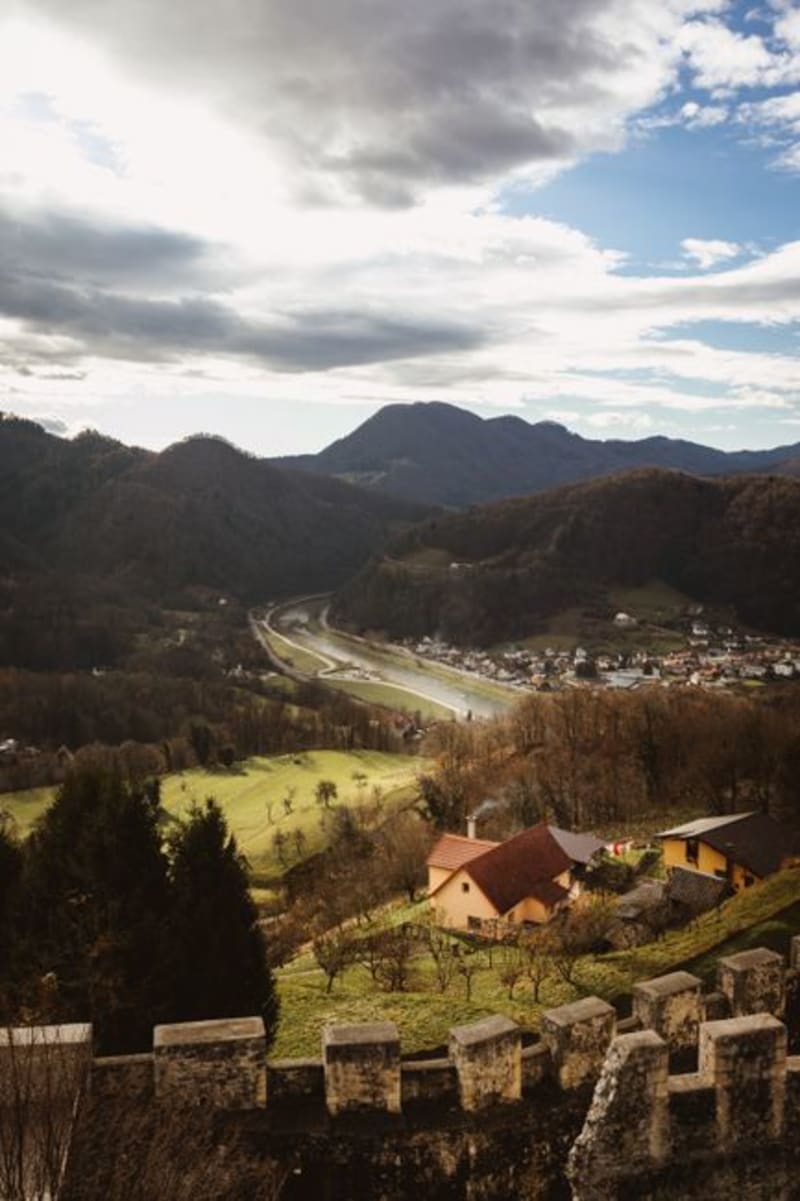
 Luče
A small village strung along the Savinja River where the valley widens just enough to breathe before narrowing again toward Solčava — an easy, unhurried base for the Upper Savinja without a single tour bus in sight.
Explore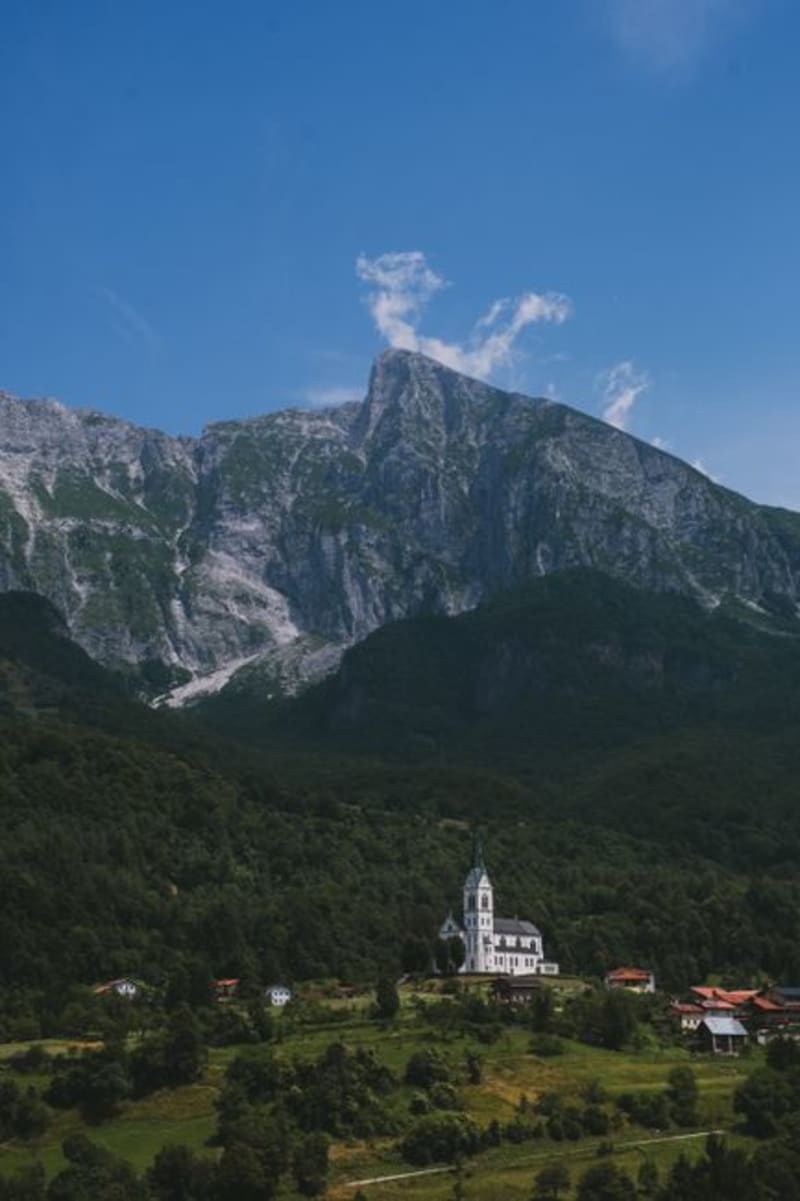 slovenia
 Lucija
The unglamorous working half of Portorož's municipality — a fish farm, a quiet marina, and the coast's most unpretentious dinner we had all trip.
Explore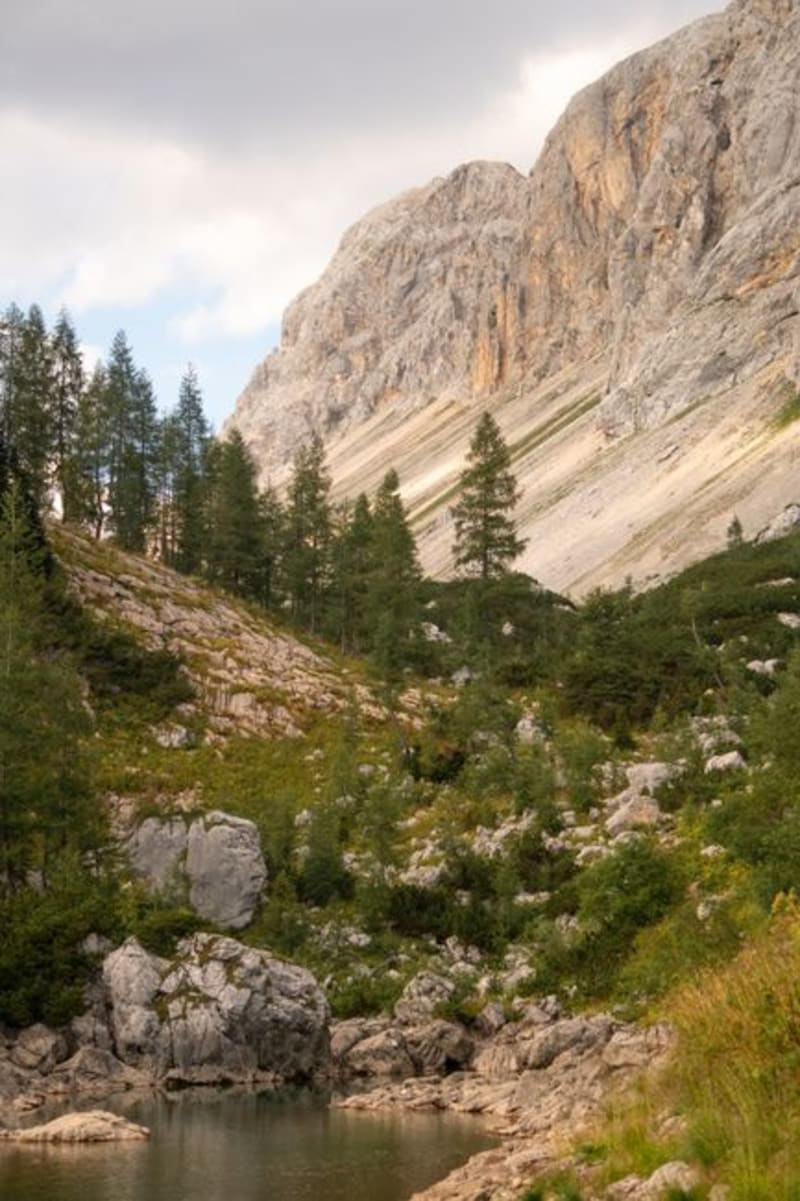 slovenia
 Mangart Saddle
Slovenia's highest mountain road, a narrow ribbon of switchbacks climbing to over 2,000 meters between Italy and the Julian Alps, ending at a saddle with nothing but sky on either side.
Explore slovenia
 Maribor
Home to the world's oldest grapevine — over 400 years old — this Drava riverside city lives beautifully between tradition and transformation.
Explore slovenia
 Matkov Kot
The least-visited of the three glacial valleys radiating from Solčava, a narrow bowl beneath the jagged peak of Ojstrica where a single farmhouse restaurant is the only sign anyone else knows the place exists.
Explore slovenia
 Menina Planina
A broad, gentle alpine plateau above the Savinja Valley, less dramatic than Velika Planina and precisely for that reason almost entirely without tourists — a place for long, easy walks and a mountain hut with a view that outperforms its modest fame.
Explore