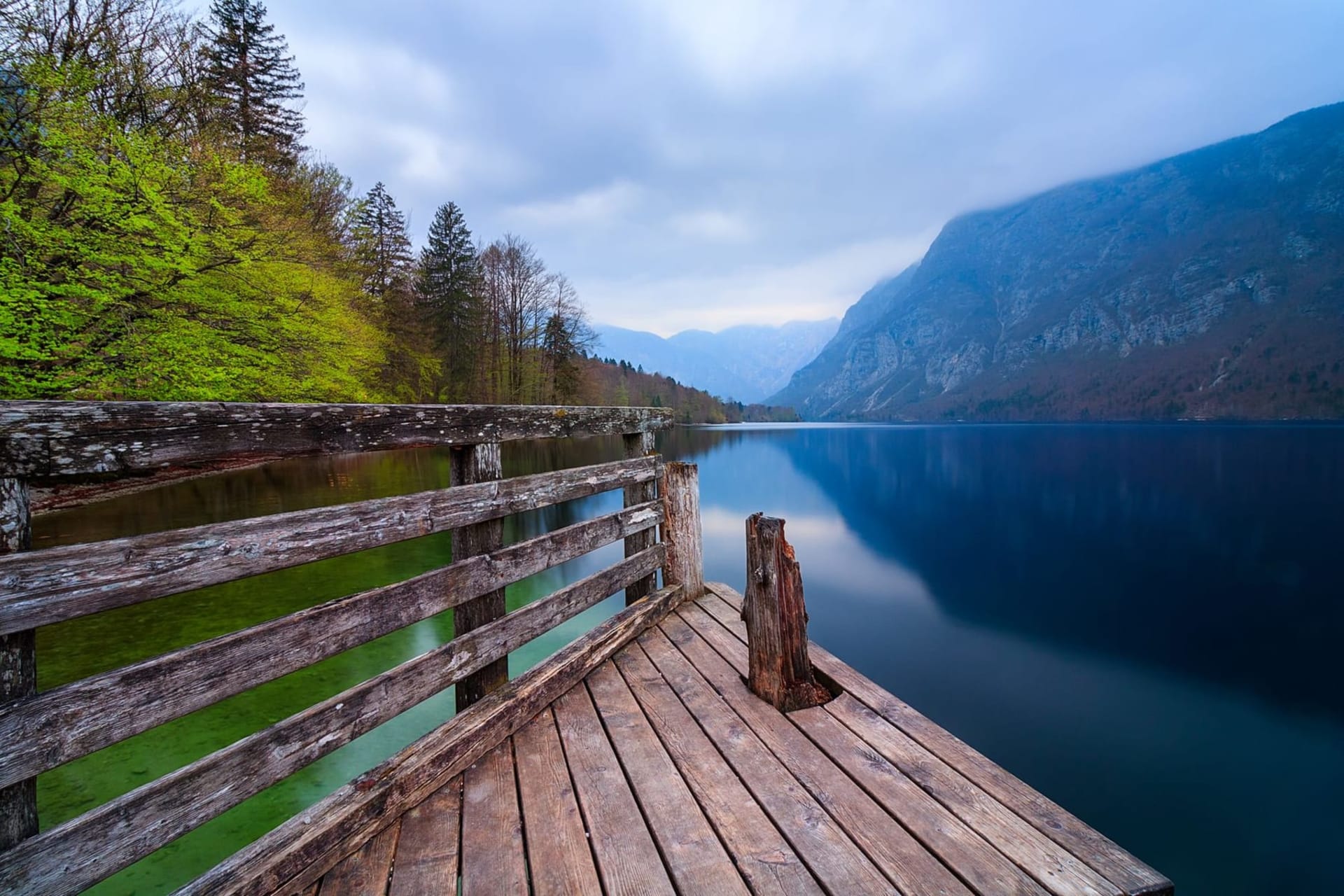
A glacial lake in the Julian Alps, wilder and quieter than its famous neighbor Bled — the Slovenia that hasn't been packaged for postcards yet.
We came to Bohinj because Bled had started to feel like a screensaver — beautiful in a way that no longer required attention. Forty minutes west by bus, through tunnels and sheep pasture, and the Julian Alps remember themselves. No island. No castle on a cliff. Just a glacial lake, three kilometres long, hemmed in by mountains that refuse to become a backdrop.
The Weight of Still Water
Bohinjsko jezero in the early morning looks almost black. The Triglav ridgeline holds the last of the night on its north face while the water below sits glassy and cold, the temperature of intention. I walked the south shore path past the Church of St John the Baptist — its frescoes faded to rust and ochre inside, the smell of old stone and candle wax, a building that has been here since the twelfth century and seems content about it. No ticket booth. No audio guide. Just an unlocked door.
The surprise came when I rounded the eastern end of the lake near Ribčev Laz and found a small fisherman already there at six in the morning, pulling in his line with the unhurried rhythm of someone who has no interest in being seen by tourists. He nodded. I nodded back. That was the whole conversation and it was enough.
Eating Near the Water
Lunch at Gostilna pri Kupniku in the village of Stara Fužina — fifteen minutes up the valley from the lake — meant a bowl of bohinjska župa, the local buckwheat soup that tastes like the forest floor in the best possible way: earthy, thick, with a swirl of sour cream that cuts through everything. Lia ordered the trout, pulled from the Sava Bohinjka river that drains the lake, and it arrived whole on a wooden board, smelling of woodsmoke and cold water.
The valley here was an ironworking region for centuries. The name Stara Fužina means Old Forge. You feel that industrial past in the stone houses, the weight of the architecture — nothing ornamental, everything load-bearing.
Up Into the Triglav National Park
The trail to Slap Savica, the waterfall at the lake’s western end, climbs through beech forest that goes golden and amber in autumn, the path slick with fallen leaves and the particular sweetness of decay that is not unpleasant. The falls themselves drop into a narrow canyon, the noise arriving before the view. I had not expected the cold — a mist that soaks through a light jacket in minutes.
When to go: September is ideal — the summer crowds thin, the beech forests turn, and the lake reflects a cooler, clearer light. Late June works too, before the peak-season buses arrive from Bled.