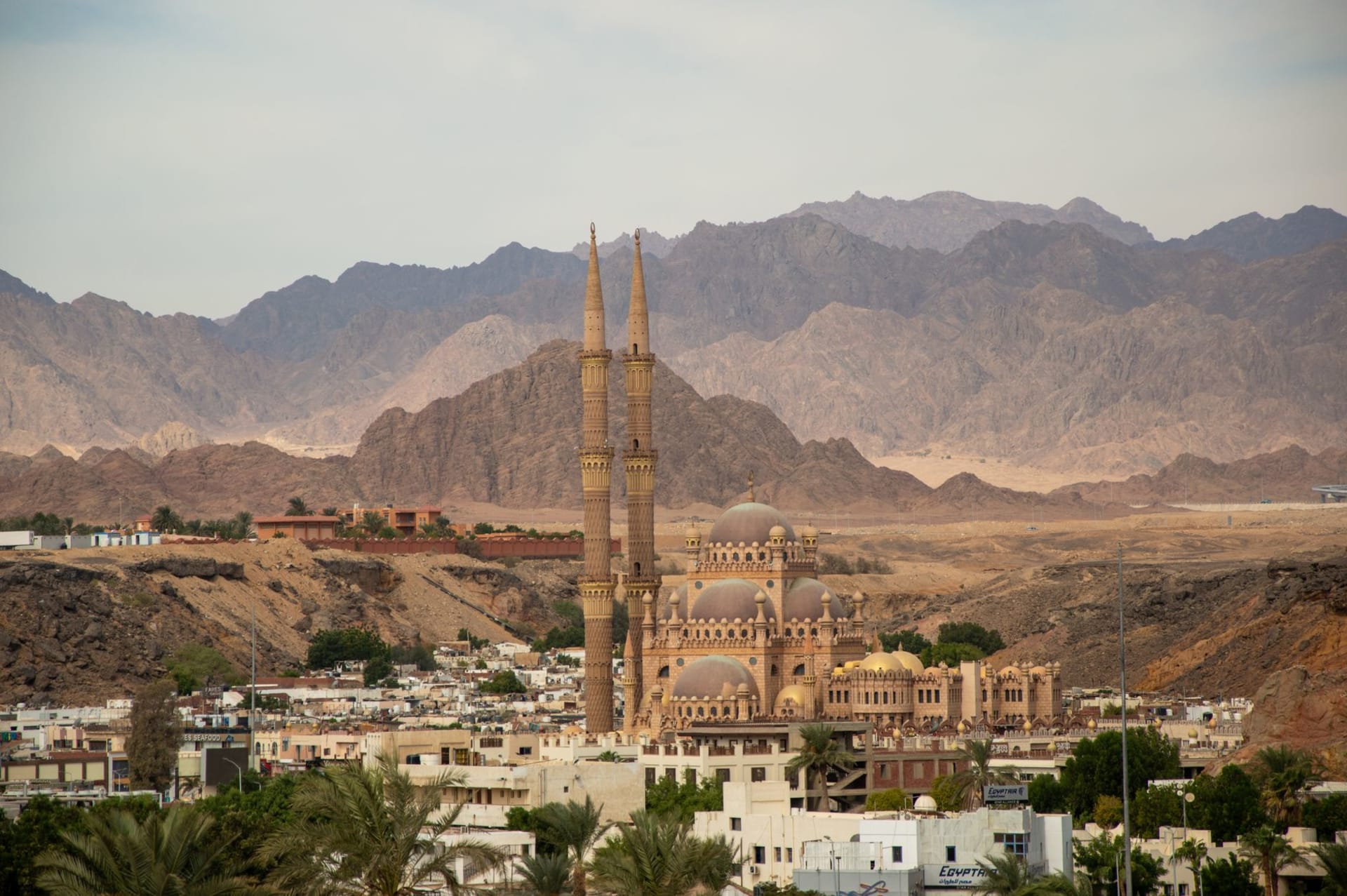
Sharm el-Sheikh
"The reef starts thirty meters from the beach and nothing else matters."
The Bubble Machine
There is a specific sound Sharm el-Sheikh makes in the morning: the hiss of regulators being tested, the thud of tanks being loaded onto boats, the low diesel grumble of the dive fleet waking up. I was awake before five for all of it, sitting outside a café in Naama Bay with cardamom tea and a briefing map, and for those two hours the city was genuinely beautiful — all mountain silhouette and still water and the faint mint smell of the sea.
That is the trick of Sharm. Strip away the Russian all-inclusive signage and the souvenir T-shirt shops and the quad bike rental touts, and what remains is an access point to one of the greatest concentrations of healthy coral reef on the planet. The dive industry here has been running for forty years and it shows: the boats are efficient, the guides know every pinnacle, and the sites are signed and managed in ways that most of tropical Asia hasn’t caught up to yet.
Reef Architecture
I did four dives in two days and the one that stays with me is Ras Umm Sid, a wall that drops from the surface to a depth I never reached. You drop in over a plateau of staghorn coral — white-tipped, dense, untouched — then the floor disappears and you’re hanging in blue water alongside a cliff draped in gorgonian fans the size of dining tables. A Napoleon wrasse the length of a bicycle came within arm’s reach and regarded me with the unimpressed expression all large fish seem to have cultivated.
The water temperature in winter sits around 22°C, cold enough to need a wetsuit, warm enough to stay down for an hour comfortably. Visibility in the morning, before the afternoon wind chop comes in, was thirty meters without effort.
The City You Navigate Around
Sharm itself is a construction project that never quite finished deciding what it wanted to be. The Old Market is the oldest part of town and has the most character — narrow lanes, grilled fish restaurants, men playing backgammon outside coffee shops — but even that has been half-swallowed by gift shops selling pharaonic kitsch. Naama Bay is the tourist spine: four kilometers of hotels, dive centers, and restaurants where the menus are in German, Russian, and Arabic but not always all three at once.
I ate well twice. Once at a proper Egyptian restaurant inland from the bay — fuul medames with olive oil and cumin, fresh flatbread, a glass of karkadeh hibiscus tea that was almost painfully tart. Once at a fish market where I pointed at a red snapper, watched it weigh and grill it, and ate it at a plastic table with tahini and pickled vegetables. Both meals cost less than a single beer in the hotel lobby bars.
Working the Logistics
The airport is large and functional. You can arrange dive packages before arrival that bundle accommodation, daily boat dives, and airport transfers, which is genuinely the most efficient way to come. If you’re not here for diving, the snorkeling off the public beaches is still remarkable — the Far Garden and the Tower sites are accessible by fin from shore.
When to go: October through April is the sweet spot — air temperatures are pleasant rather than brutal (25–32°C), and visibility peaks in winter. Summer (June–August) brings 40°C heat and crowds of European package tourists. Avoid Eid holidays for lower prices and fewer divers on the boats.