Middle East
Sinai Peninsula
"Between two seas and a burning sky, Sinai strips everything back to the essential."
The bus from Cairo dropped me at Dahab at two in the morning, and the first thing I noticed wasn’t the stars — though they were absurd, the kind of sky you forget exists — it was the quiet. After three weeks in Cairo’s permanent roar, the Sinai silence felt physical, like stepping into a cool room. A Bedouin guy named Mahmoud was waiting by the terminal with a handwritten sign for a guesthouse I’d booked from a forum post. He didn’t ask me anything. He handed me a glass of mint tea and we drove without speaking along a coast road where the Red Sea was just a blackness on the right and the mountains were a darker blackness on the left.
That arrival set the tempo for everything that followed. Sinai runs on its own clock, and the longer you stay the more you sync to it. Days in Dahab dissolve into snorkeling the Blue Hole in the early morning light — that terrifying vertical chimney in the reef, the water going from turquoise to deep sapphire as you look down — then sitting on floor cushions at a beach restaurant eating shakshuka and fresh flatbread while cats circle your feet. The Bedouin families who run these spots have been here for generations; they have a lightness about them, an unhurried intelligence, that makes the tourist hustle in Sharm el-Sheikh feel like a bad dream from another planet. I avoided Sharm almost entirely. It’s a package holiday resort that happens to have a spectacular reef; Dahab and Nuweiba are where Sinai actually breathes.
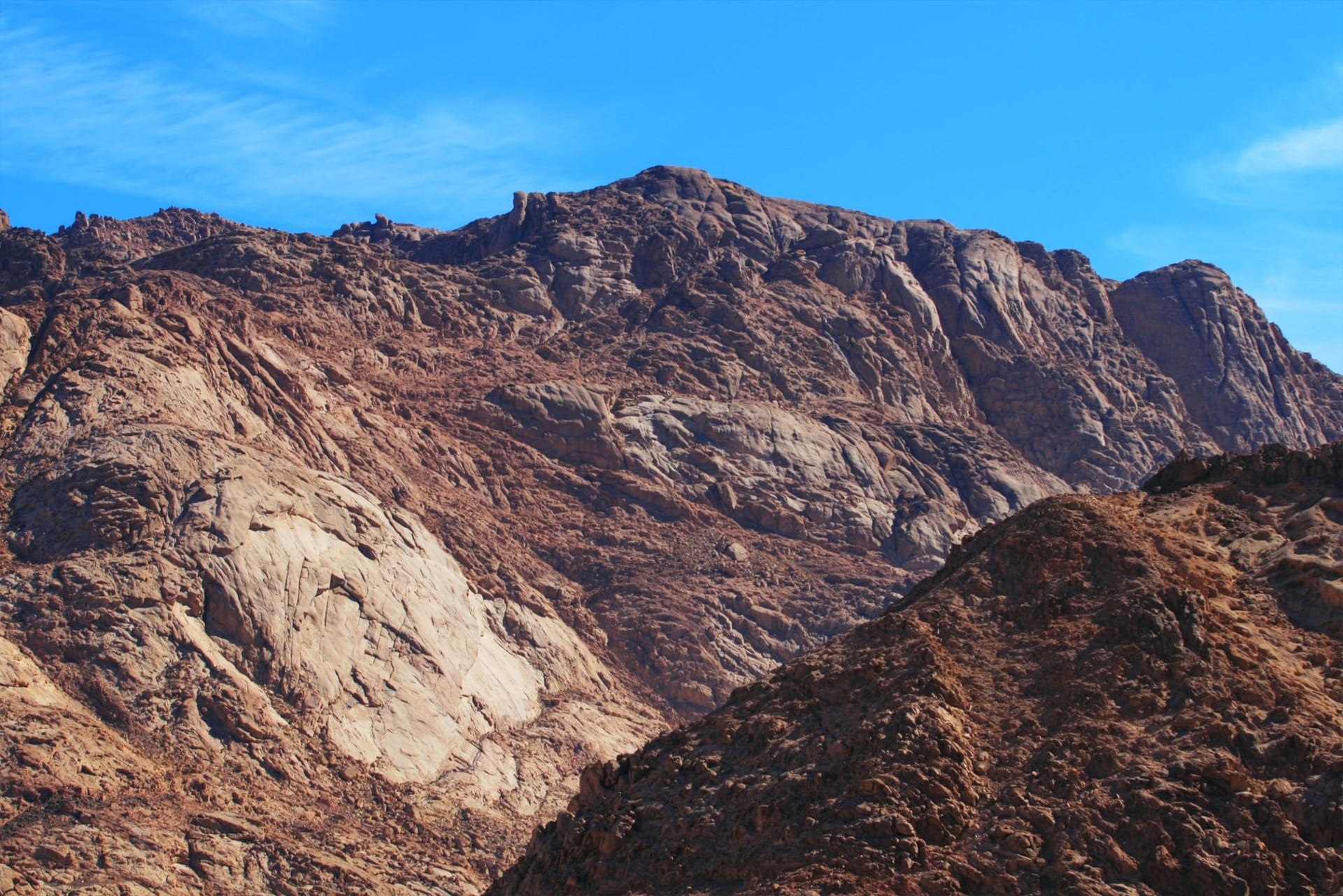
Mount Sinai I climbed at midnight to catch the sunrise, the way everyone does. Three thousand steps carved into granite by monks, lanterns dotting the path ahead and below you like a slow river of pilgrims. It’s genuinely moving — not because of the religious associations, though those layers are present and real — but because the desert from that summit at dawn, with Aqaba visible to the east and Suez to the west and Saudi Arabia a pink smudge across the water, is one of the most commanding views I’ve ever stood in front of. The Monastery of Saint Catherine at the base is the oldest continuously functioning Christian monastery in the world, which is the sort of fact that rearranges your sense of time when you’re standing in its garden looking at a burning bush.
When to go: October through April. The summer heat in the interior is serious — 45°C in Wadi Rum levels of serious — and the diving crowds thin out mid-September. March and April are ideal: warm enough for comfortable snorkeling, cool enough for desert hiking, and the light on the mountains is extraordinary.
What most guides get wrong: They treat Sinai as a detour — three days on the way to Jordan or after Cairo. But the peninsula rewards patience in a way few places do. The Bedouin hospitality, the desert trails between oases, the sheer improbability of world-class diving at the foot of biblical mountains — none of that lands in a long weekend. Give it ten days minimum, stay in Dahab, and let the rhythm find you instead of chasing the highlights.