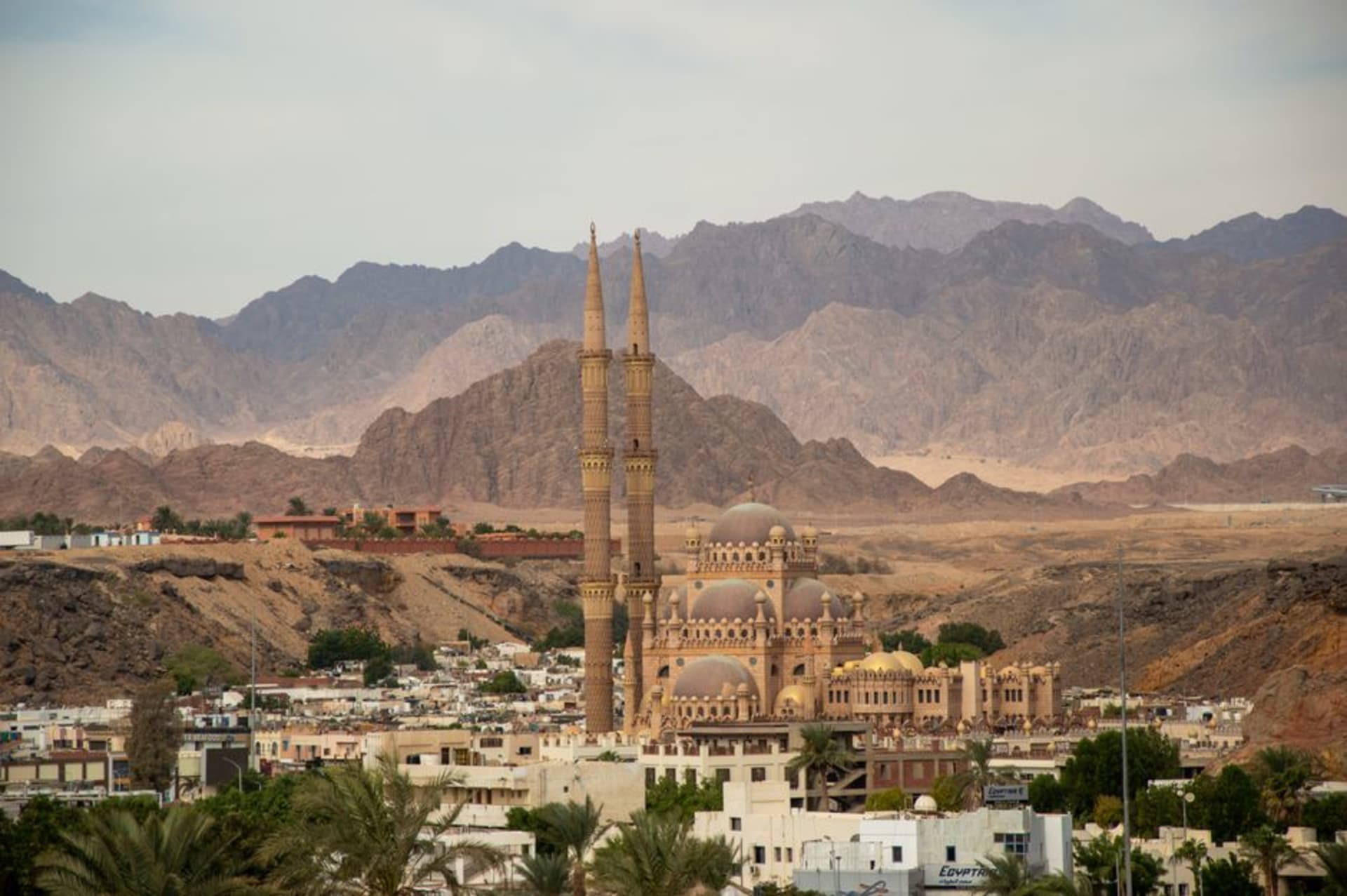
Serabit el-Khadim
"Some places you visit. This one you earn, one switchback at a time."
A wind-scoured plateau of turquoise mines and Hathor's ruined temple, where the earliest alphabet was scratched into sandstone by miners.
Lia found Serabit el-Khadim on a dog-eared map in our guesthouse in Dahab, a single dotted line trailing off into blank space with no road symbol next to it. That should have told us something. We hired a driver who knew the piste out past the mining town of Abu Zenima, and then we walked, straight up, for the better part of two hours, over loose sandstone that shifted under every step. I kept thinking about the fact that this climb has barely changed since the Middle Kingdom, when Egyptian expeditions came up here for the same reason we were sweating our way to the top: turquoise. The whole plateau is riddled with old mine shafts, black mouths in the rock that Lia refused to get near, and I don’t blame her.
What’s waiting at the summit is not a tidy monument. It’s a sprawl of broken columns, stelae leaning at odd angles, and shrine chambers half swallowed by drift sand, all of it dedicated to Hathor in her role as “Lady of Turquoise.” Pharaohs added to the complex over centuries, so nothing here feels like it was built at once, more like the desert equivalent of a house with additions from three different decades. I sat on a fallen block for a long time just looking at how the light hit the stone, low and orange, and understood immediately why this place stayed a secret for so long. There is no village, no signage, no fence. St. Catherine’s gets the busloads; Serabit el-Khadim gets almost no one.
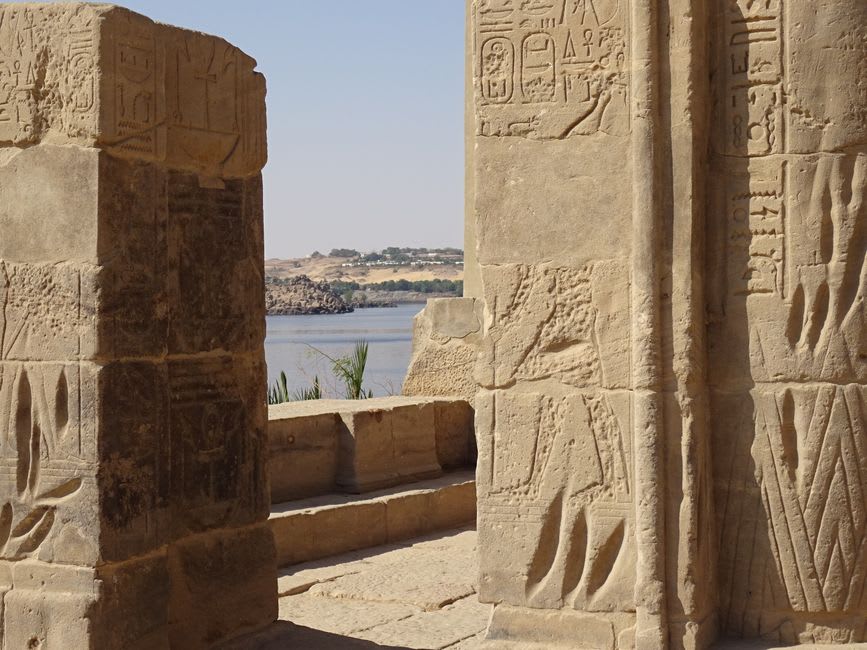
The part that actually stopped me in my tracks was smaller than the temple itself. Off to one side, cut into the rock near the old mine entrances, are the marks that Flinders Petrie catalogued in 1905: the Proto-Sinaitic inscriptions, carved by the Semitic laborers who worked these mines somewhere between the nineteenth and fifteenth centuries BC. Scholars consider it among the very earliest alphabetic writing we know of. I’m not a linguist and I still felt something looking at those scratches, knowing a tired miner three and a half thousand years ago pressed a chisel into this exact rock to leave a mark that wasn’t a hieroglyph, wasn’t a pictogram, but an actual letter. Lia photographed them for twenty minutes straight.
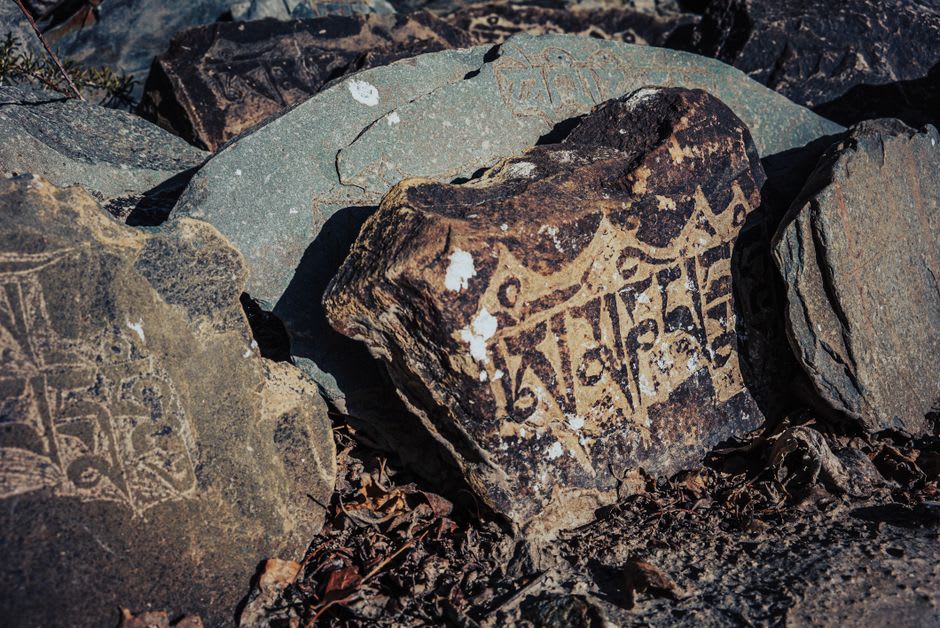
We ate our lunch, bread and hard cheese we’d carried up in a daypack, sitting among stones that mining expeditions from the Middle Kingdom through the New Kingdom would have walked past on their way to work. No other visitors showed up the entire time we were there. Coming back down, my knees complaining the whole way, I remember telling Lia this was the emptiest I’d felt a genuinely important place feel in all our years of traveling.
When to go: Aim for October through April. We went in early spring and were still glad for the head start before the sun cleared the ridge — by summer, that exposed, shadeless climb would be brutal.